Vision Problems in Children: Warning Signs to Watch For
Kids rarely say they can't see well. Learn the warning signs, what amblyopia and strabismus are, and when to schedule your child's first eye exam.
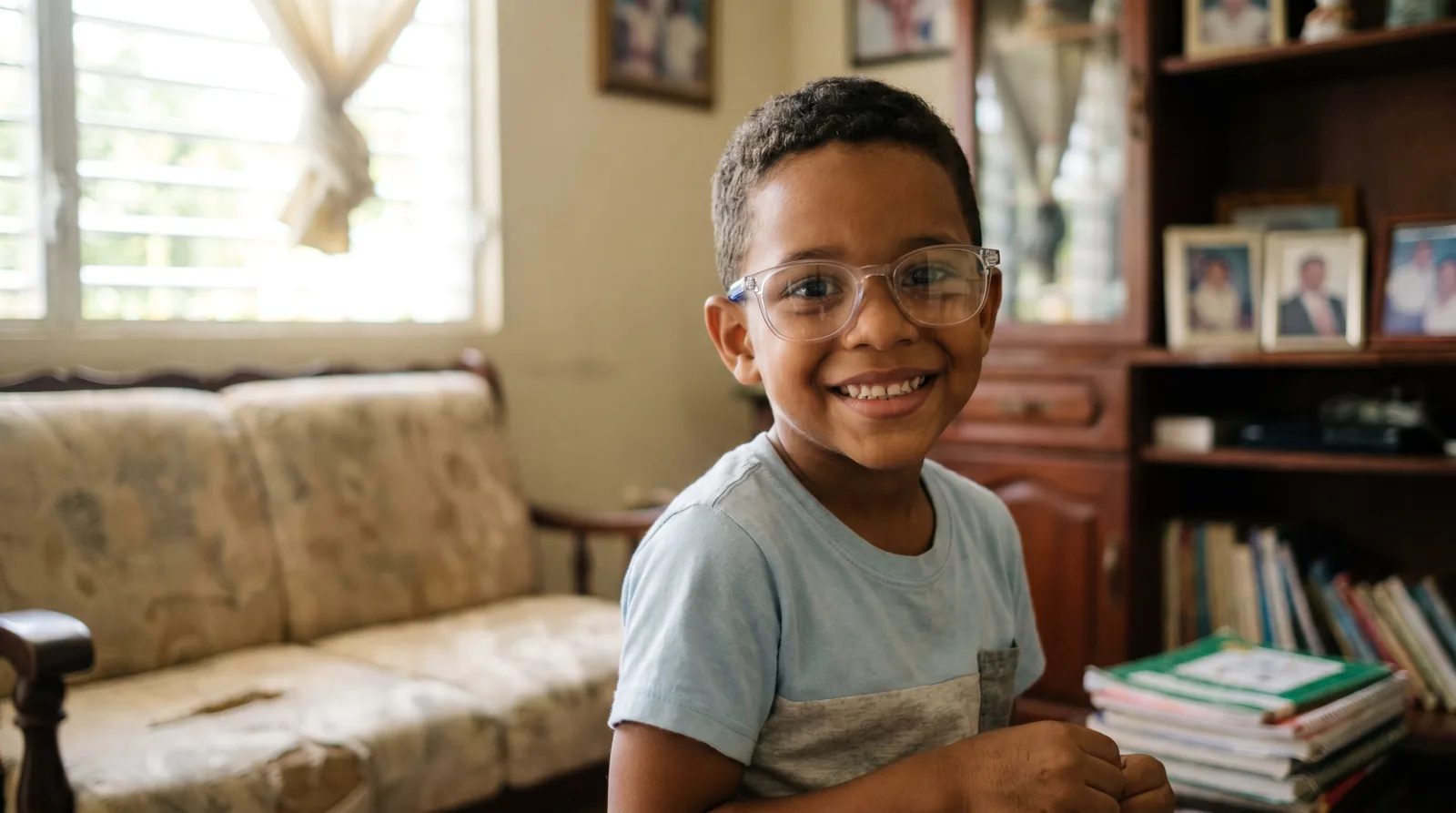
Kids almost never think to say their vision is off, and there's a simple reason why: this is just what the world looks like to them. They've never known anything different. That's why so many vision problems in children go unnoticed for years, right when they'd be easiest to correct. Catching them almost always depends on an adult noticing the signs in time.
And it's worth paying attention. Amblyopia, commonly known as "lazy eye," is the leading cause of vision loss in childhood and affects up to 3 in every 100 children, according to the National Eye Institute. The key thing to understand is that a child's vision develops within a window of time that starts closing around age 7. Catching a problem early changes everything.
This article covers the signs to watch for, when to schedule your child's first eye exam, and what can be done.
Why Kids Don't Complain
When an adult's vision suddenly blurs, they notice and see a doctor. A child doesn't, because they have nothing to compare it to: if this is how they've always seen, they assume everyone sees the same way. On top of that, when one eye sees poorly, the other one compensates enough for the child to function normally, so the problem stays hidden in plain sight.
That's why the problem usually gets caught by someone else: a parent who notices their child sitting too close to the TV, a teacher who sees they're struggling to copy from the board, or a pediatrician during a checkup. The child's own complaint is almost never the first clue.
This changes the whole approach. With kids, we don't wait for them to say they can't see well. We watch how they behave and check their vision even when they seem fine.
Warning Signs Parents Should Watch For
Certain behaviors work as red flags. None of them confirms a diagnosis on its own, but any one of them is reason enough for an eye exam:
- An eye that turns inward, outward, up, or down, even if it only happens sometimes.
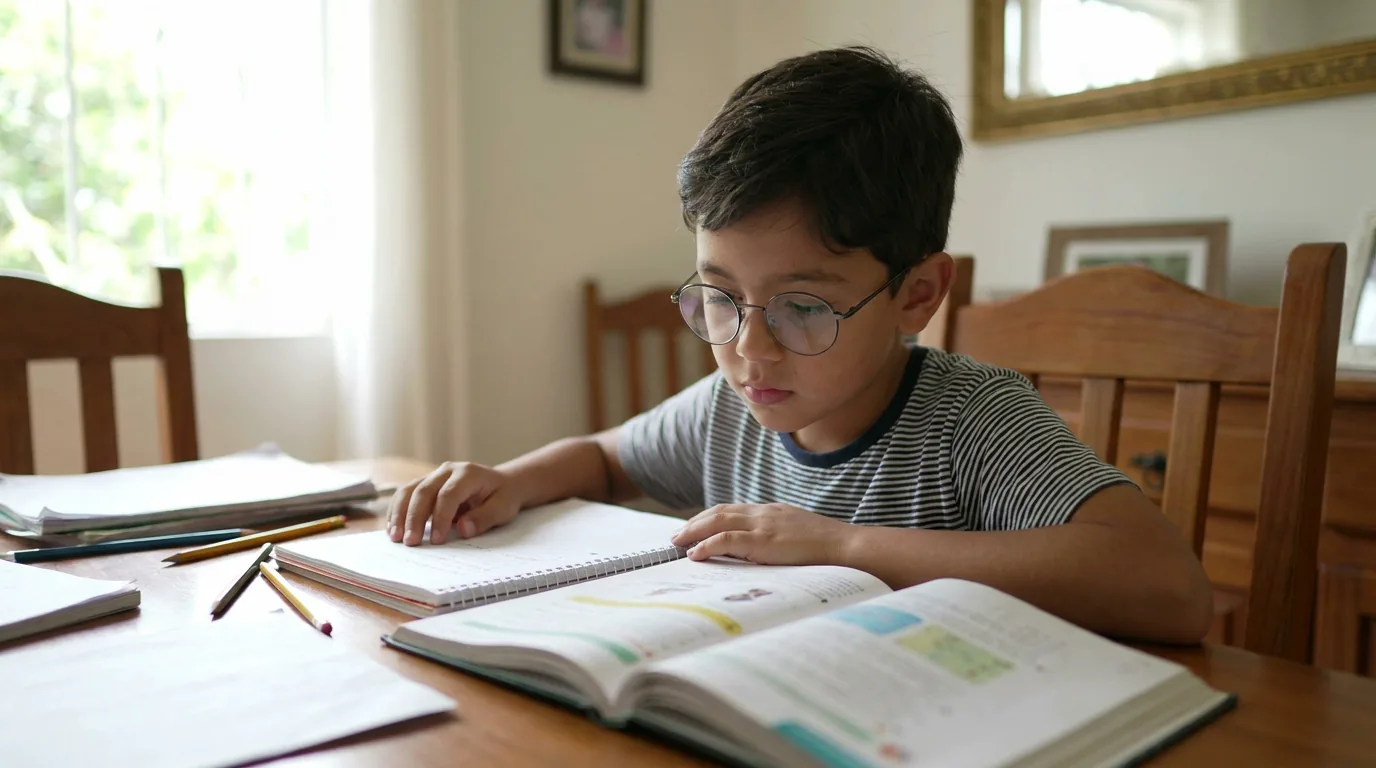
- Sitting too close to the TV, a phone, or a notebook.
- Squinting or tilting the head to focus.
- Covering or rubbing one eye frequently.
- Watery eyes, redness, or sensitivity to light.
- Falling behind in school or losing interest in reading for no clear reason.
- Complaints of headaches or eye fatigue by the end of the day.
One sign deserves special attention: if you notice an eye turning after 4 months of age, don't chalk it up to "they're still a baby." It's worth having an ophthalmologist take a look. As a general rule, the earlier any of these signs get checked out, the better the outcome.
Amblyopia and Strabismus: The Two That Matter Most
These two terms are worth knowing, because they're the ones that cost the most vision when they go unnoticed.
Amblyopia, or lazy eye, happens when the brain and one eye don't learn to work together during childhood, so the brain starts to ignore the image coming from that eye. The eye itself isn't damaged; the brain simply switches it off. It tends to happen when one eye sees much worse than the other, or when the eyes aren't aligned.
Strabismus is exactly that misalignment: one eye looks straight ahead while the other turns. Beyond being visible to the naked eye, strabismus is one of the most common causes of amblyopia, according to the National Eye Institute. That makes it more than a cosmetic issue: a turned eye can be a sign that the vision in that eye is at risk.
Dr. Gernot Winkler, a fellowship-trained pediatric ophthalmologist and strabismus specialist at Centro Láser, sums it up for parents this way: in children, time is vision. A lazy eye caught at age 4 almost always recovers; the same case at 10 is far harder to treat. The difference isn't the treatment itself, it's when treatment starts.
The Window You Can't Afford to Miss
This is the central idea of this article. Vision doesn't come pre-installed at birth: the brain learns to see over the first few years of life, and that learning has an expiration date. The critical period for visual development lasts until about age 7, and amblyopia treatment works best the earlier it starts: its effectiveness drops with age and becomes minimal after age 13, according to the American Academy of Ophthalmology.
That window is also a major opportunity. Longitudinal studies reviewed by the American Academy of Ophthalmology show that early screening can cut the prevalence of amblyopia by 45% to 60%. Few things in medicine offer that kind of return for acting early.
The practical takeaway for parents is simple: when it comes to a child's vision, don't wait. What gets caught within the window can be corrected. What gets missed can last a lifetime.
When Should the First Eye Exam Happen?
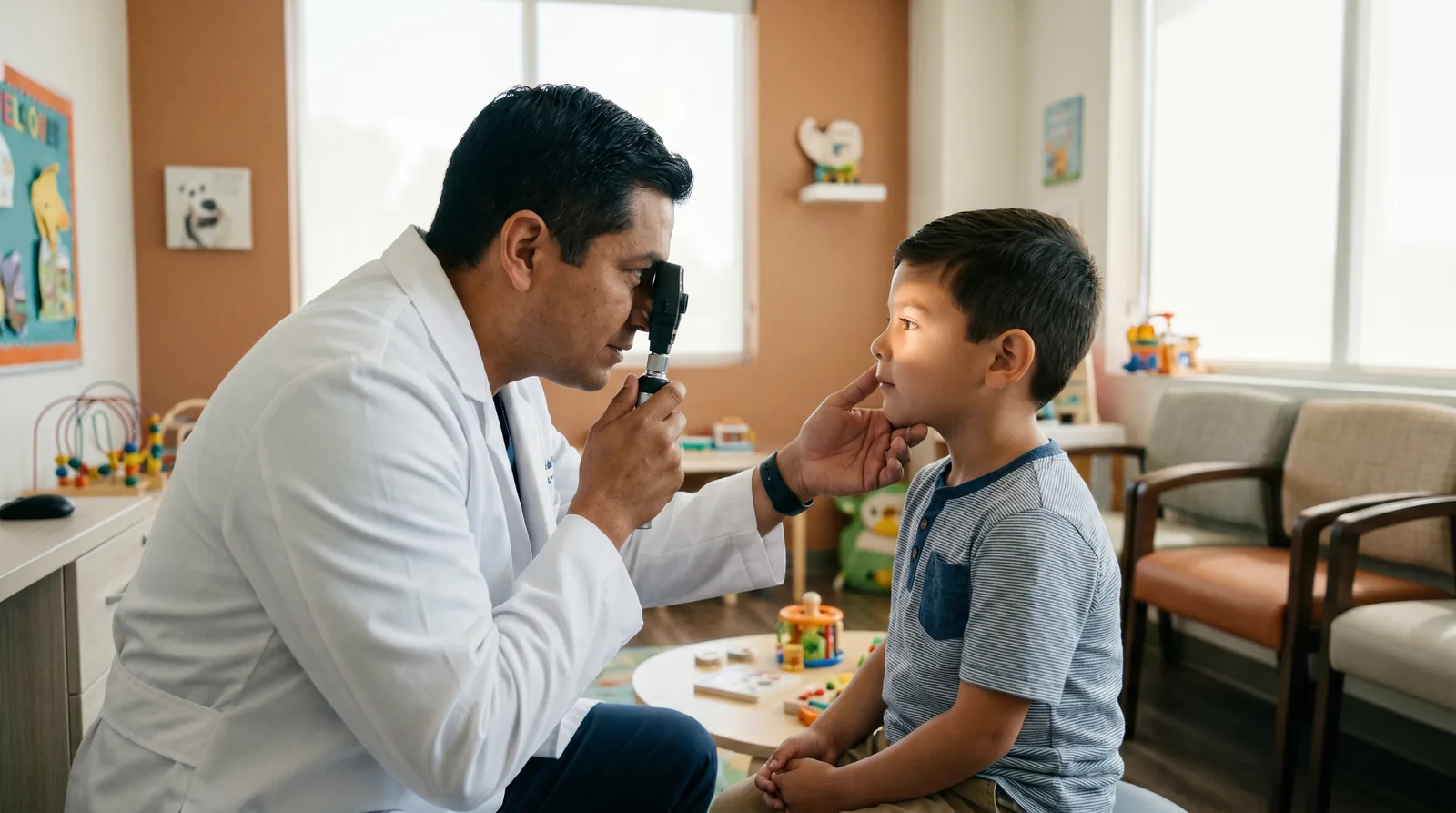
You don't need to wait until your child can read, or until they complain. Tests exist today that can evaluate a baby's vision without a single word. The general recommendation is to check every child's vision at least once between ages 3 and 5, and instrument-based screening, which doesn't require the child to read or speak, can be done as early as 12 months of age, according to the American Academy of Ophthalmology.
In practice, a pediatric eye evaluation is worth scheduling at these points:
- In the first few months, if you notice a turned eye or anything that doesn't look right.
- During the first year of life, around age 3, and before starting school.
- At any point if any of the warning signs in this article show up.
- If there's a family history of strabismus, amblyopia, or needing strong glasses from an early age.
A pediatrician's checkup is valuable, but it doesn't replace a complete eye exam when a warning sign shows up. When in doubt, a complete pediatric eye exam can settle the question quickly.
What Treatments Are Available?
The good news is that most childhood vision problems can be treated successfully when caught early. Treatment depends on the case:
- Glasses: correct nearsightedness, farsightedness, or astigmatism, and are sometimes enough to resolve mild amblyopia on their own.
- Patching or eye drops: for amblyopia, the stronger eye gets covered for a few hours a day, with a patch or with drops that blur it, to force the brain to use the weaker eye. Amblyopia treatment works best the earlier it starts.
- Strabismus surgery: when the eyes don't align, strabismus surgery adjusts the eye muscles to straighten the gaze and, in many cases, helps vision as well.
- Myopia control: when nearsightedness is progressing quickly, myopia control strategies can help slow that progression.
The plan is always built around the individual child. What doesn't change is the principle: treating within the visual development window gets the best results.
Frequently Asked Questions
At what age should my child have their first eye exam? If everything looks normal, a checkup around 6 months, age 3, and before starting school is a good rule of thumb. If you notice a turned eye or any warning sign, don't wait for those ages: get it checked right away.
Can lazy eye be cured? In most cases, it recovers very well when treated within the visual development window, especially before age 7. After that, it becomes harder to treat, which is why early detection matters so much.
If my child does well in school, does that mean they see well? Not necessarily. A child can compensate with one eye and still do fine in class while the other eye falls behind, without anyone noticing. That's why an eye exam shouldn't be decided by report cards.
Does strabismus go away on its own? An eye that's constantly turned won't correct itself and should be evaluated. Some very young infants have brief, passing misalignments, but a turned eye that persists past 4 months of age needs to be checked.
Do screens damage children's eyesight? Heavy screen use is linked to eye strain and may influence how quickly myopia progresses. Screens don't burn the eye, but it's worth balancing screen time with outdoor activity and keeping an eye on your child's prescription.
Don't Wait for Your Child to Tell You Something's Wrong
When it comes to children's vision, the best gift you can give is getting ahead of it. Since kids rarely complain, it's up to the adults around them to watch for the signs and act in time. A timely exam can be the difference between a problem that resolves in months and one that stays for life.
If you've noticed any of the signs in this article, or your child has simply never had a complete eye exam, now is the time. Schedule a pediatric evaluation at Centro Láser, in Santo Domingo, Dominican Republic, and get answers while the window is still open.
Request Your Evaluation and we'll reach out to schedule your visit.
This content is for informational and educational purposes only and is not a substitute for professional medical consultation, diagnosis, or treatment. If you have any concerns about your child's vision, please consult your ophthalmologist.
Written by Centro Láser. Clinically reviewed by Dr. Gernot Winkler, fellowship-trained pediatric ophthalmologist and strabismus specialist.