What Is a Pediatric Eye Exam?
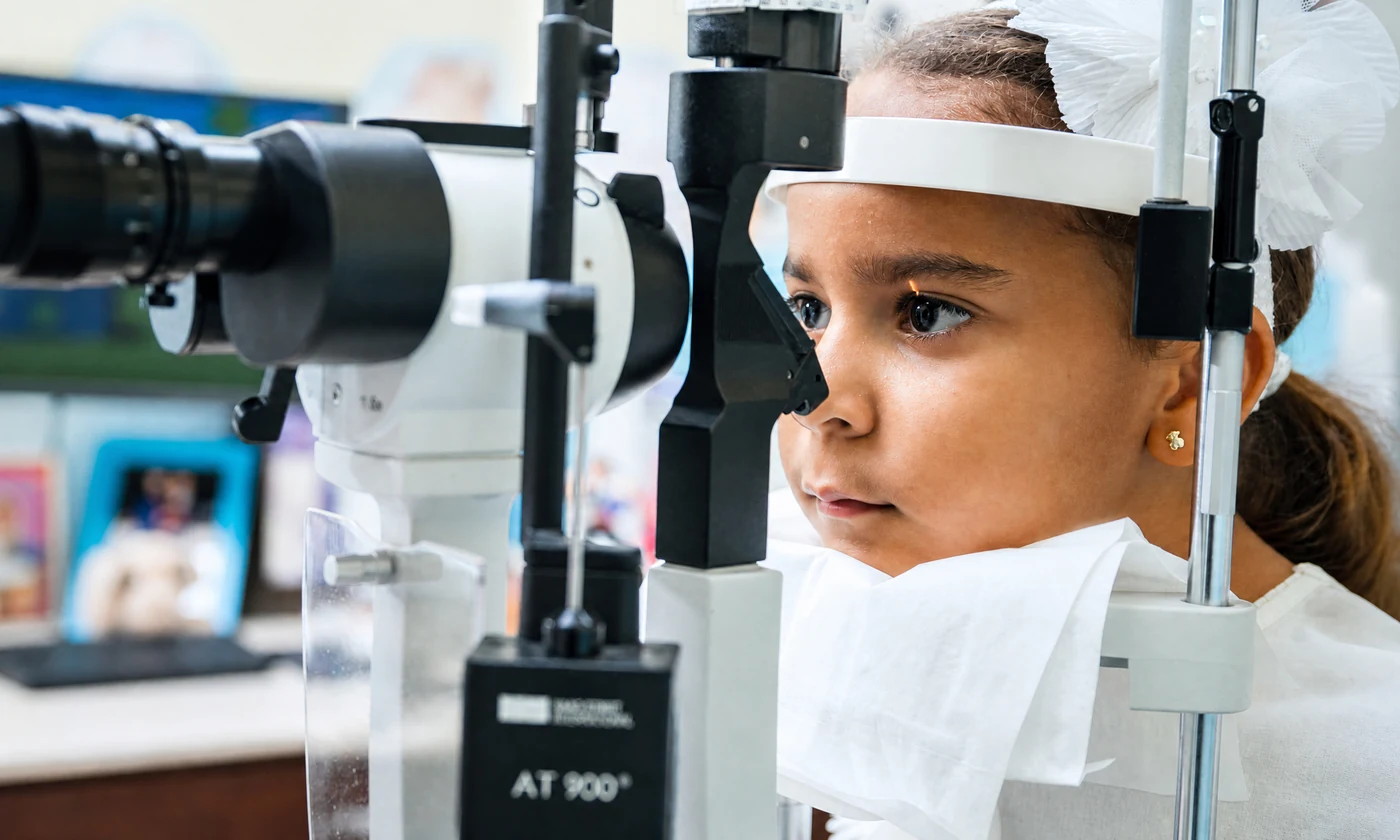
A pediatric eye exam is a complete vision evaluation tailored to a child’s age and stage of development. It’s the starting point of pediatric ophthalmology and its most valuable tool, catching early what a child can’t put into words, or doesn’t even realize is a problem.
Unlike an adult eye exam, it doesn’t require a child to read letters or answer questions. Objective methods exist to measure refractive error, eye alignment, and eye health, even in babies who can’t talk yet.
Why It Matters
Kids rarely complain about their vision, because the way they see is the only way they’ve ever known. To them, that’s just what the world looks like. That’s why many problems show no obvious symptoms and only surface during an exam:
- Refractive errors: myopia (nearsightedness), hyperopia (farsightedness), astigmatism
- Strabismus: misaligned eyes
- Amblyopia (lazy eye): one eye sees less than the other
- Retinal problems and other conditions
- Retinopathy of prematurity in preemies
Catching these early, within the window while a child’s vision is still developing (up to age 7 or 8), is what makes successful treatment possible.
When to Bring Your Child In
- First months of life: an initial checkup, especially important for preemies
- Around age 3: a check on visual development
- Before starting school: so vision issues don’t get in the way of learning
- Any warning sign: a turned eye, sitting too close to screens, squinting, or tilting the head
Preemie Retina Screening (ROP)
Premature babies, especially those with low birth weight, need a specialized dilated retina exam in the first weeks of life to check for retinopathy of prematurity (ROP), a preventable cause of childhood blindness. This screening is essential because ROP can’t be seen with the naked eye, and catching it early is what protects the baby’s vision.
What Happens During the Exam
- History and observation: background information and how the child behaves visually.
- Objective measurement of refractive error, alignment, and fixation, using age-appropriate methods.
- Cycloplegia (dilating drops) when needed, to get an accurate refractive measurement and examine the back of the eye.
- Dilated retina exam, including ROP screening for preemies.
- A plan: glasses, treatment, or follow-up based on the findings.
The exam takes 30 to 45 minutes, including dilation time.
Why Choose Centro Láser for Your Child’s Eye Exam
At Centro Láser, the pediatric eye exam is the foundation of our pediatric ophthalmology program, backed by a team known for its patience and warmth with kids and the full support of every subspecialty at the center. If the exam finds strabismus, amblyopia, or progressing myopia, treatment starts right away, no need to look elsewhere.