Rehabilitation and aids to help you see better

Low Vision

When your vision doesn’t improve with glasses or surgery, that doesn’t mean you’re out of options. Our low vision program helps you make the most of the sight you still have, with a specialized evaluation, optical aids, and visual rehabilitation to help you regain your independence.

Low vision program and visual rehabilitation at Centro Láser, Santo Domingo

What you should know about low vision

Low vision is a visual impairment that limits daily life and cannot be corrected with glasses, contact lenses, medication, or surgery. It is not total blindness: it is reduced vision that still allows you to read, get around, and live independently, as long as you have the right aids and training.

It’s usually the advanced stage of conditions like macular degeneration, glaucoma, diabetic retinopathy, or retinitis pigmentosa. The damage that’s already been done can’t be reversed, but that doesn’t mean there’s nothing left to do. It means the goal changes. It’s no longer about curing the condition, it’s about making the most of the vision you have left.

That’s the heart of our low vision program. Many people with reduced vision stop reading, cooking, or going out because they believe they no longer can. The truth is that with the right support, whether that’s a proper magnifier, a filter that cuts down glare, better lighting, or a new reading technique, many of those activities become possible again.

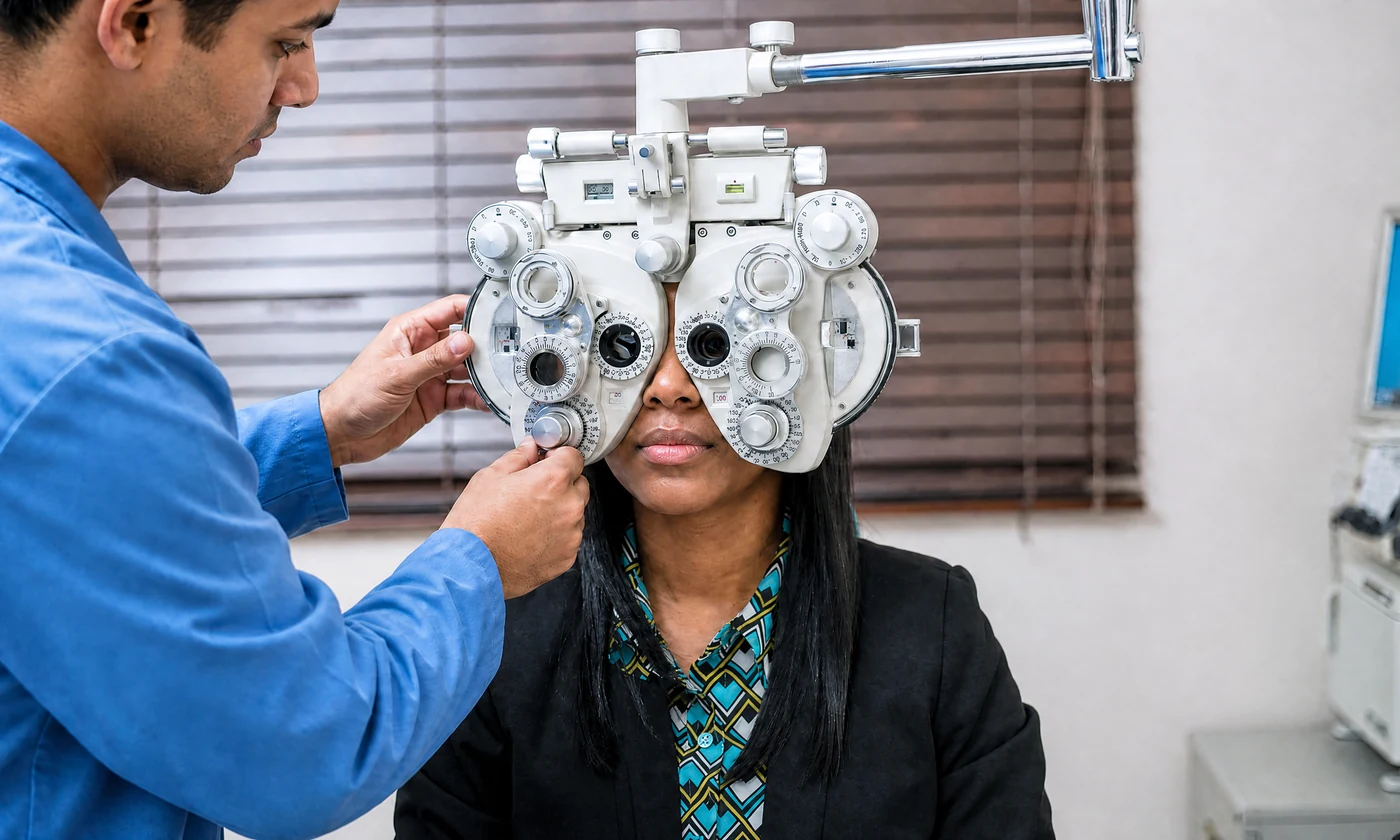
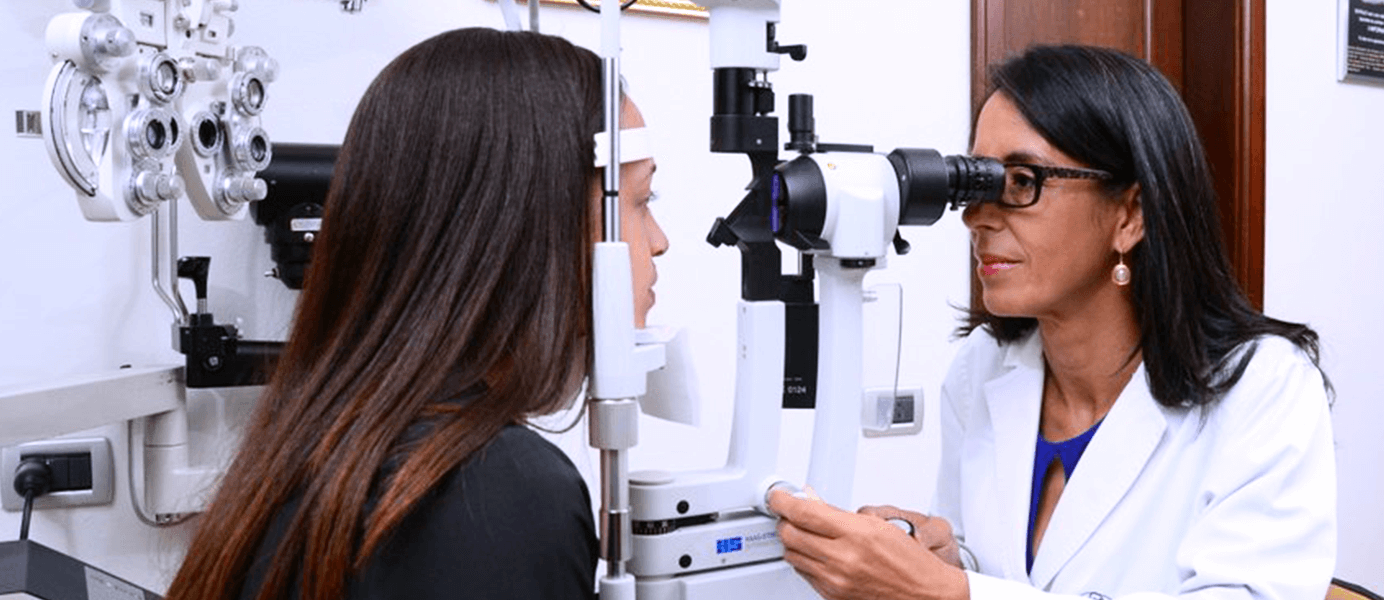
Our program combines a functional vision assessment, fitting of low-vision optical aids (magnifiers, telescopes, filters), and visual rehabilitation that teaches you how to use your remaining vision and adapt your surroundings. The goal is always the same: your independence and your quality of life.
What we
address

Each condition has its own symptoms, diagnosis, and treatment. If you recognize your symptoms in one of them, we can help.

Advanced Macular Degeneration

It’s the most common cause of low vision after age 60. As the macula deteriorates, central vision fades, making it hard to read, recognize faces, and see fine detail, even though side vision is preserved. That preserved peripheral vision is exactly what our low vision program teaches you to make the most of.

  • A blurry or empty spot in the center of your vision
  • Trouble reading and recognizing faces
  • Side vision remains intact
  • Needing much more light to see
  • A prior diagnosis of AMD

Advanced Glaucoma

Advanced glaucoma narrows the visual field from the outside in, leaving "tunnel vision" in its later stages. The damage to the optic nerve can’t be reversed, but central vision is often preserved and can be strengthened with aids and mobility training.

  • A greatly narrowed visual field (tunnel vision)
  • Bumping or tripping over objects to the side
  • Trouble getting around in unfamiliar spaces
  • Good central vision preserved in many cases
  • A prior diagnosis of glaucoma

Advanced Diabetic Retinopathy

Long-standing diabetes can leave retinal damage that surgery and laser treatment can no longer reverse, with areas of lost or distorted vision. Our low vision program helps these patients keep functioning with the vision they have left.

  • Fixed spots or dark areas in your vision
  • Fluctuating or distorted vision
  • Trouble reading and seeing at night
  • Long-standing diabetes
  • Previous retina treatments that no longer improve vision

Retinitis Pigmentosa

An inherited condition that progressively damages the retina, starting with night vision and peripheral field. It advances slowly over a lifetime. Visual rehabilitation and low-vision aids are key to maintaining independence at every stage.

  • Trouble seeing at night or in dim light (starting from a young age)
  • Progressive loss of side vision
  • Bumping into things in low-light settings
  • A family history of the condition
  • Slow, progressive narrowing of the visual field

When treatment
makes sense

You don't have to wait. Treatment is considered as soon as one or more of these signs appear.

  • Your vision doesn’t improve with glasses, contact lenses, or surgery

  • You have advanced macular degeneration, glaucoma, or diabetic retinopathy

  • You’ve stopped reading, cooking, or going out because you can no longer see well

  • Glare from light makes everyday life much harder

  • You want to regain independence in your daily activities

How we treat
this condition

Evaluation, optical aids, and rehabilitation that restore everyday function. The goal isn’t to cure, it’s to help you do what you’d given up on again.

Low Vision Assessment Starting Point

Low Vision Assessment

Measures how your vision works in real life and maps out the aids and training to get back the activities you've had to give up.

Duration
60-90 minutes
Anesthesia
Not required
Recovery
1-2 days to resume activities
Explore the procedure
Low Vision Optical Aids Custom-Fit Vision Aids

Low Vision Optical Aids

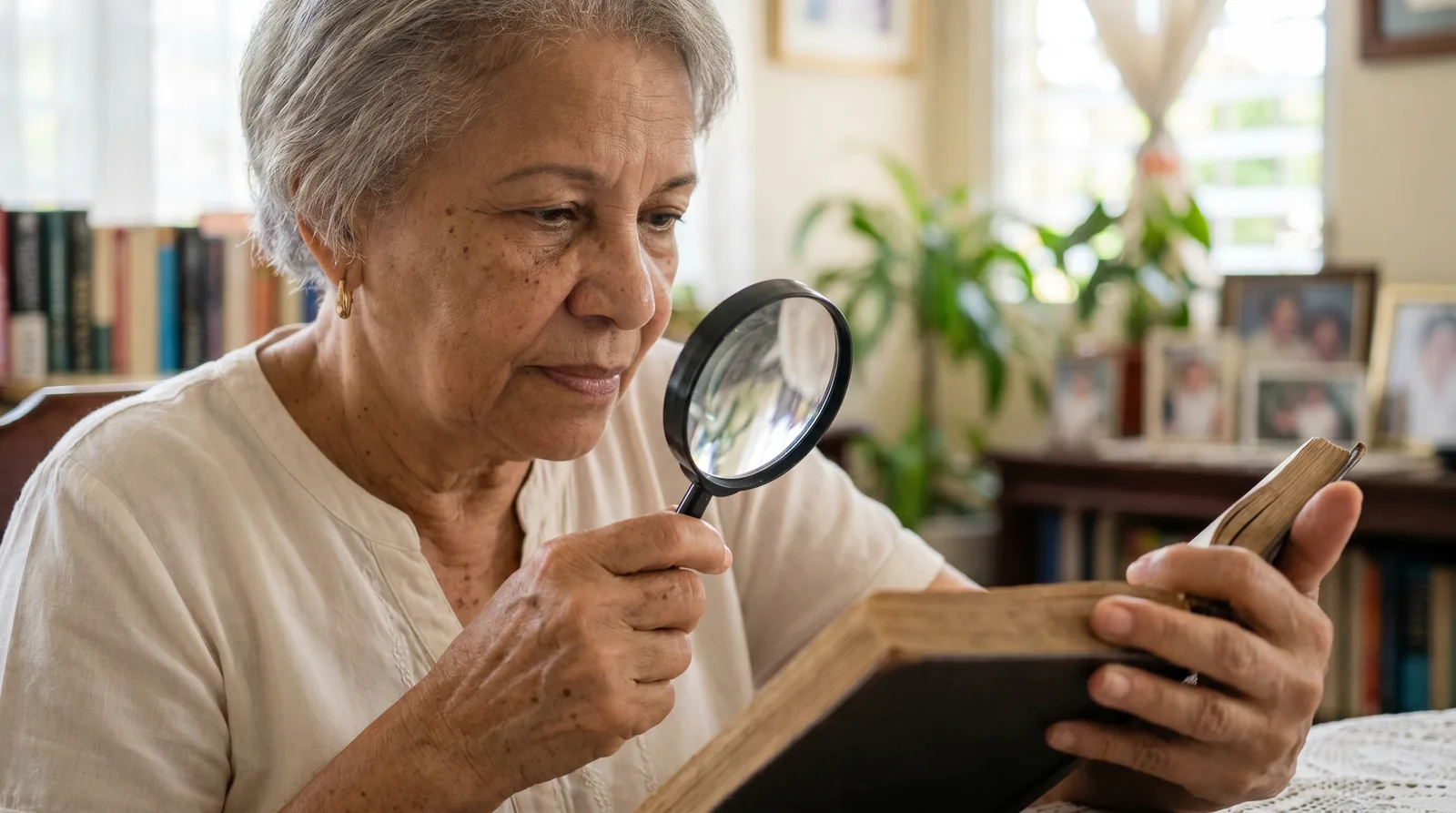
Magnifiers, telescopes, filters, and magnifying glasses fitted to each task. The right aid brings back the activities that matter to you.

Duration
Fitting over one or more visits
Anesthesia
Not required
Recovery
1-2 days to resume activities
Explore the procedure
Visual Rehabilitation Regain Independence

Visual Rehabilitation

Train yourself to use the vision you have and adapt your environment: eccentric viewing, reading, lighting, and use of optical aids.

Duration
Multi-session program
Anesthesia
Not required
Recovery
1-2 days to resume activities
Explore the procedure

Your recovery,
step by step.

Visual recovery is quick. We're with you at every post-op check until you're discharged.

01 /03

Understanding your vision and your goals

We measure how your vision works in real life and work with you to define which activities you want back: reading, recognizing faces, getting around safely.

Evaluation
02 /03

Trying and choosing the right aids

We test different optical aids and filters against your specific goals, until we find the ones that truly work for each task.

Fitting
03 /03

Learning to use them

We teach you how to get the most out of your aids and adapt your surroundings. With practice, the activities you’d given up become possible again.

Rehabilitation

Why choose us
for your care

Four concrete reasons to trust the health of your eyes to this team.

Remaining sight

Focused on the vision you have left

We don’t give up when someone hears "there’s nothing more to do." Low vision care starts right there, making the most of the sight you still have to restore what you can do.

Custom-fit

Aids tailored to you

Every person and every activity calls for a different solution. We test and fit magnifiers, telescopes, and filters around your specific goals: reading, cooking, recognizing faces.

Rehab

Rehabilitation, not just devices

We train you to use your remaining vision, including eccentric viewing, and adapt your surroundings and lighting. An aid only works when you know how to use it.

1

Backed by our whole center

We work alongside our retina, glaucoma, and other specialists who treat the underlying condition, for complete, coordinated care.

Specialized ophthalmologists
in low vision

Meet the team who will handle your evaluation, surgery, and follow-up.

How to book your visit

Four steps.
One visit.

We designed every step so you reach your treatment plan without unnecessary detours.

1 /04

Book your visit

By WhatsApp, form, or phone. Within 24 hours we confirm the day, time, and specialist at the location you prefer.

24 h
2 /04

Initial evaluation

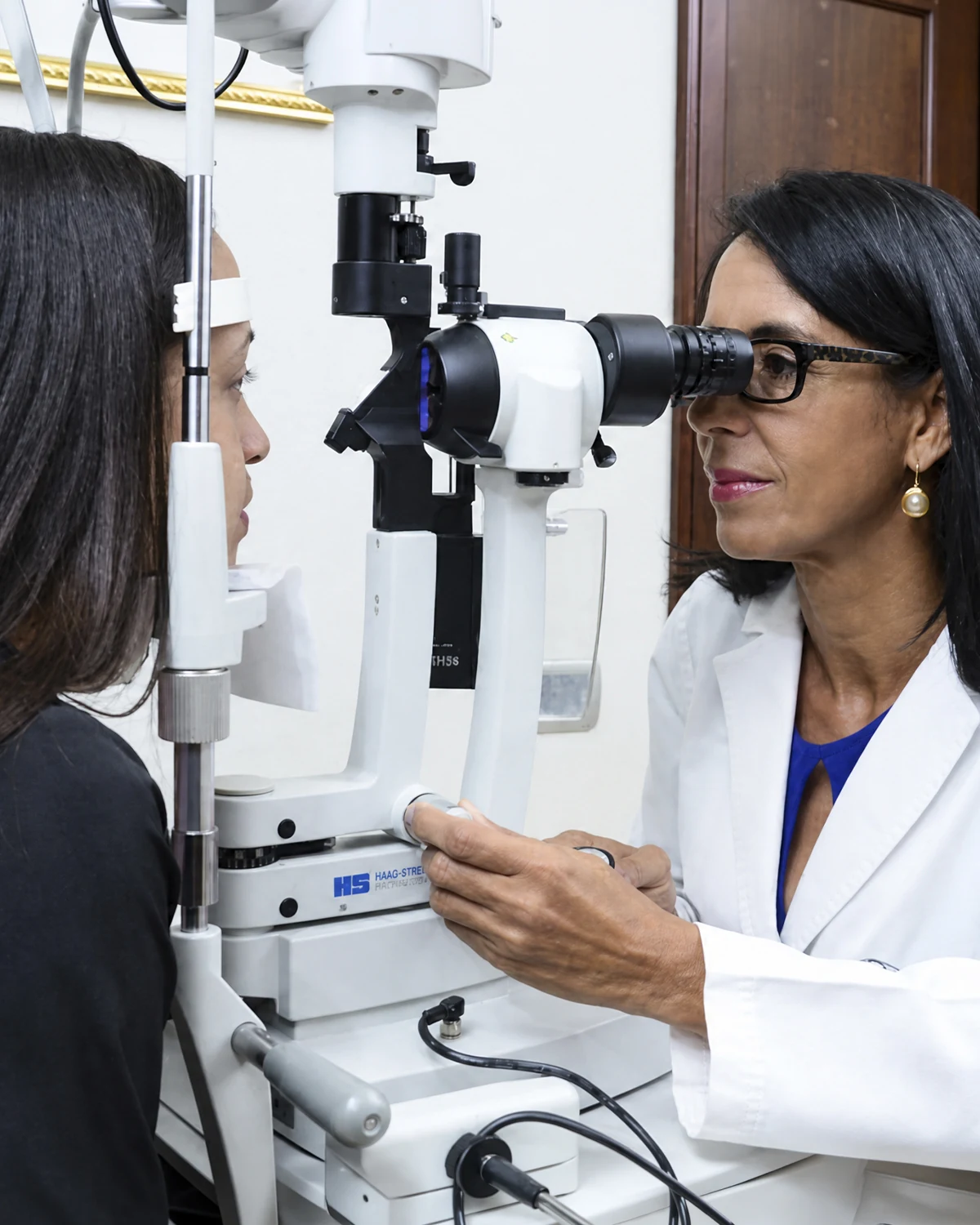
A complete eye exam with your specialist. We talk through your history, symptoms, and what you want to achieve.

45 min
3 /04

Diagnostic testing

Whatever your case calls for, done inside the center and often during the same visit.

Same day
4 /04

Treatment plan

Your doctor walks you through options, costs, and next steps. You decide with clear information.

Next steps

We accept the country's
major health plans

Most plans cover surgery with standard options. Premium options may require a copay.

Learn more
about low vision

Patient guides reviewed by our specialists.

About
low vision

It’s a loss of vision that limits daily life and can’t be corrected with glasses, contact lenses, medication, or surgery. It’s not total blindness: the person retains useful vision, just reduced. Our low vision program isn’t about curing the condition (the damage already done can’t be reversed); it’s about helping you make the most of the vision you have so you can regain independence in your daily activities.

When someone says "there’s nothing more to do," they usually mean there’s no treatment that can cure or reverse the damage. But that’s not the same as there being nothing left to do for your quality of life. Low vision care starts exactly at that point. With the right aids and training, many people who had stopped reading, cooking, or going out are able to do so again. The goal shifts from curing to functioning.
The most common are macular degeneration (the leading cause after age 60), advanced glaucoma, diabetic retinopathy, and retinitis pigmentosa. In their advanced stages, all of them leave damage that can’t be reversed. Our low vision program works with the vision these conditions leave behind, in coordination with the specialists who treat the underlying disease.

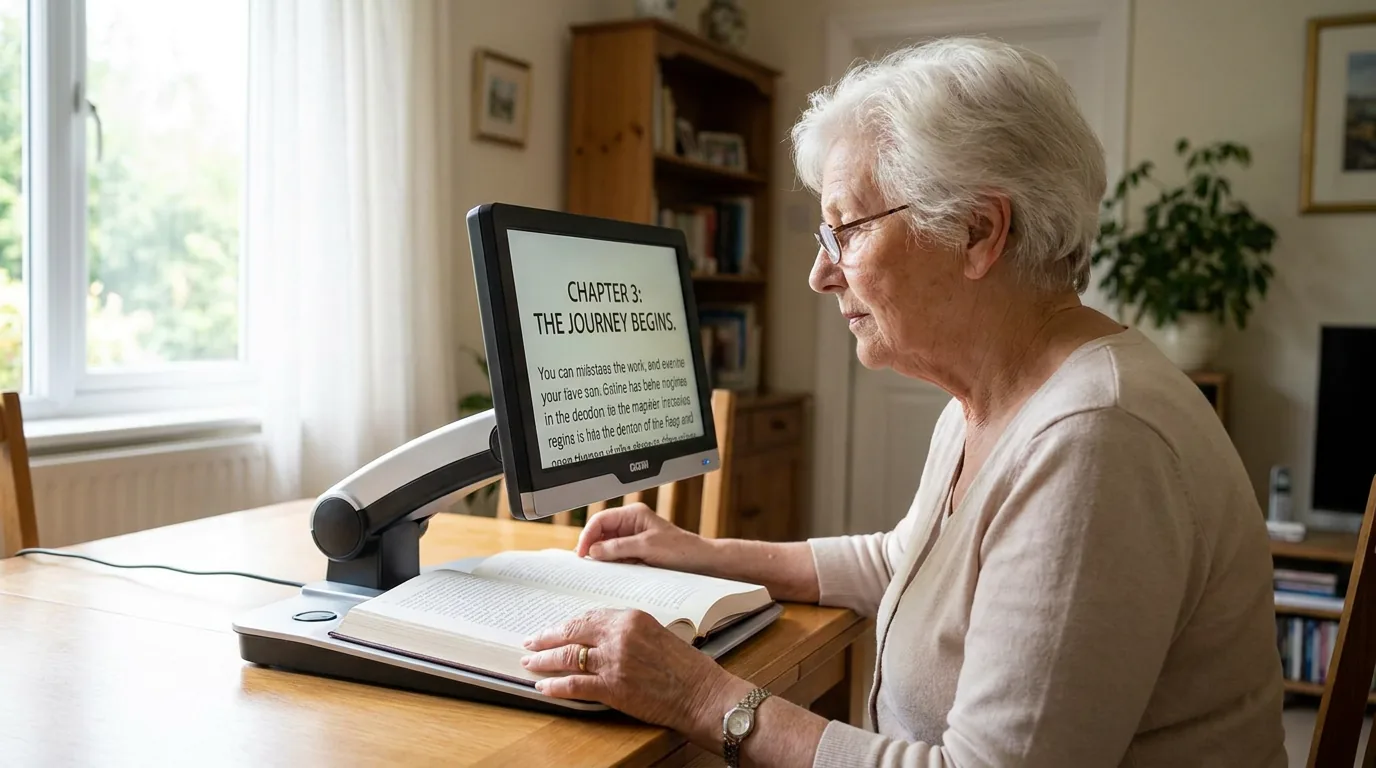
Many, chosen based on your goals: magnifiers (handheld, stand, or electronic) for reading, telescopes for distance tasks like watching TV or reading signs, specialized filters that reduce glare and improve contrast, and high-magnification glasses. The key isn’t the most expensive aid, it’s the right one for the task you want back and for your type of vision.

It’s training to make better use of the vision you have and to adapt your surroundings. It includes techniques like eccentric viewing (learning to look slightly "off-center" when your central vision is damaged), reading strategies, improvements to lighting and contrast at home, and learning to use your aids correctly. Aids truly work once you know how to use them, and that’s what rehabilitation teaches.

No, although it’s more common with age because the conditions that cause it are too. It also affects younger people with conditions like retinitis pigmentosa, complications from diabetic retinopathy, or damage from other diseases. Our low vision program adapts to every age and to each person’s goals, whether that’s studying, working, or staying independent at home.

It’s important to be honest here: low-vision aids don’t restore lost vision or cure the underlying condition. What they do is maximize and simplify the use of the vision you have, so you can go back to doing specific tasks you’d given up on. The difference in quality of life can be enormous, even though the vision itself doesn’t change. The goal is function and independence, not getting your old eyesight back.

It’s different from a standard eye exam. Instead of focusing only on your prescription, it evaluates how your vision works in real life: how much you can see, what’s hardest for you, how you handle contrast and glare, and which activities you want back. From there, we test specific aids with your goals in mind. It’s a functional evaluation, centered on what you want to be able to do again.

Not at all. Low vision care complements, it doesn’t replace, treatment of the underlying condition. You should keep up with your retina, glaucoma, or other specialty checkups, since many of these conditions need ongoing treatment to keep from getting worse. Our low vision program works in coordination with those specialists, all within the same center.

Where to
find us

Centro Láser Naco

C/ Fantino Falco #3, Ensanche Naco, Santo Domingo
+1 809 563-1324
Mon-Fri 7:30am – 5:00pm | Sat 7:30am – 12:00pm

Centro Láser Megacentro

Av. San Vicente de Paúl 321, Megacentro, Santo Domingo Este
+1 809 563-1324
Mon-Fri 7:30am – 5:00pm | Sat 7:30am – 12:00pm

Legacy Eye Clinic

C. Ing. Juan Paradas Bonilla 11, Santo Domingo

Make the most of the vision you have

An evaluation with our low vision program. Personalized optical aids and rehabilitation to help you regain your independence and quality of life.