Vision Rehabilitation for Low Vision in Santo Domingo
Vision rehabilitation helps people with low vision read, get around, and live independently. See what it involves and where to find it in Santo Domingo.
When someone loses vision and hears "there's nothing more we can do," it feels like the end of the road. But that sentence often isn't the whole truth. Even when lost vision can't be restored, a great deal can still be done to help someone read again, get around safely, and regain independence. That's what vision rehabilitation does, and it's available right here in Santo Domingo.
This guide walks through what vision rehabilitation is, what it includes, who it's for, and how to access it, because understanding it can completely change life for someone with low vision, and for their family too.
What Is Low Vision?
Low vision is vision loss that glasses, contact lenses, medication, or surgery can't fully correct, making everyday tasks like reading, cooking, recognizing faces, or getting around safely much harder, according to the National Eye Institute. It isn't the same as total blindness. Most people with low vision still have some usable sight, and that remaining vision is exactly what rehabilitation builds on.
It's usually caused by conditions like macular degeneration, glaucoma, diabetic retinopathy, and other diseases that damage vision in ways regular glasses can't fix, according to the same source.
Understanding this is the first step, because having low vision doesn't mean running out of options. It means shifting the goal, from trying to "see like before" to making the most of the vision that's still there.
What Is Vision Rehabilitation?
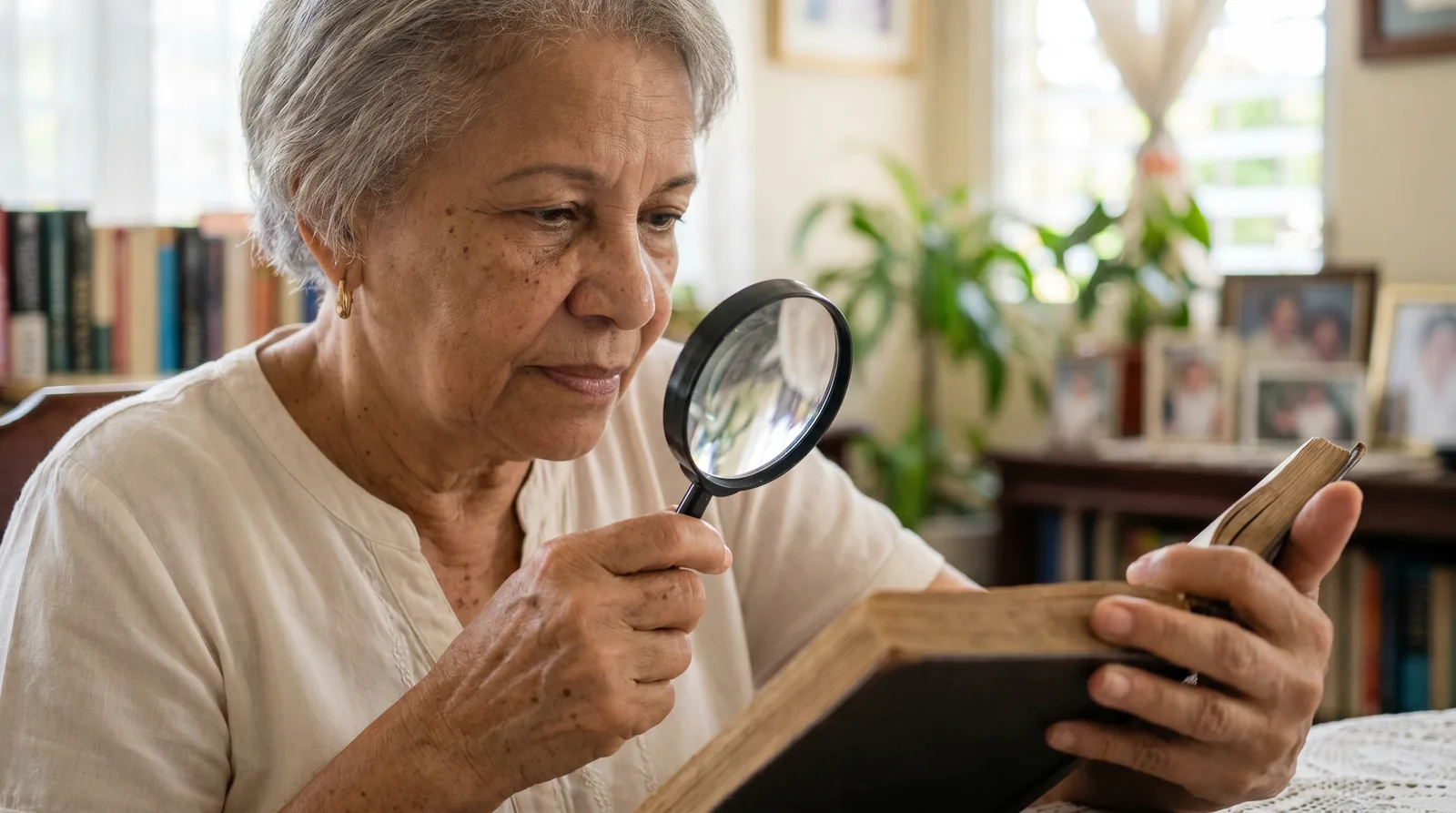
This is where the mindset shift really matters. Vision rehabilitation doesn't cure or restore lost sight, but it helps people make the most of the vision they have left so they can regain their independence, according to the American Academy of Ophthalmology. The goal isn't to bring back eyesight. It's to bring back the ability to do things: read a prescription label, see a grandchild's face, walk without fear of tripping.
It works a lot like other kinds of rehabilitation. Just as someone relearns how to move after an injury, a person with low vision learns to use their remaining sight with the right strategies and tools. It isn't about giving up. It's about retraining and adapting.
That's what makes vision rehabilitation so powerful. It works with what's still possible, and in practice, it gives people back a sense of independence they thought they'd lost for good.
What Does Vision Rehabilitation Include?
Vision rehabilitation is a set of resources tailored to each person's vision and goals, according to the American Academy of Ophthalmology. It typically includes:
- Low vision evaluation: a specialized exam that measures what vision remains and what it can be used for.
- Optical aids: magnifiers, special lenses, and telescopes that enlarge and bring objects closer.
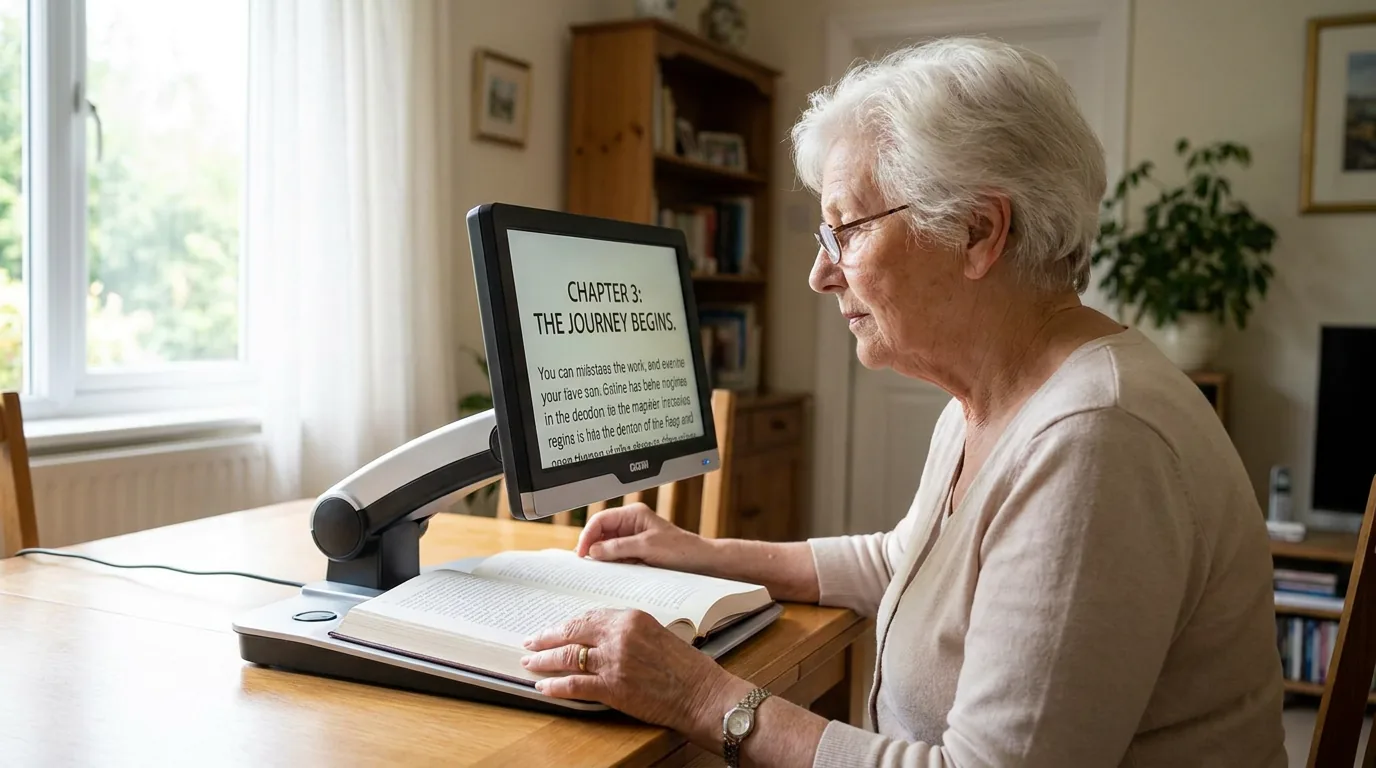
- Electronic aids: digital magnifiers, screen-enlarging software, and text-to-speech tools.
- Lighting and contrast: simple changes at home that make a huge difference in how well someone can see.
- Training and adaptations: learning to use remaining vision, organizing the home environment, and relearning everyday tasks.
- Support from a rehabilitation team: depending on the case, occupational therapy or orientation and mobility training can help someone recover daily tasks and get around safely.
Not everyone needs the same combination. The real value is in matching the right tools to each person, with a plan built around the activities that matter most to them.
How Does It Change Daily Life?
Examples make this easier to picture. With vision rehabilitation, many people go back to reading the newspaper or a book with an electronic magnifier. They learn to identify bills and coins, recognize loved ones' faces using specific viewing strategies, manage their medications without fear of mixing them up, cook using tactile markers and strong contrast, and keep using their phone thanks to built-in accessibility features.
These may sound like small wins, but they restore dignity and independence. Regaining even one of these abilities changes a person's life, and the lives of the people around them, and it's rare to stop at just one.
Who Is It For?
Vision rehabilitation is for anyone whose vision can't be fully corrected with glasses, contact lenses, medication, or surgery, when that vision loss is making daily life harder. There's no need to wait until sight is "almost gone." The sooner someone gets help, the sooner they regain independence.
It's especially valuable for older adults with macular degeneration, people with advanced glaucoma or diabetic retinopathy, and anyone who feels their limited vision is taking away their independence. To better understand why low vision isn't the same as blindness, we cover that in our guide on low vision and rehabilitation.
It's also a huge relief for families, who often don't know how to help and are glad to discover there's a real path forward.
Emotional Well-Being Matters Too
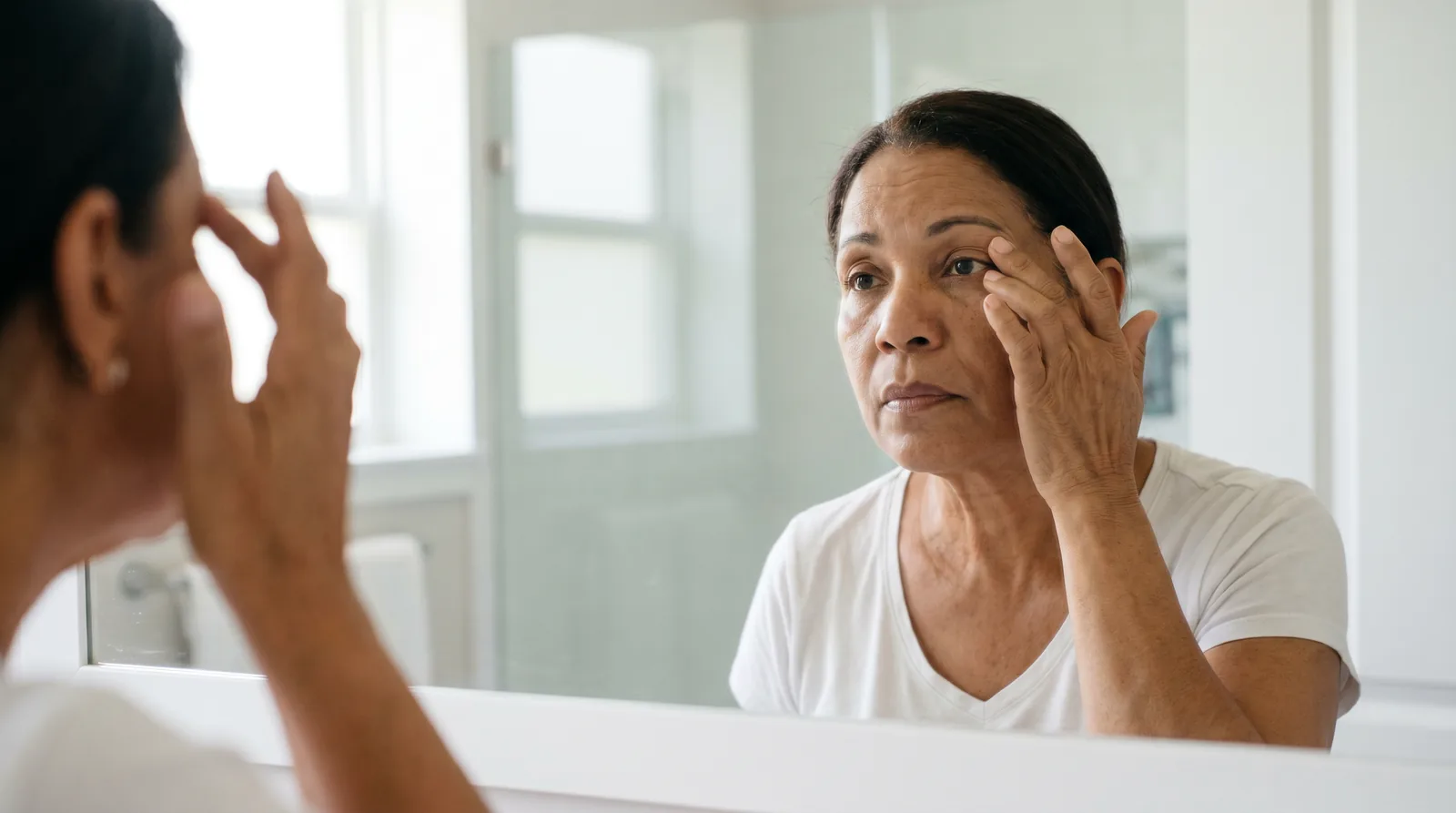
Vision loss doesn't just affect the eyes. It often brings frustration, isolation, and in many cases sadness or depression, especially when someone feels they're losing their independence, as the National Eye Institute also points out. Recognizing that is part of good care.
Vision rehabilitation helps here too. Regaining the ability to do things independently lifts mood and helps people stay connected to others. Family plays a huge role too: supporting without hovering, encouraging the use of aids, and celebrating every bit of progress. No one should have to face low vision alone.
Vision Rehabilitation in Santo Domingo
One of the biggest challenges for people with low vision in the Dominican Republic has been finding specialized care close to home. The good news is that Santo Domingo now offers a specialized low vision evaluation and a rehabilitation plan built around the right aids for each patient.
Having this care nearby matters enormously. It allows for ongoing follow-up, adjusting aids as needs change over time, and supporting both the patient and their family throughout the process. Low vision isn't solved in a single visit. It takes ongoing care that adapts over time.
The key is taking that first step: a low vision evaluation that defines what's possible in each specific case.
Frequently Asked Questions
Will vision rehabilitation restore my sight? No, it won't restore vision that's already been lost, and it's important to know that going in. What it does is help you make the most of the vision you still have, through aids and training, so you can regain independence in daily life.
Does it still help if I can barely see? Yes. Rehabilitation works with any amount of usable vision, and there are aids and strategies even for very limited sight, including tools that read text out loud. Your evaluation will determine what's possible in your specific case.
What counts as a low vision aid? These are tools that make it easier to see and function: magnifiers, telescopes, electronic magnifiers, screen-enlarging or screen-reading software, and lighting and contrast adjustments. They're chosen based on what each person needs to do.
At what age is this done? At any age. It's very common in older adults because of macular degeneration, but it also applies to younger people with vision loss from other causes.
Do I have to stop seeing my regular ophthalmologist? No. Vision rehabilitation works alongside the treatment for your underlying condition, not instead of it. You keep treating the cause with your specialist while also working to regain function.
Can low vision cause depression? Vision loss can affect mood and increase isolation, especially when it comes with a loss of independence. That's why regaining autonomy through rehabilitation, along with support from family, matters just as much as optical aids. If sadness persists, it's worth bringing up during your visit.
Are low vision aids expensive? Options range widely, from simple, affordable magnifiers to more advanced electronic devices. Your evaluation helps identify exactly what you need, starting with the simplest option that meets your goals.
How do I get started? With a low vision evaluation. That visit measures your vision, talks through your goals, and builds a plan with the right aids and training for you.
You Can Regain Your Independence
Having low vision isn't the end of the road, and "there's nothing more we can do" is almost never the last word. Vision rehabilitation exists to give back what matters most: the ability to read, get around, and live independently, by making the most of the vision that remains.
If you or a family member are living with vision loss that glasses can no longer fix, don't settle before exploring this option. Book a low vision evaluation at Centro Láser, and let's find out together how much independence can be regained.
This content is for educational and informational purposes only and is not a substitute for professional medical consultation, diagnosis, or treatment. Vision rehabilitation is planned during a personalized low vision evaluation and does not replace treatment for the condition that caused the vision loss.