Femtosecond Laser vs. Standard Cataract Surgery: Which One?
Femtosecond laser or standard phacoemulsification for cataract surgery? Here's how they differ, what the evidence shows, and how to choose.
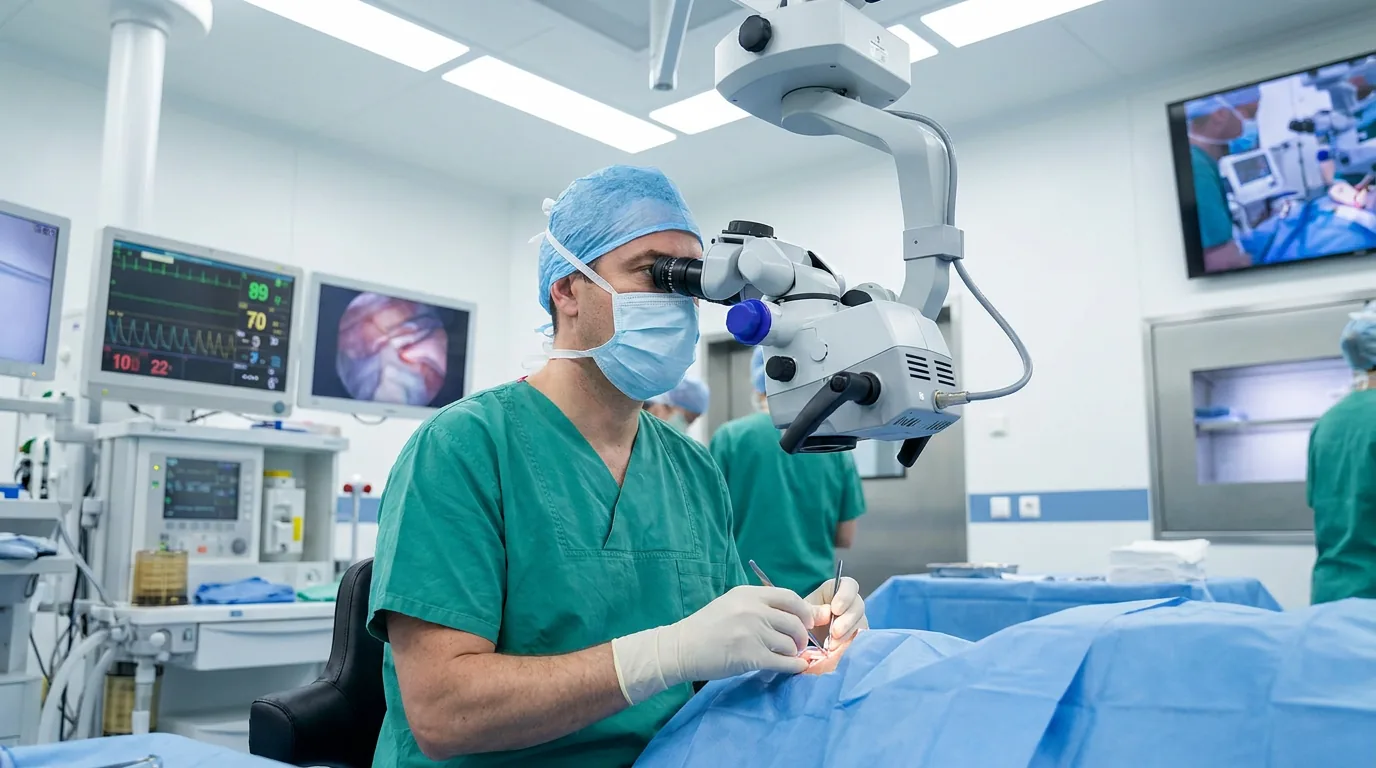
If you've been told you have a cataract and started researching your options, you've probably come across two very different sounding words: "laser" and "phacoemulsification." And the obvious question follows: which one is better? The short, honest answer is that both are excellent, and the decision has less to do with marketing and more to do with your particular case.
Let's start with the reassuring part: cataract surgery is one of the most common and effective procedures in medicine, and about 9 out of 10 people see better afterward, according to the National Eye Institute. Whichever technique is used, you're looking at a mature, extensively studied surgery.
Let's get into the real differences, without the hype.
What Is Cataract Surgery?
A cataract is a clouding of the eye's natural lens that develops over the years, making your vision look like you're looking through a foggy window. Cataract surgery removes that clouded lens and replaces it with a clear, artificial intraocular lens, according to the American Academy of Ophthalmology.
If you're still weighing whether it's time for surgery or how to know when the moment has come, we cover that in our guide to cataract symptoms and when to have surgery. Here, we're assuming you already know you need the surgery and want to understand the technology behind it.
What changes between the two techniques isn't the goal, since that stays the same. It's how certain steps get done.
Phacoemulsification: The Gold Standard
Phacoemulsification, or "phaco," is the most widely used technique in the world and the benchmark everything else gets measured against. The surgeon makes a very small incision and, using an instrument that emits ultrasound waves, breaks up the clouded lens and gently suctions it out. The intraocular lens is then implanted in that same spot, according to the American Academy of Ophthalmology.
It's an outpatient procedure, just minutes long in experienced hands, typically done with numbing eye drops and followed by a generally quick recovery. Decades of use and millions of surgeries back it up.
Being "the standard" doesn't mean it's outdated. It means it's the benchmark, the proven technique that consistently delivers excellent results.
Femtosecond Laser Cataract Surgery: What It Adds
Femtosecond laser assisted cataract surgery adds a layer of automation. Before the main part of the procedure, a laser guided by detailed images of your eye handles a few steps that, in phaco, the surgeon does by hand: the incisions, the circular opening in the capsule that surrounds the lens, and an initial breakup of the lens itself, according to the American Academy of Ophthalmology.
The idea behind it is precision and repeatability: making certain steps extremely exact and consistent from one surgery to the next. In some specific cases, such as very dense cataracts or certain eye anatomies, that precision can be a technical advantage your surgeon may value.
So far, it sounds like the laser "wins." But the evidence tells a more nuanced story, and it's worth knowing before you decide.
Is the Laser Better Than Phacoemulsification?
This is the million-dollar question, and it deserves a straight answer. The available evidence doesn't show that femtosecond laser surgery produces better visual outcomes or fewer complications than phacoemulsification. Overall, both techniques achieve comparable results, according to a systematic review from the Cochrane Collaboration, one of the most rigorous sources for evaluating medical evidence.
In other words: the laser is an excellent tool, but it isn't automatically superior. A well-performed phaco procedure by an experienced surgeon delivers top-tier results. That's why, when a clinic markets the laser as a guarantee of "better vision," it's promising more than the science actually supports.
What is true is that choosing a technique is a clinical conversation, not a trend to follow. Your surgeon weighs your type of cataract, your eye's anatomy, the lens being implanted, and your expectations. Sometimes the laser adds real value; sometimes phaco is exactly the right choice for you. Neither one is a shortcut.
The Intraocular Lens Matters as Much as the Technique
Here's something many people don't realize, and it usually has more of an impact on your everyday vision than the laser versus phaco debate: the intraocular lens (IOL) that gets implanted. The technique removes the cataract; the lens determines how you'll see afterward.
There are several types, according to the American Academy of Ophthalmology, and the right one depends on your eyes, your visual needs, and your lifestyle:
- Monofocal: provides sharp vision at a single distance, usually far away. It's highly reliable, though you'll likely still need reading glasses to see things up close.
- Multifocal or trifocal: aims to provide good vision at multiple distances to reduce your dependence on glasses, although not every eye is a good candidate, and some people notice halos around lights at first.
- Toric: also corrects astigmatism and can be combined with either of the options above.
Choosing the right lens is a personal decision. Someone who drives a lot at night and someone who reads for hours up close may need different lenses, and that's something you'll talk through before surgery. It matters just as much as the technology used to operate.
What Determines the Price?
The cost of cataract surgery isn't a single fixed number, and understanding why helps you avoid unfair comparisons. The main factors are the technique chosen (phaco and laser surgery are priced differently), the type of intraocular lens (lenses that reduce your dependence on glasses typically cost more than a monofocal lens), the clinic's technology and medical team, and the testing and follow-up visits included in the procedure.
That's why two quotes can look very different and actually be offering different things. What matters is comparing what each one includes: technique, lens, evaluation, and follow-up care. The exact price for your case is set after your evaluation, once it's clear which technique and lens are right for you.
How Is This Decided in My Case?
The decision between laser and phaco, and especially the choice of lens, isn't made off a menu. It's made after an evaluation that examines your cataract, precisely measures your eye, and talks through how you use your vision day to day.
That evaluation also checks the rest of the eye, because conditions like retina problems or glaucoma are important to know about before surgery and can affect how much vision you regain. Knowing this ahead of time helps set realistic expectations.
A good surgeon doesn't steer you toward the most expensive technology; they steer you toward what actually works best for your case. Sometimes that includes the laser; sometimes phaco with the right lens is exactly what you need. That honesty is part of choosing the right place for your surgery.
Frequently Asked Questions
Is femtosecond laser surgery safer than phacoemulsification? The evidence doesn't show that it's safer or that it produces better vision. Both techniques have comparable, very good outcomes. Safety depends heavily on your surgeon's experience and how carefully your case is managed.
So what's the laser actually good for? It adds automation and precision to certain steps, which can be useful in specific cases. It's a good tool, not a guarantee of a better outcome on its own.
Which technique will let me stop wearing glasses? That depends far more on the intraocular lens than on the technique. Multifocal or trifocal lenses aim to reduce your dependence on glasses, but not every eye is a candidate. It's decided during your evaluation.
Is cataract surgery done on both eyes at the same time? Typically, one eye is done first, and the second eye follows weeks later, once the good result from the first is confirmed. Your surgeon will let you know the right timing for your case.
How long does recovery take? Most people notice improvement within a few days and get back to their routine with a few simple precautions. Your care team will walk you through what to do, and what to avoid, during your recovery.
Can a cataract come back after surgery? A cataract itself can't come back, since the clouded lens has been replaced with an artificial one. What can happen, months or years later, is that the capsule holding the lens becomes slightly cloudy, making your vision blurry again. That's resolved in minutes with a simple in-office laser procedure, no trip back to the operating room required.
How do I know what's right for me? With an evaluation. That's where your cataract is studied, your eye is measured, and your lifestyle is discussed to choose the right technique and lens. It's the only serious way to decide.
The Best Technology Is the One That's Right for You
The debate between femtosecond laser and phacoemulsification has a freeing conclusion: both are excellent, and neither is a magic shortcut. What truly determines your outcome is an accurate diagnosis, an experienced surgeon, and the right intraocular lens for your life.
If you have a cataract and want to understand the best option for your case, schedule an evaluation at Centro Láser in Santo Domingo, Dominican Republic. We'll walk you through your options clearly and decide together, without selling you technology you don't need.
This content is for informational and educational purposes only and is not a substitute for professional medical consultation, diagnosis, or treatment. The right technique and lens for your case are determined during a personalized ophthalmic evaluation.