What Is Myopia Control?
Myopia control is a set of treatments that slow the progression of myopia in children. It’s important to understand how this differs from standard correction: regular glasses let your child see clearly, but they don’t stop the myopia from getting worse year after year. Myopia control is aimed at exactly that problem, reducing how much the prescription increases.
It’s one of the areas that has advanced the most in pediatric ophthalmology in recent years, and it answers a growing concern among parents whose kids seem to need a new lens prescription every few months.
Why Slow Myopia, Not Just Correct It?
High myopia isn’t just about thicker lenses. The higher it climbs, the greater the risk of serious eye problems later in life:
- Retinal detachment
- Glaucoma
- Earlier-onset cataracts
- Myopic maculopathy
Slowing myopia progression in childhood lowers that risk. It’s an investment in your child’s lifelong eye health, not just a present-day convenience.
The Treatments
- Low-dose atropine drops: one drop at night that slows the progression of myopia. It’s one of the most well-studied methods.
- Peripheral defocus lenses: glasses specifically engineered to slow myopia, in addition to correcting it.
- Specialty contact lenses: peripheral defocus contacts or orthokeratology lenses (worn overnight to temporarily reshape the cornea).
The ophthalmologist selects the best fit based on the child’s age, lifestyle, and how quickly the myopia is advancing. Treatments are sometimes combined.
The Role of Habits
Medical treatments work even better alongside healthy habits that also help slow myopia:
- Time outdoors: ideally two hours a day (the factor with the strongest evidence behind it)
- Limiting screen time and prolonged close-up work
- Regular visual breaks and good lighting while studying
Who Is a Candidate?
- Children with progressing myopia, especially early-onset cases
- A prescription that jumps noticeably at each checkup
- A family history of high myopia
- The earlier treatment starts, the greater the benefit
The Process
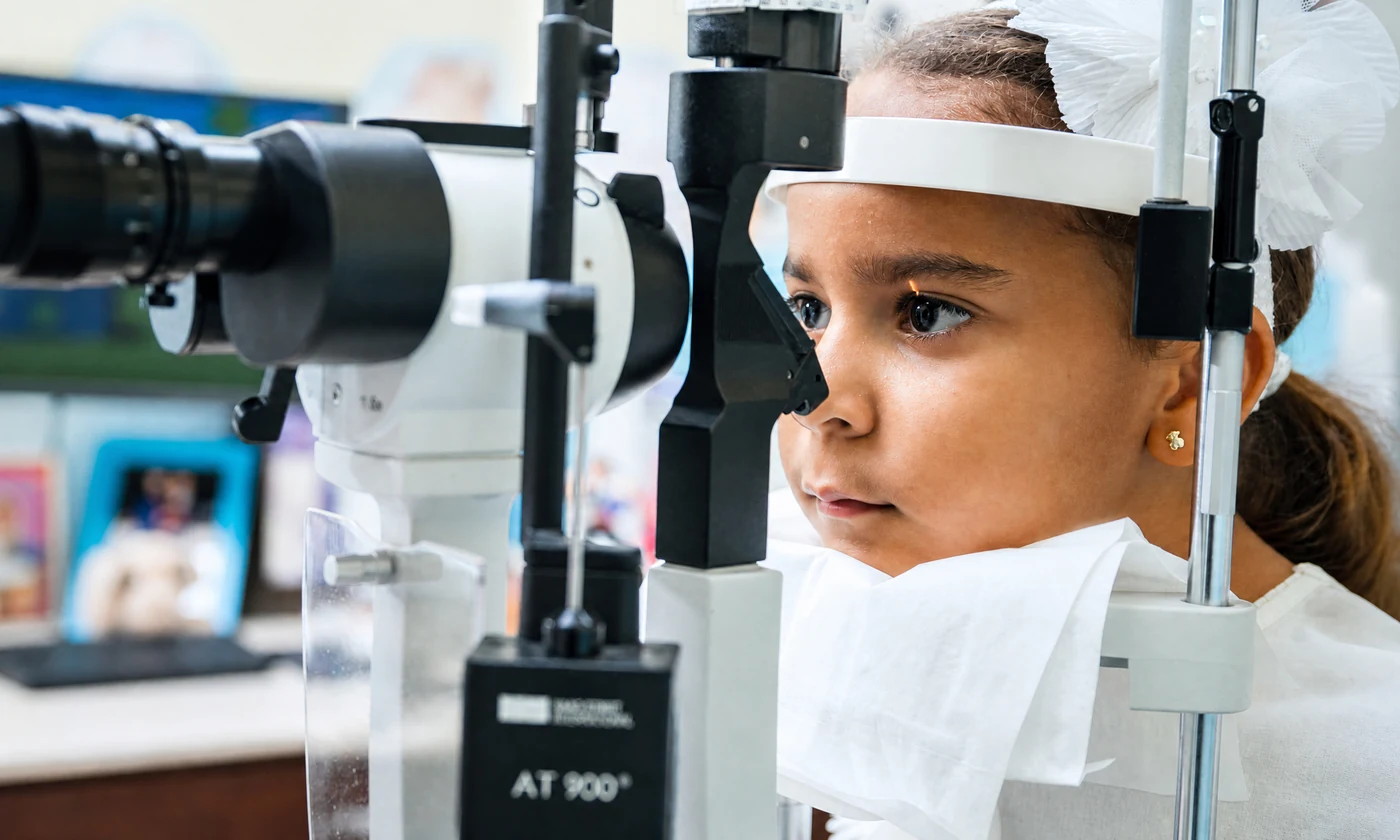
- Evaluation: measuring the prescription under cycloplegia and tracking how fast it’s progressing.
- Choosing the treatment: atropine, specialty lenses, or contact lenses, depending on the case.
- Getting started and educating the family on correct use and supporting habits.
- Regular checkups to confirm the myopia is slowing down and adjust the plan as needed.
Why Choose Myopia Control at Centro Láser
At Centro Láser, myopia control is part of our pediatric ophthalmology program. We evaluate each child to choose the most appropriate treatment and provide close follow-up to confirm the myopia is slowing, adjusting the plan at every stage of growth. We also guide the family through the habits that make a real difference.