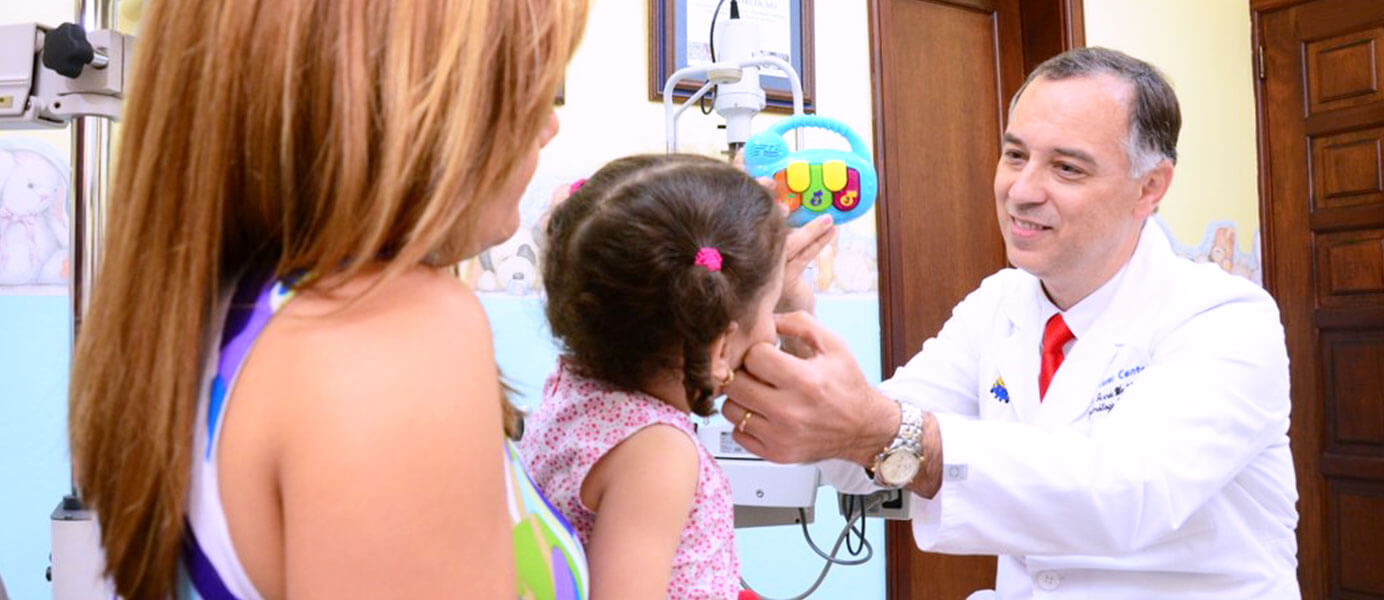
What Is Strabismus Surgery?
Strabismus, commonly known as crossed eyes, is a loss of eye alignment: one eye looks in a different direction than the other (turning in, out, up, or down). Strabismus surgery adjusts the muscles that move the eye to restore proper alignment.
Each eye has six muscles that control its movement. Surgery strengthens, weakens, or repositions whichever muscles need it to correct the misalignment. It’s performed on the surface of the eye, without entering the eye itself, and in children it’s done under general anesthesia on an outpatient basis.
More Than Cosmetic
Aligning the eyes brings real functional benefits:
- Improves depth perception (3D binocular vision)
- Helps prevent or treat amblyopia (lazy eye), because the brain stops ignoring the misaligned eye
- Relieves double vision in many cases, especially in adults
- Psychological and social benefits, particularly for children and teens
A Treatment That Works With Others
Surgery aligns the eyes, but it doesn’t always replace other treatments. A child may still need:
- Glasses to correct their prescription
- A patch if they have amblyopia
These treatments complement each other. That’s why surgery is planned as part of a complete approach to managing a child’s strabismus and vision.
Who’s a Candidate?
- Children with strabismus that glasses alone can’t correct
- Congenital strabismus (often operated on early)
- Adults with strabismus that has persisted since childhood or developed recently
- Adults with double vision from misalignment
The ophthalmologist determines the ideal timing for surgery based on the type of strabismus and the patient’s age.
The Procedure Step by Step
- Full evaluation: measuring the misalignment, and assessing binocular vision and the eyeglass prescription.
- Anesthesia: general for children, local or general for adults.
- Muscle adjustment: strengthening, weakening, or repositioning according to the surgical plan.
- Closure: the procedure is performed on the surface of the eye, on an outpatient basis.
It takes 45 to 90 minutes, depending on how many muscles are involved.
Recovery
- First to second week: red, irritated eye with mild discomfort controlled with drops
- Children usually get back to their activities within a few days
- Rubbing the eye, swimming, and strenuous activity are avoided during the recommended period
Some cases need more than one surgery over time to achieve and maintain the best alignment, especially complex ones.
Why Choose Centro Láser for Strabismus Surgery
At Centro Láser, strabismus surgery is performed within our pediatric ophthalmology program, by a team known for its warmth and patience with children. We evaluate every case comprehensively (alignment, prescription, and amblyopia) so surgery fits into a complete treatment plan, and we also care for adults who need to correct their strabismus.