SMILE vs LASIK vs PRK: How to Choose the Right Surgery
Compare SMILE, LASIK, and PRK: how each works, recovery time, and which one matches your eyes. Get evaluated at Centro Láser in Santo Domingo.

Saying goodbye to glasses and contacts is possible, and today there's more than one way to get there. The surgery that lets you stop wearing corrective lenses is called refractive surgery, and at Centro Láser we offer the three most widely used techniques in the world: SMILE, LASIK, and PRK. Which one is best? The honest answer is that it depends on your cornea, your prescription, and your lifestyle. There's no single technique that's best for everyone, only the one that's right for your eyes.
What's clear is that these procedures work. In the PROWL studies, published in JAMA Ophthalmology, between 96% and 99% of LASIK patients reported being satisfied with their vision at three months. Still, no procedure is completely free of risk, and the right technique isn't chosen based on trends or price. It's chosen after a detailed measurement of your eye.
If you've made it this far, chances are you're already thinking about surgery, and it's completely normal to feel some nerves about it too. We hear the same questions again and again: Could I go blind? What if I move my eye? Will I be asleep? Does it hurt? Let's walk through those calmly and explain how each technique differs, so you arrive at your evaluation already knowing what we're talking about.
What Is Refractive Surgery?
Refractive surgery is the group of procedures that reshape the cornea, the clear layer at the front of the eye, so light focuses correctly on the retina and you no longer need glasses or contacts to see clearly. When you have myopia, astigmatism, or hyperopia, the image doesn't focus where it should, and the laser corrects that focal point with micron-level precision.
The three techniques compared here (SMILE, LASIK, and PRK) all do the same thing at their core: reshape the cornea with a laser. What sets them apart is how the surgeon reaches the layer being treated. That difference may sound technical, but it determines your recovery, how much dry eye you feel afterward, and how good a candidate you are based on your corneal thickness.
There's something we repeat at every first consultation: the best surgery isn't the newest one or the most expensive one, it's the one your eye tolerates best over the long run. That's why at Centro Láser we measure first and recommend second, never the other way around.
LASIK: The Most Familiar Technique
LASIK is probably the name you already recognize. The surgeon creates a very thin layer on the surface of the cornea, called a flap, lifts it like a hinged lid, applies the laser to the inner layer to reshape it, and then repositions the flap, which seals on its own without stitches.
Its biggest advantage is speed. Visual improvement with LASIK typically begins within the first 24 to 48 hours, and most patients return to their daily activities the next day, according to Mayo Clinic. Full stabilization can take a few more weeks. It's a mature technique, studied for decades, with high satisfaction rates.
The trade-off? That flap stays part of your cornea afterward. For people who play contact sports or already tend toward dry eye, that detail matters, and it's worth discussing before surgery, not after.
SMILE: Surgery Without a Flap
ReLEx SMILE is the newest of the three techniques, and Centro Láser was the first clinic in the Dominican Republic to offer it. Instead of lifting a flap, the laser creates a small disc of tissue inside the cornea, called a lenticule, and the surgeon removes it through a tiny incision just a few millimeters wide. The outer cornea stays almost completely intact.
That small incision pays off for many patients: SMILE tends to cause less dry eye than LASIK during the first six months, because it preserves more of the nerve network on the corneal surface. By the one-year mark, most studies no longer find a difference between the two techniques. Still, if you spend your day in front of screens or live with the air conditioning running most of the time, common in Santo Domingo's climate, that early advantage is a real point in its favor.
Dr. Juan Batlle Logroño, a fellowship-trained cornea and refractive surgery specialist at Centro Láser, puts it this way to his patients: SMILE is appealing when the goal is to protect the cornea's structure and lower the risk of dry eye, especially for active people and athletes, because without a flap there's no thin layer that could shift if the eye takes a hit. It's not magic, and it doesn't work for everyone, but when a case is a good fit, it's a very good fit.
PRK (ASA): The Option for Thin Corneas
PRK, which at Centro Láser we perform as Advanced Surface Ablation (ASA), was the first of these three techniques, and in many cases it's still the most sensible choice. There's no flap and no lenticule here. The outermost layer of the cornea, the epithelium, is gently removed, the laser is applied directly to the surface, and the epithelium regenerates on its own over the following days.
That simplicity comes with a slower recovery. With PRK, discomfort typically lasts two to three days, peaking around day two or three. Vision improves gradually over the first few weeks, and full stabilization can take several months while the surface heals. It's not intense pain, but it's more noticeable than with the other two techniques, so it's worth planning for a few days of downtime.
So why do we still recommend it? Because when the cornea is thin, or when someone's lifestyle carries a real risk of eye trauma, skipping the flap altogether is the safer long-term choice. The American Academy of Ophthalmology agrees that for thin corneas, PRK or SMILE can be a better fit than LASIK. The oldest technique here isn't the worst one, it's the right one for a specific profile.
SMILE vs LASIK vs PRK at a Glance
Here's a side-by-side look at how the three techniques differ on what matters to patients.
| Feature | SMILE | LASIK | PRK / ASA |
|---|---|---|---|
| How it accesses the cornea | Minimal incision, no flap | Flap (thin layer) | No flap, treats the surface directly |
| Visual recovery | Fast (a few days) | Very fast (1 to 2 days) | Slower (several days) |
| Discomfort in the first days | Mild | Mild | Moderate (2 to 3 days) |
| Tendency toward dry eye | Lower | Higher | Variable |
| Thin corneas | Possible in some cases | More limited | Good option |
| Contact sports | Very favorable (no flap) | Worth discussing | Favorable |
No single row in that table makes the decision on its own. A patient with a thin cornea and an active sports schedule might lean toward SMILE or PRK, while someone with a thicker cornea who wants clear vision the next day may be a better candidate for LASIK. The table points you in a direction. The evaluation makes the call.
How Do You Know Which Technique Is Right for You?
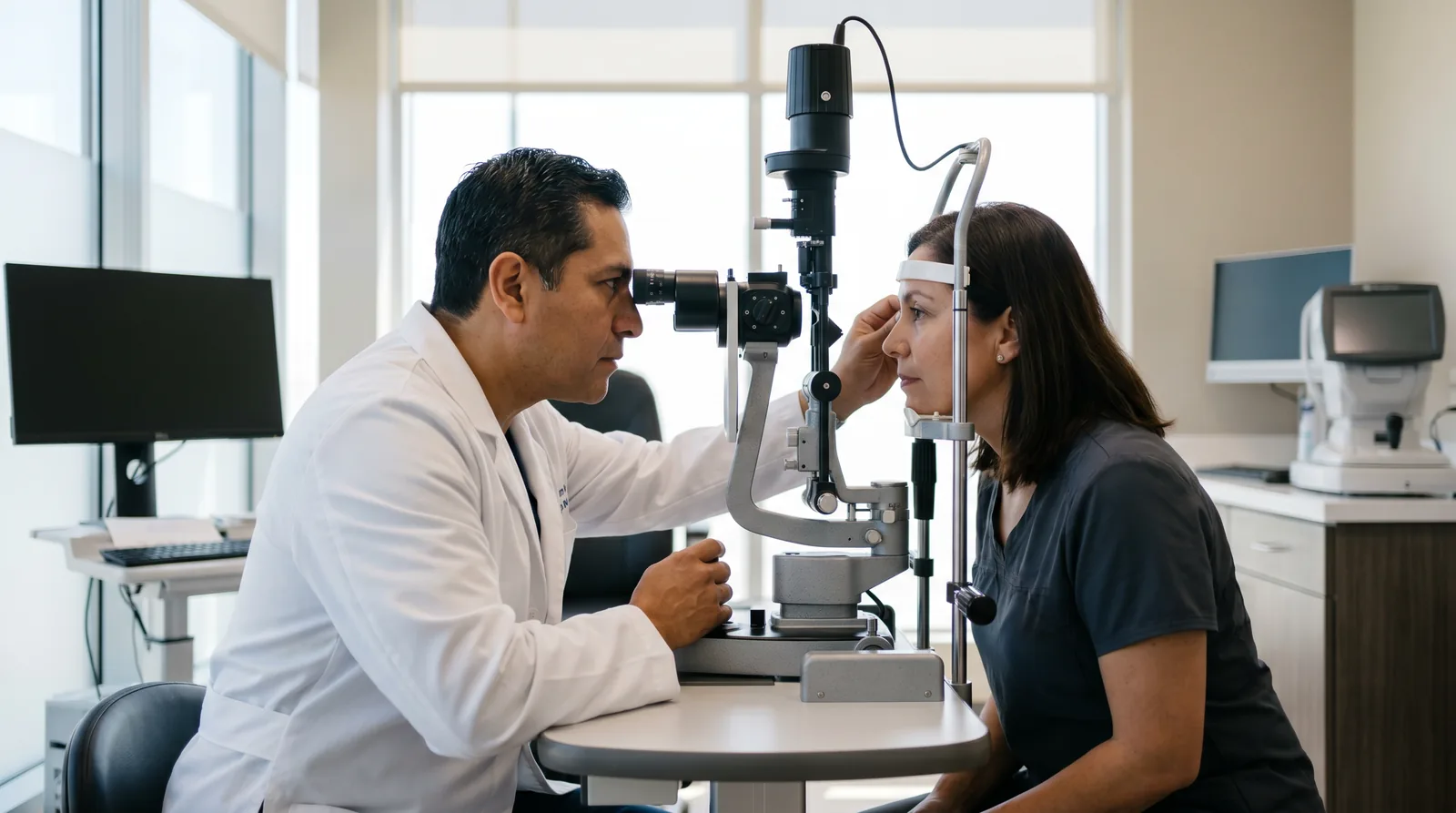
Here's the part no article can honestly answer for you, and that's by design. The right technique comes out of a preoperative workup that measures your corneal thickness and shape, your prescription, the condition of your ocular surface, and even your pupils. Two people with the exact same level of myopia can end up with different recommendations, and that's actually a good sign. It means the decision belongs to your eyes, not to a brochure.
During your consultation, we also talk through your expectations. If your prescription is very high and your cornea can't support laser surgery, sometimes the best answer isn't any of these three techniques, but an intraocular lens (IOL), and we'd rather tell you that upfront. We call this your Lifetime Vision Plan: it's not just about the surgery today, it's about taking care of your eyesight for the next thirty years.
As for the fear, it's worth being direct about it. Modern lasers use an eye-tracking system that monitors your micromovements in real time and continuously adjusts the beam. If your eye shifts beyond the allowed range, the system pauses the laser pulses and resumes once your eye is back in the correct position, so the worry about "moving and ruining everything" doesn't reflect how today's equipment works. Going blind from a routine refractive surgery is extraordinarily rare. That doesn't mean there's zero risk. Every procedure carries some, which is exactly why a thorough evaluation matters.
Frequently Asked Questions
Does surgery to stop wearing glasses hurt?
Numbing eye drops are used during the procedure, and each eye takes only a few minutes. Afterward, discomfort with LASIK and SMILE is usually mild, while with PRK you may feel burning or a foreign-body sensation for two to three days.
What happens if I move my eye during the laser?
Today's laser systems include a tracker that follows your eye movements in real time and pauses treatment if you move outside the allowed range. You don't need to hold perfectly still. The system is built for exactly that.
How long is the recovery?
With LASIK and SMILE, many patients are seeing well within one or two days. With PRK, visual recovery is more gradual and takes several days, since the surface of the cornea needs time to heal.
Can I have surgery if I have astigmatism?
In most cases, yes. LASIK and PRK correct myopia, hyperopia, and astigmatism, and the Zeiss SMILE platform also corrects myopic astigmatism, an indication the FDA approved back in 2018. Your specialist will determine at your evaluation which technique covers your case best.
Are the results permanent?
The correction of myopia or astigmatism is stable for the vast majority of patients. What surgery can't stop is the eye's natural aging process, so years down the road you may still need reading glasses for presbyopia (a separate change from what was corrected).
Take the Step Toward Visual Freedom
Stopping the use of glasses or contacts isn't just a single operation. It's an informed decision you make together with your surgeon. SMILE, LASIK, and PRK are three good paths to the same destination, and choosing well starts with measuring your eyes, not with copying someone else's experience.
At Centro Láser we offer all three techniques, so the recommendation you receive is whatever your cornea calls for, with no bias toward one option. If you want to find out which one is right for you, schedule your refractive surgery evaluation and let's talk it through with your test results on hand.
Request your evaluation and we'll reach out to schedule your visit.
This content is for informational and educational purposes only and is not a substitute for professional medical consultation, diagnosis, or treatment. If you have any questions about your eye health, talk to your ophthalmologist.
Written by Centro Láser. Clinically reviewed by Dr. Juan Batlle Logroño, fellowship-trained cornea and refractive surgery specialist.