What Is Advanced Surface Ablation?
ASA (Advanced Surface Ablation) is a laser vision correction procedure that uses an excimer laser to reshape the corneal surface directly, without creating a flap. It’s the modern, refined version of classic PRK (Photorefractive Keratectomy), built on a more detailed preoperative workup, more precise epithelium handling, and a bandage contact lens for recovery.
Unlike LASIK, ASA doesn’t lift a corneal “flap” to reach the stroma. Instead, the surgeon gently removes the epithelium (the cornea’s outermost layer) and applies the excimer laser directly to the tissue underneath. The epithelium regenerates naturally over the following days.
Why Choose ASA?
ASA is the structurally safest option because it eliminates any risk tied to a corneal flap. It’s the procedure of choice when:
- The cornea is thin and LASIK would leave too little residual tissue
- The patient plays contact sports or has a high risk of eye trauma, since a LASIK flap can shift after a blow to the eye
- Corneal topography shows irregularities or early keratoconus
- There’s a history of corneal scarring that rules out LASIK
- The patient prioritizes maximum structural safety over a faster recovery
Clinical Candidacy
ASA is appropriate for patients who:
- Are over 21 years old
- Have had a stable prescription for at least 12 months
- Have myopia, hyperopia, or astigmatism within the ranges the technique allows
- Have thin corneas or aren’t candidates for LASIK
- Lead an active lifestyle, especially athletes or those who play contact sports
- Have normal corneal topography or only mild irregularities (a full evaluation determines eligibility case by case)
Contraindications
ASA isn’t recommended for patients with:
- Active cataracts
- Uncontrolled glaucoma
- Active rheumatic disease
- History of ocular herpes simplex
- History of keloid scarring
- Severe, uncontrolled dry eye
- Active keratoconus or progressive corneal ectasia
Advantages Over LASIK
| Feature | ASA | SBK LASIK | ReLEx SMILE |
|---|---|---|---|
| Flap created | No | Yes (femtosecond) | No |
| Flap displacement risk | None | Low | None |
| Functional visual recovery | 5-7 days | 24 hours | 24 hours |
| Full stabilization | 6-8 weeks | 2-4 weeks | 2-4 weeks |
| Suitable for thin corneas | Yes | Yes (ultra-thin) | Yes |
| Suitable for contact sports | Ideal | Wait 3-4 weeks | Wait 1-2 weeks |
| Postoperative discomfort | More in the first days | Minimal | Minimal |
Step-by-Step Procedure
- Preoperative evaluation: a complete workup in a single visit. Pentacam topography, pachymetry, IOL Master 500 biometry, personalized Topolyzer biometry, OCT, iTrace (ray tracing), HD Analyzer, and specular microscopy when applicable.
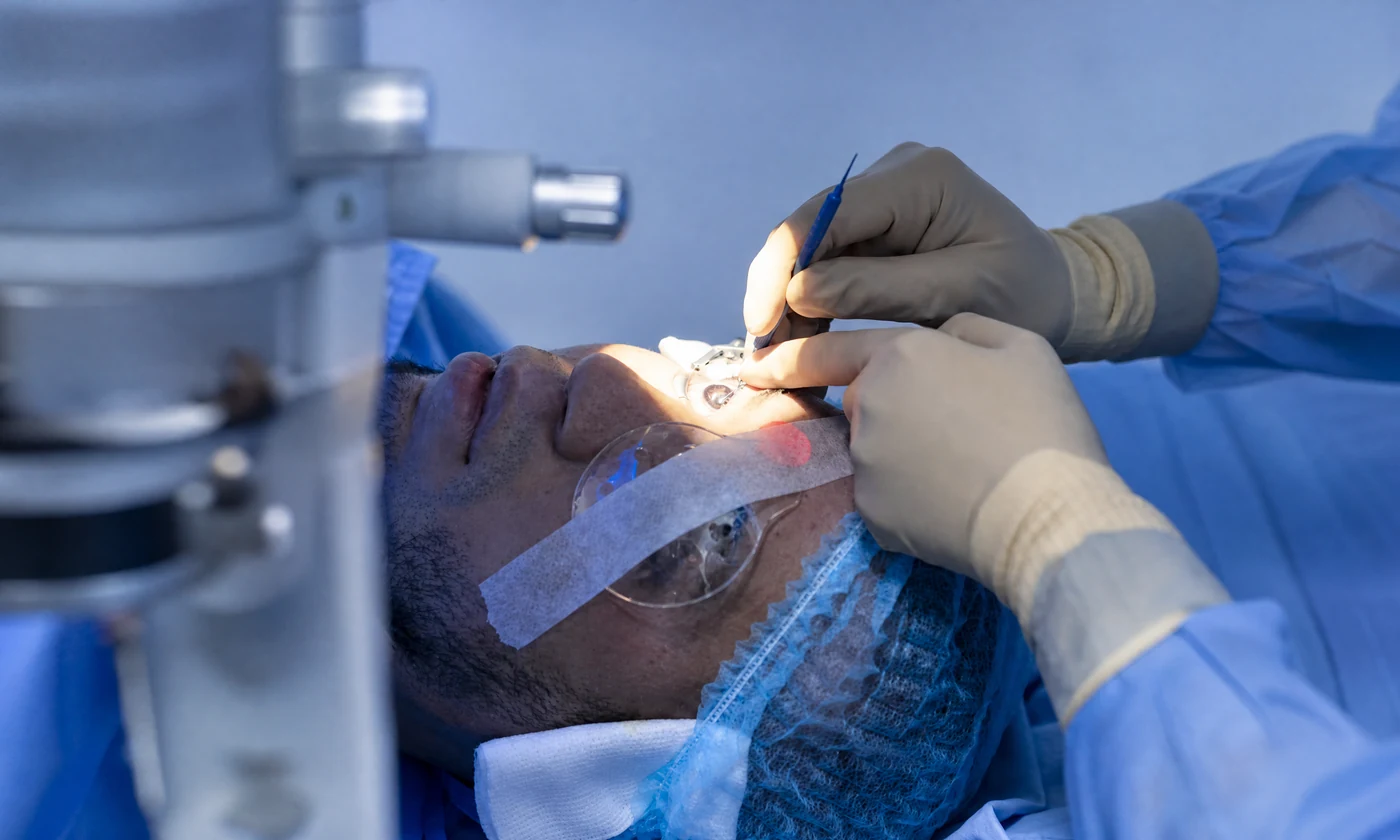
- Day of surgery: topical anesthetic drops are applied and the patient lies back under the laser.
- Epithelium removal: the surgeon gently removes the corneal epithelium in about 30 seconds, with no pain thanks to the anesthetic.
- Excimer laser application: the laser removes corneal tissue according to the patient’s prescription, taking just seconds per eye.
- Bandage lens placement: a soft contact lens is placed to protect the cornea while the epithelium regenerates.
- Postoperative care: antibiotic drops, anti-inflammatory drops, and artificial tears.
Total procedure time: about 15-20 minutes for both eyes.
Recovery and Aftercare
ASA recovery is slower than LASIK’s because the epithelium that was removed needs to regenerate before vision stabilizes. The surgeon monitors the process closely with follow-up visits during the first week.
Recovery timeline:
- Days 1-2: functional but variable vision. Some patients see 20/20 right away, others have blurry vision. Symptoms can include irritation, a foreign body sensation, burning, tearing, light sensitivity, heavy eyelids, and redness.
- Day 3: vision may temporarily dip while the epithelium regenerates, making computer work difficult.
- Week 1: the bandage contact lens is removed at a follow-up visit. Vision improves significantly and normal visual tasks resume.
- Week 2: patients feel well and vision keeps improving, though slight residual double vision can occur.
- Weeks 3-4: vision reaches 90-95% of its final level, with full comfort.
- Weeks 6-8: visual recovery fully stabilizes.
General restrictions:
- Driving: avoid the first few days, generally cleared after the first week
- Precision work (surgeons, jewelers): may be difficult for the first 2 weeks
- No rubbing your eyes for at least 3 weeks
- No swimming or hot tubs for 2 weeks
- UV-protective sunglasses required outdoors for the first month
- No eye makeup for the first 2 weeks
Technology and Preoperative Testing
ASA’s preoperative workup follows the same protocol as SBK LASIK:
- Pentacam corneal topography (Oculus)
- Pachymetry: measures corneal thickness, critical for confirming ASA is the right choice
- IOL Master 500 biometry (Zeiss)
- Topolyzer: personalized corneal biometry
- OCT (Optical Coherence Tomography)
- iTrace (ray tracing): aberration analysis for a personalized surgical plan
- HD Analyzer: objective measurement of visual quality
- Specular microscopy: used when endothelial health needs to be evaluated
Why Choose Centro Láser for ASA
Centro Láser offers refractive surgery with the three most advanced techniques available worldwide: ReLEx SMILE, SBK LASIK, and Advanced Surface Ablation. That means we can match you with the safest technique for your eye anatomy, not just whatever happens to be on hand.
If your evaluation confirms ASA is your best option, whether that’s because of thin corneas, an active sports lifestyle, early keratoconus, or any of the specific indications above, we schedule surgery knowing it’s the structurally safest procedure for your case.