What Is SBK LASIK?
SBK LASIK (Sub-Bowman Keratomileusis) is the modern evolution of traditional LASIK. It corrects refractive errors, myopia, hyperopia, astigmatism, and presbyopia, by reshaping corneal tissue with micrometric precision. The key upgrade over classic LASIK: the corneal flap is created with a femtosecond laser instead of a mechanical blade.
The name SBK describes the technique of creating an ultra-thin flap just below Bowman’s layer, preserving more corneal tissue and lowering the risk of biomechanical complications. It’s the go-to option for patients who want the fast recovery of LASIK but have a somewhat thinner cornea.
Why It’s an Evolution of Traditional LASIK
Standard LASIK uses a microkeratome (a mechanical blade) to create the corneal flap. SBK replaces that step with a femtosecond laser:
- Greater precision: the laser creates a more uniform, more predictable flap
- Ultra-thin flap: leaves more corneal tissue intact, important for thinner corneas
- Lower risk of flap complications: no irregular cuts or decentration
- Lower incidence of post-op dry eye
- Blade-free surgery: a key step forward for patient safety and comfort
Clinical Indications
SBK LASIK is appropriate for patients who are:
- Over 21 years old
- On a stable prescription for at least 12 months
- Nearsighted, farsighted, astigmatic, or presbyopic, within the ranges the technique allows
- Confirmed to have adequate corneal thickness (via pachymetry)
- Confirmed to have normal corneal topography with no signs of keratoconus or ectasia
- Living an active lifestyle that benefits from a fast recovery
If your cornea is too thin or shows signs of keratoconus, we offer alternatives like ASA or ReLEx SMILE.
Contraindications
Not recommended for patients with:
- Active cataracts
- Uncontrolled glaucoma
- Active rheumatic disease
- History of ocular herpes simplex
- History of keloid scarring
- Severe dry eye
- Keratoconus or corneal ectasia
Advantages Over Other Techniques
| Feature | SBK LASIK | Traditional LASIK | ReLEx SMILE | ASA |
|---|---|---|---|---|
| Flap creation | Femtosecond laser | Mechanical blade | No flap | No flap |
| Flap thickness | Ultra-thin | Standard | Not applicable | Not applicable |
| Functional recovery | 24 hours | 24-48 hours | 24 hours | 5-7 days |
| Post-op dry eye | Reduced | Common | Minimal | Common, temporary |
| Suitable for thin corneas | Yes | Limited | Yes | Yes |
| Hyperopia | Yes | Yes | Limited | Yes |
The Procedure, Step by Step
- Preoperative evaluation: a complete workup in a single visit. Pentacam topography, pachymetry, IOL Master 500 biometry, personalized Topolyzer biometry, OCT, iTrace (ray tracing), HD Analyzer (visual quality), and specular microscopy when applicable.
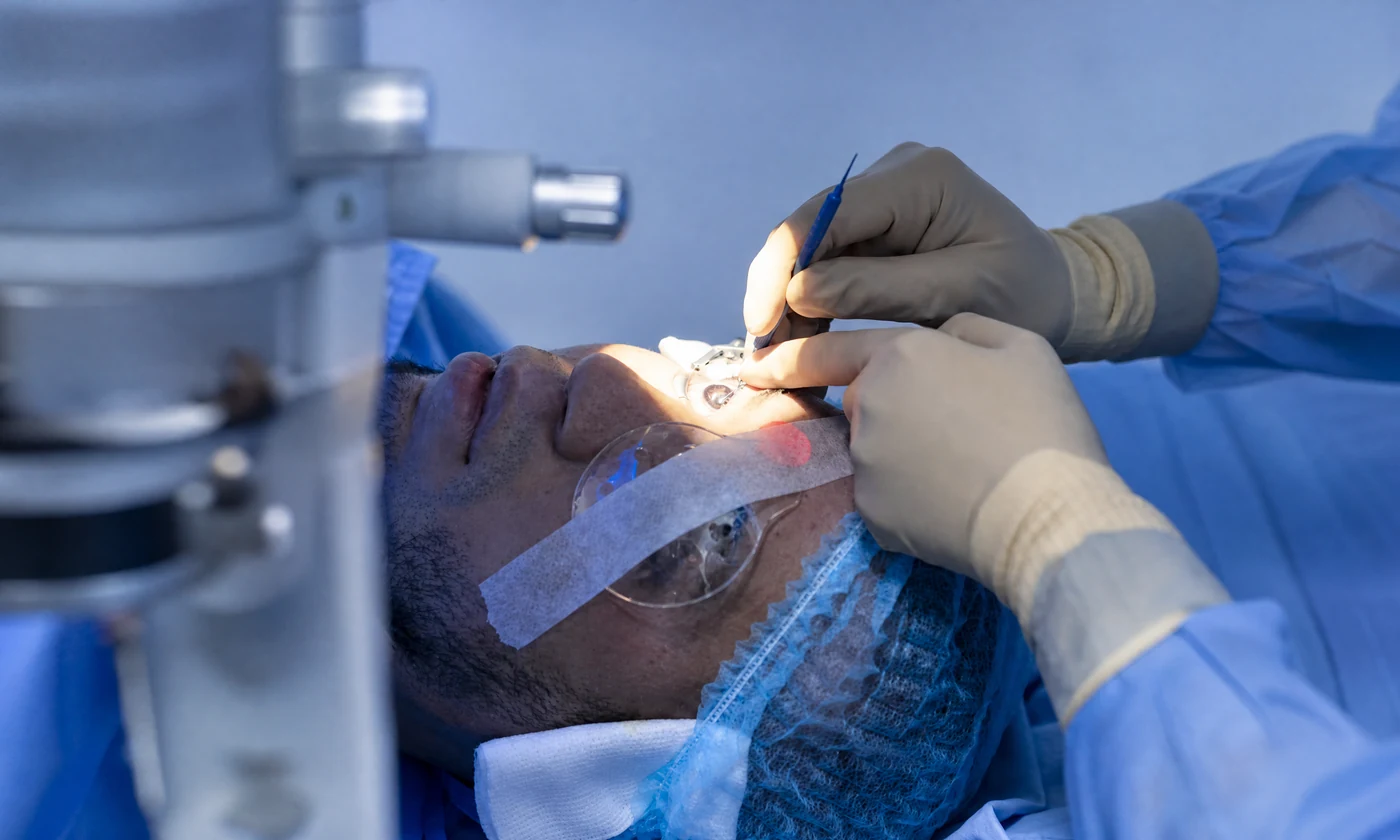
- Day of surgery: topical anesthesia with eye drops. You lie back under the laser.
- Flap creation with femtosecond laser: the laser creates the ultra-thin flap in about 20 seconds per eye.
- Excimer laser application: with the flap lifted, the excimer laser reshapes the corneal tissue according to your prescription. This takes just seconds.
- Flap repositioning: the surgeon lays the flap back down like a “natural bandage.” It adheres on its own, no stitches needed.
- Immediate observation: a brief rest period, then discharge with post-op instructions.
Total time: approximately 15-20 minutes for both eyes.
Recovery and Aftercare
The first 4-6 hours may bring a gritty sensation, tearing, and light sensitivity. These are expected symptoms that resolve on their own.
Recovery timeline:
- Day 1: noticeable improvement in vision. Return to basic activities.
- First week: vision stabilizes, sharpest clarity. Continue antibiotic and anti-inflammatory eye drops.
- Weeks 2-4: full stabilization. Medical clearance.
First-month restrictions:
- Avoid rubbing your eyes for at least 3 weeks
- No swimming or hot tubs for 2 weeks
- Light exercise: wait 7 days
- Contact sports: wait 3-4 weeks
- Wear UV-protective sunglasses outdoors
- No eye makeup for the first 2 weeks
Technology and Preoperative Testing
The preoperative evaluation for SBK LASIK uses:
- Pentacam corneal topography (Oculus): a detailed map of corneal shape
- Pachymetry: measures corneal thickness
- IOL Master 500 biometry (Zeiss): refractive calculation
- Topolyzer: personalized corneal biometry
- OCT (Optical Coherence Tomography): corneal analysis
- iTrace (ray tracing): analyzes optical aberrations for a personalized surgical plan
- HD Analyzer: objective measurement of visual quality
- Specular microscopy: used when endothelial health needs to be evaluated
Why Choose SBK LASIK at Centro Láser
Centro Láser offers refractive surgery with the three most advanced techniques available worldwide: ReLEx SMILE, SBK LASIK, and Advanced Surface Ablation. That means we can match you with the technique best suited to your case, not just whatever happens to be on hand.
Our preoperative protocol covers every necessary test in a single visit, with refractive surgeons trained internationally in each technique. If your evaluation confirms SBK LASIK is your best option, we schedule your surgery with the confidence that it’s the safest procedure for your eye’s anatomy.