Keratoconus Symptoms and Treatment: Why Early Care Matters
Keratoconus thins and warps the cornea, but in most cases its progression can be stopped. Learn the signs, cross-linking, and why early care matters.

If your eyeglass prescription keeps changing every few months, you notice halos and blurring at night, and your glasses never quite correct your vision, it might not be just "bad eyes." It could be keratoconus: a condition in which the cornea, the clear tissue that covers the front of the eye, gradually thins and bulges outward into a cone shape. That irregular shape distorts vision and, unlike a typical refractive error, tends to get worse over time.
Here's the good news, and it's a big one: today, in most cases, keratoconus progression can be stopped. A treatment called corneal cross-linking can halt its progression, especially when it's caught early. That's the whole point of this article: the sooner keratoconus is diagnosed, the more vision you keep, and the less invasive the treatment needs to be.
Keratoconus usually shows up during the teenage years or in young adulthood, a stage of life when it's easy to blame the symptoms on stress or an outdated eyeglass prescription. Knowing the warning signs can save you years of lost vision.
What Is Keratoconus?
A healthy cornea is round and evenly curved, like the surface of a ball, and that shape is what allows your eye to focus properly. In keratoconus, the collagen structure that gives the cornea its rigidity weakens, and the eye's normal internal pressure gradually pushes the cornea outward into a cone shape. That irregular surface keeps light from focusing evenly, which is what causes the distorted vision.
Keratoconus is a progressive condition, and in most cases it affects both eyes, though almost always one more than the other. It isn't an infection, it isn't contagious, and it isn't caused by straining your eyes. It's a problem with the structure of the cornea itself.
What defines keratoconus isn't any single symptom, but a pattern: vision that keeps getting worse and a prescription that never settles down. When that pattern shows up in a young person, it's worth considering keratoconus and getting the cornea checked.
Signs and Symptoms of Keratoconus
Symptoms develop gradually and, at first, look a lot like worsening nearsightedness or astigmatism. The most common warning signs, as described by the American Academy of Ophthalmology, include:
- Blurry or distorted vision that glasses never fully correct.
- Frequent prescription changes, forcing you to update your glasses again and again.
- Increasing astigmatism, sometimes progressing quickly.
- Glare and halos around lights, especially when driving at night.
- Light sensitivity and, in some cases, irritation from rubbing your eyes.
One detail that says a lot is how fast things change. A prescription that shifts every few months in a young person isn't normal, and it's one of the clearest reasons to ask for a corneal exam. If this sounds like you, don't wait until your next glasses update to bring it up.
Who Gets Keratoconus, and Why?
Keratoconus typically begins around puberty and progresses over the following years, according to the medical literature compiled by the National Library of Medicine. In most cases it stabilizes by the fourth decade of life, meaning between the ages of 30 and 40, but by then, whatever vision has already been lost stays lost.
Several factors raise the risk or speed up the progression. The most important one, and the most avoidable, is rubbing your eyes hard: repeated rubbing weakens the cornea even further, which is why the American Academy of Ophthalmology flags it as a habit worth breaking. Keratoconus is also linked to eye allergies (which make you want to rub your eyes), a family history of the condition, and certain genetic conditions.
The practical takeaway cuts two ways: if you have relatives with keratoconus, or allergies that make you rub your eyes, keep an eye on your own vision; and if you've already been diagnosed, breaking the rubbing habit is part of the treatment.
The fact that keratoconus targets young people is no small detail. It shows up right in the years of school, early careers, and learning to drive, exactly when clear vision matters most, and it's the stage when the disease progresses fastest. Catching it in that window is what makes it possible to stop it before it shapes how you see for the rest of your life.
Why Early Detection Changes Everything

This is the biggest shift in cornea care in decades. In the past, doctors could only watch keratoconus progress, and many patients eventually needed a corneal transplant. Today, corneal cross-linking (CXL) exists: a treatment that can stop the progression, which makes early detection the single most valuable decision a patient can make.
Dr. María Teresa Salazar, a fellowship-trained cornea specialist at Centro Láser, puts it this way: keratoconus caught early can be stopped before it steals any more vision; caught late, it often can only be managed. The difference between the two usually comes down to one thing: a corneal exam done in time.
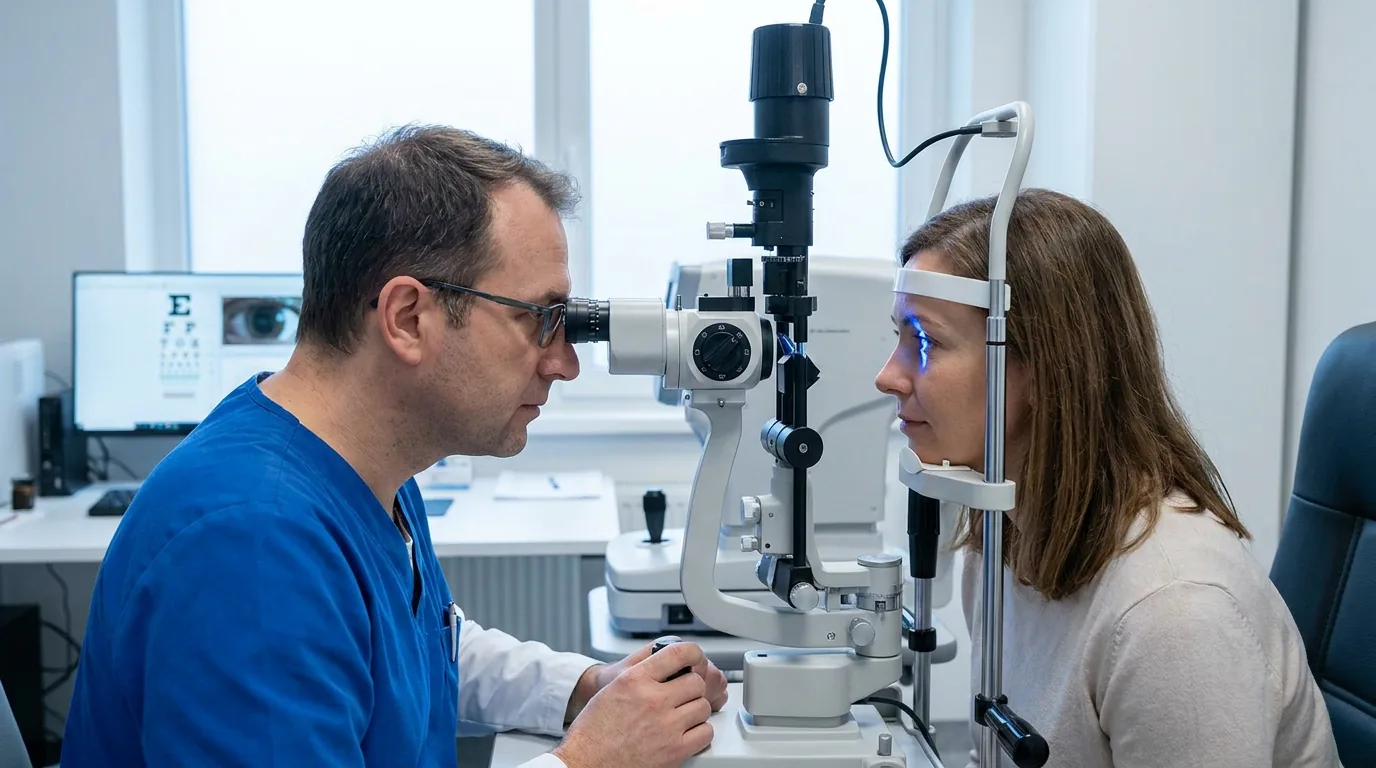
That exam is called corneal topography or tomography, and it maps out the exact shape and thickness of your cornea. It can pick up keratoconus even at very early stages, before vision damage becomes obvious. It's quick and non-invasive, and for a young person whose prescription won't settle down, it's worth its weight in gold.
Keratoconus Treatment Options
There isn't a single treatment, but a step by step approach that adjusts to each stage of the disease. Keratoconus management combines stopping the progression with improving vision:
- Corneal cross-linking: This is the primary treatment for stopping progression, and recent medical reviews describe it as the standard of care for progressive keratoconus, according to the National Library of Medicine. Cross-linking strengthens the cornea's collagen using vitamin B2 drops and ultraviolet light, and its goal is to stabilize the cornea, not necessarily sharpen vision. That's why it's recommended early, to preserve the vision you still have.
- Intracorneal ring segments (ICRS): Intracorneal ring segments are inserted into the cornea to even out its shape and improve vision. They improve how you see, but they don't stop progression on their own, so they're often paired with cross-linking.
- Specialty contact lenses: Rigid gas permeable or scleral lenses create a smooth, regular surface over the irregular cornea and can dramatically improve vision without surgery. For very irregular corneas, they're sometimes the option that works best for everyday life.
- Corneal transplant: Reserved for advanced cases, when the other options are no longer enough. In 1987, Centro Láser's founders created the Dominican Republic Eye Bank (Bancórneas), which supports the full chain of care behind a corneal transplant whenever one is needed.
The takeaway is the order itself: stop the progression first, then correct vision, with transplant only as a last resort. The earlier you start on that path, the better off you stay.
Frequently Asked Questions
Does keratoconus cause blindness? It rarely leads to total blindness, but left untreated it can cause a significant loss of functional vision. Most cases are managed well, especially when caught early.
Can I rub my eyes if I have keratoconus? That's exactly what you should avoid. Rubbing your eyes hard can make keratoconus worse, so it's worth treating any itchy allergies and breaking the habit of rubbing.
Is keratoconus hereditary? There can be a family component. If an immediate family member has it, it's worth getting your cornea checked, especially if you're young and your prescription keeps changing.
Do glasses or contacts cure keratoconus? No, they don't cure it. Glasses and contacts, including scleral lenses, improve vision, but they don't stop the progression. Cross-linking is the treatment for that.
Will I need a corneal transplant? Most patients never need one, precisely because cross-linking and intracorneal rings have changed the picture. Transplant today is reserved for the most advanced cases.
Does cross-linking hurt, or will it affect my vision? It's done with numbing eye drops, and most patients tolerate the procedure well. Vision may stay blurry for a few days while the cornea heals, but the goal is to protect the sight you have going forward.
Catch It Before It Progresses
Keratoconus has a window of opportunity, and that window is time. Caught early, it can be stopped and vision preserved; caught late, the options narrow. So if you're young and your vision won't stabilize, or if keratoconus runs in your family, a corneal exam is one of the best investments you can make in your eyes.
You don't have to wait until your vision gets bad to act. Schedule a cornea evaluation at Centro Láser, and with a map of your cornea in hand, let's settle the question while there's still time.
Request Your Evaluation and we'll reach out to schedule your visit.
This content is for informational and educational purposes only and is not a substitute for professional medical consultation, diagnosis, or treatment. If you have any concerns about your eye health, please consult your ophthalmologist.
Written by Centro Láser. Clinically reviewed by Dr. María Teresa Salazar, fellowship-trained specialist in cornea and refractive surgery.