Double Vision (Diplopia): When Is It an Emergency?
Double vision can be harmless or a warning sign of stroke. Learn the cover test, red flags, and when sudden double vision means it's time for the ER.
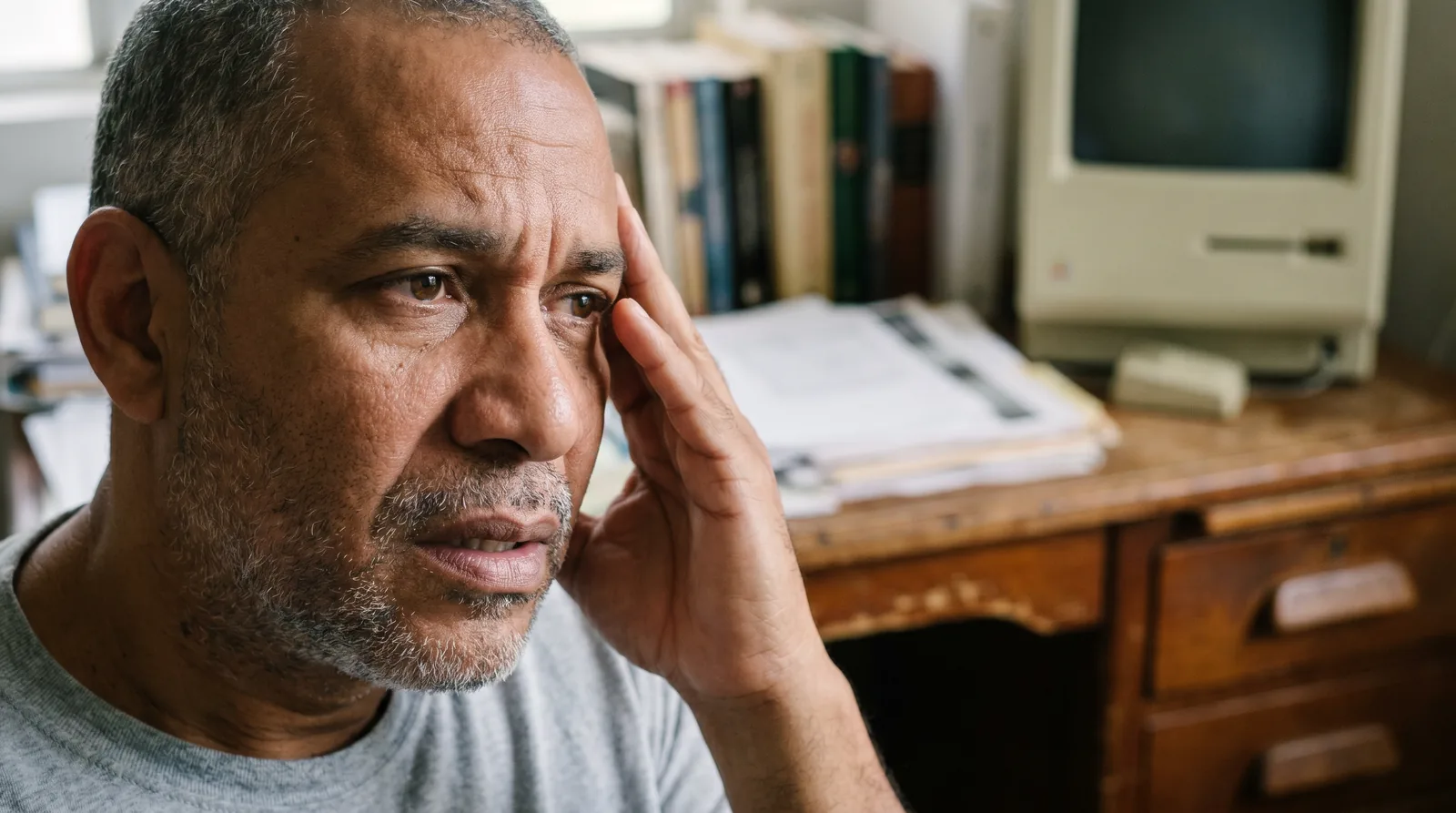
Seeing double is scary, and it should be. Double vision, which doctors call diplopia, can range from a harmless annoyance to the first warning sign of something serious happening in the brain. The difference often comes down to a detail you can check yourself in seconds: whether the double image shows up in one eye or in both.
This isn't something to shrug off. About 16% of emergency room visits for double vision turn out to be a stroke or a mini-stroke known as a transient ischemic attack (TIA), according to the American Academy of Ophthalmology. That's why sudden double vision, especially when it comes with other symptoms, isn't something to wait out.
In this article, we'll walk you through how to tell dangerous double vision from harmless double vision, which signs mean you need care right away, and how it gets evaluated. The goal isn't to scare you. It's to give you a simple rule you can rely on if this ever happens to you or someone you love.
The Test to Try First
Before anything else, there's a simple check that tells you a lot: cover one eye and see whether the double vision goes away.
- If covering either eye makes the double image disappear, that's binocular double vision: it only happens with both eyes open.
- If you cover your unaffected eye and the double image stays in the eye that's still uncovered, that's monocular double vision: it's coming from one eye alone.
This isn't a minor technicality, according to the Cleveland Clinic: it completely changes how urgent the problem is. That's why it's the first thing worth checking, before you panic or brush it off.
Double Vision in One Eye: Usually an Eye Problem
When double vision sticks around in one eye even with the other one covered, the cause is almost always in the eye itself, not the brain. It's usually an optical issue: astigmatism, early cataracts, significant dry eye, or a problem with the surface of the cornea. An ophthalmologist can identify and treat these causes, and they generally don't pose an immediate danger.
That doesn't mean you should ignore it. Monocular double vision still deserves an eye exam to find the cause and correct it, because it often has a straightforward fix, anything from an updated glasses prescription to cataract surgery or treatment for the ocular surface.
The good news is that, with rare exceptions, monocular diplopia isn't the kind that sets off alarm bells. That's reserved for the other kind.
Double Vision in Both Eyes: Here's Where to Pay Attention
Binocular double vision happens because your two eyes stop pointing at the same spot, so your brain ends up with two images that don't line up. That misalignment can come from the muscles that move the eye or, more importantly, from the nerves that control those muscles.
Here's the part that deserves attention. The nerves that move your eyes (the third, fourth, and sixth cranial nerves) originate in the brain, and when one of them isn't working right, the cause can be minor or it can be something serious, like a vascular problem. That's why binocular diplopia can point to neurological conditions that need to be ruled out, according to the Cleveland Clinic.
Dr. Adalgisa Corona, a fellowship-trained neuro-ophthalmologist at Centro Láser, puts it plainly: sudden double vision in both eyes is not something to watch at home and hope it gets better. It needs to be evaluated, because sometimes the eye is the first place that shows what's happening in the brain.
Red Flags: When Double Vision Is an Emergency
This is the part of the article we most want you to remember. If double vision comes on suddenly, especially alongside any of these symptoms, get emergency care right away, not an appointment for next week:
- Sudden, severe headache, unlike any you've had before.
- One pupil noticeably larger than the other, or a pronounced drooping eyelid.
- Weakness or numbness in the face, arm, or leg, usually on one side of the body.
- Trouble speaking, confusion, or loss of balance.
- Severe dizziness along with the double vision.
Sudden onset of binocular double vision is a red flag on its own, and combined with a severe headache or a dilated pupil, it becomes an emergency that calls for urgent brain imaging, according to the American Academy of Ophthalmology. Several of these symptoms together can mean a stroke is happening in real time, and with stroke, every minute counts. When you see that combination, the right move is to go to the emergency room or call emergency services, not to schedule an appointment with your regular ophthalmologist.
What Causes Double Vision?
The list of causes is long and varied, which is exactly why double vision needs to be worked up properly. Among the most common causes of binocular diplopia, as described in the medical literature compiled by the National Library of Medicine, are:
- Cranial nerve palsy (third, fourth, or sixth nerve), the most common cause in adults.
- Stroke or TIA (mini-stroke).
- Thyroid eye disease, which affects the muscles that move the eye.
- Diabetes and high blood pressure, which can damage the nerves that control the eyes.
- Multiple sclerosis and other neurological conditions.
- Trauma to the head or eye socket.
- Tumors or aneurysms pressing on the nerves.
- Myasthenia gravis, which causes double vision that changes throughout the day.
Not all of these are serious, and many respond well to treatment. But because the list includes causes that are serious, the whole point of an evaluation is to separate the harmless from the dangerous. That's why the exact same symptom, double vision, can end up needing nothing more than a new glasses prescription, or urgent care, depending entirely on what's causing it.
How Is Double Vision Diagnosed and Treated?
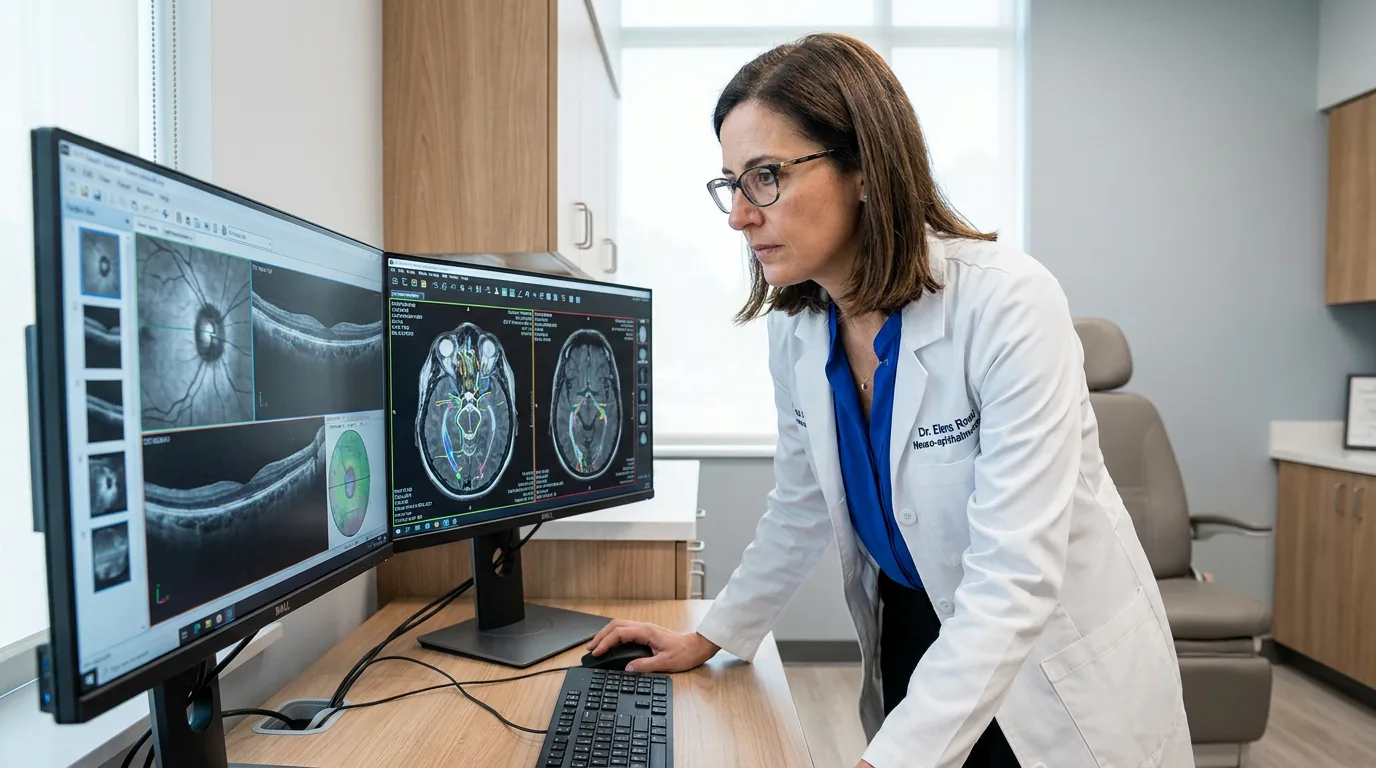
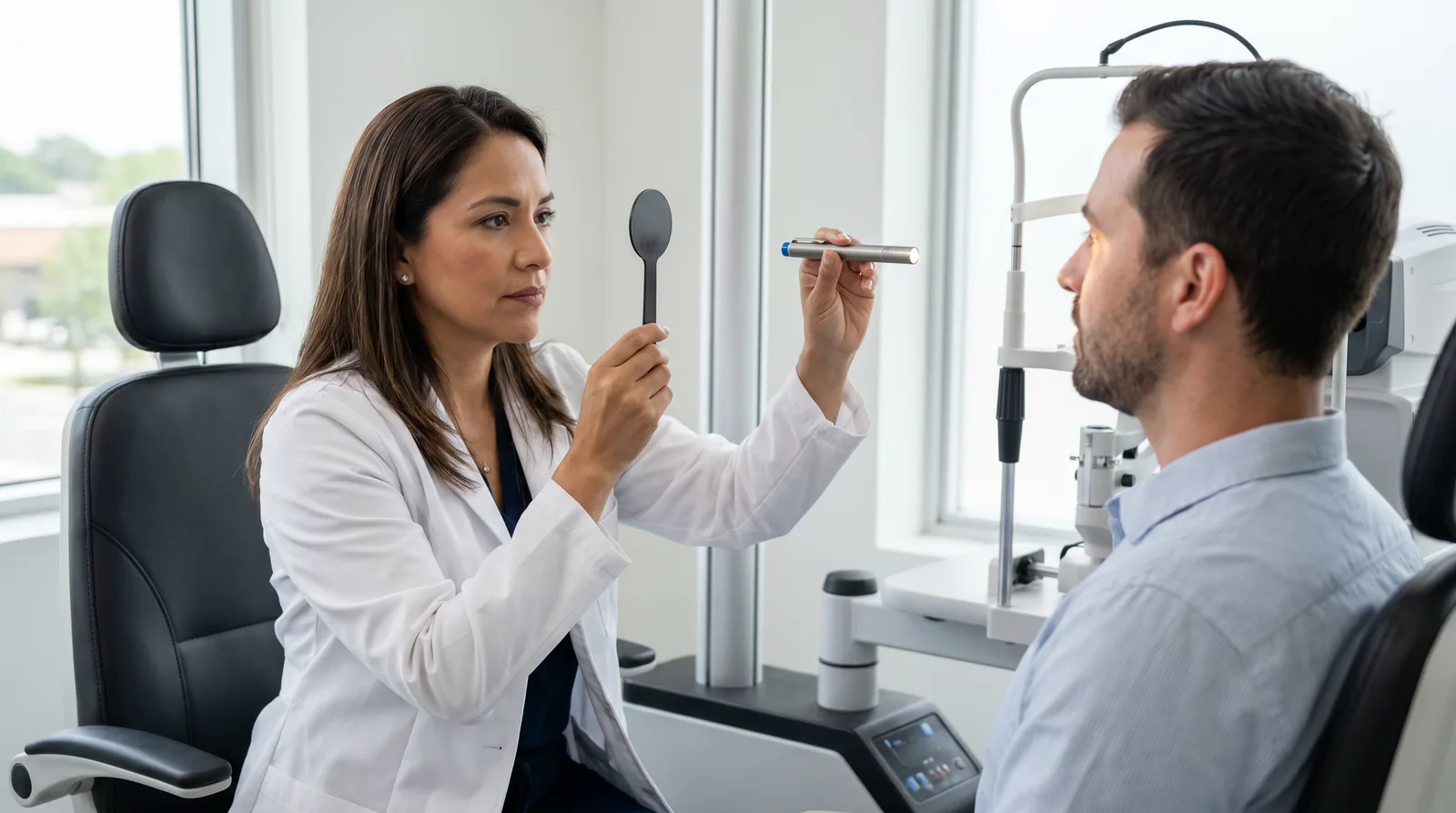
Binocular double vision falls squarely within neuro-ophthalmology, the field that connects the eye and the brain. A neuro-ophthalmic evaluation checks how your eyes move, the state of your pupils, and your optic nerve, and when needed, it's paired with imaging studies to get a look at the brain and the nerves themselves.
Treatment depends entirely on the cause. When there's an underlying condition (thyroid disease, diabetes, a neurological problem), treating that comes first. For the double vision itself, diplopia management can include prism lenses, temporarily patching one eye, or, in stable cases, strabismus surgery to realign the eyes.
The order matters: rule out anything urgent first, then correct the annoyance. That's why new double vision always deserves an evaluation, even when it seems minor.
Frequently Asked Questions
Is double vision serious? It depends. Double vision in one eye (monocular) is almost never dangerous. Double vision with both eyes open (binocular), especially if it comes on suddenly, can be serious and should be evaluated promptly.
What should I do if double vision suddenly shows up? Cover one eye: if it disappears, it's binocular. If you also have a severe headache, weakness, trouble speaking, or dizziness, go to the emergency room right away, since it could be a sign of a stroke.
Does double vision go away on its own? Some causes do improve on their own, like certain nerve palsies related to diabetes, but there's no way to know that without an evaluation. Never assume it will go away by itself, especially if it started suddenly.
Which doctor should I see? An ophthalmologist, ideally one with experience in neuro-ophthalmology, since that's the specialist who studies the connection between the eye and the brain. If you have any warning signs, go to the emergency room first.
Can fatigue cause double vision? Fatigue can make an existing tendency toward eye misalignment worse, and some conditions, like myasthenia gravis, cause double vision that gets worse with tiredness. If it happens often, it's worth getting checked out.
Does double vision always require an MRI or CT scan of the brain? Not always. It depends on the full picture: your age, how the double vision came on, which nerve appears to be affected, and any symptoms that come with it. Your specialist decides which tests you need. What is a hard rule: sudden double vision with warning signs needs urgent brain imaging.
Don't Wait to See If It Passes
With double vision, being cautious comes down to two steps: check whether it's in one eye or both, and if it came on suddenly along with other symptoms, get emergency help. That simple reaction can make a huge difference when something serious is behind it.
If you're dealing with double vision that's new, persistent, or comes and goes, don't write it off as normal. Schedule an evaluation at Centro Láser, and if you have any warning signs, go to an emergency room first.
Request Your Evaluation and we'll reach out to schedule your visit.
This content is for informational and educational purposes only and is not a substitute for professional medical consultation, diagnosis, or treatment. If you experience sudden double vision along with other symptoms, seek emergency care immediately.
Written by Centro Láser. Clinically reviewed by Dr. Adalgisa Corona, fellowship-trained specialist in neuro-ophthalmology.