Neuro-Ophthalmology: When Vision Problems Start in the Brain
Sometimes your eye exam is normal but your vision still isn't right. Neuro-ophthalmology looks at the brain-eye connection. Learn when to see a specialist.
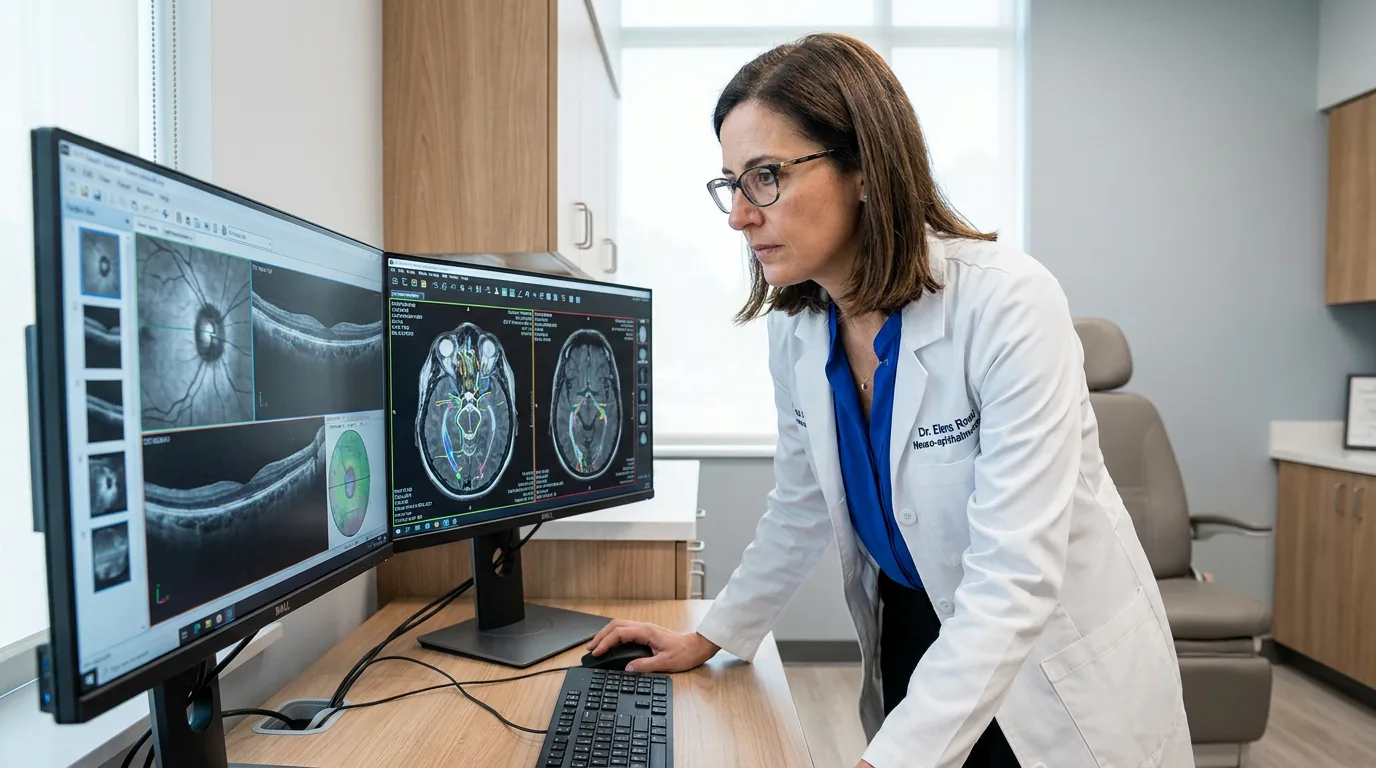
Here's a situation that confuses a lot of people. You go to the eye doctor because something feels off with your vision, they run a full exam, and they tell you your eye is healthy. But your vision keeps failing you. How is that possible? The answer lives in a word most people have never heard: neuro-ophthalmology. Sometimes the problem isn't in the eye itself. It's in the pathway that connects the eye to the brain.
This guide explains what neuro-ophthalmology is, what kinds of problems it treats, and, most importantly, when it's time to see a specialist in this field. Understanding this can save you valuable time, because some of these conditions are serious.
What Is Neuro-Ophthalmology?
Neuro-ophthalmology is the subspecialty that studies the connection between the eyes, the brain, and the nervous system, according to the American Academy of Ophthalmology. In simple terms, it deals with vision problems that don't start in the eye itself, but in the nerves and brain areas that process what you see.
Seeing involves much more than having a healthy eye. Light enters through the eye, but the image actually forms in the brain. The optic nerve is the cable that carries that information from the eye to the vision centers of the brain. If something goes wrong anywhere along that path, a person sees poorly even when the eye itself is perfect.
That's why neuro-ophthalmology sits at the border between two worlds: ophthalmology and neurology. And it's exactly at that border where symptoms show up that no eye exam, on its own, can fully explain.
How Can a Healthy Eye Still Have Blurry Vision?
Here's the key idea that's hard to wrap your head around at first. Vision doesn't stop at the eye. Information travels through the optic nerve and the brain's visual pathways, so a problem anywhere along that route can affect your sight even when the eye itself is perfectly healthy, according to the American Academy of Ophthalmology.
Think of a camera connected to a screen by a cable. You can have an excellent camera, but if the cable or the screen fails, the picture doesn't come through right. In your body, that camera is the eye, the cable is the optic nerve, and the screen is the brain. Neuro-ophthalmology checks the cable and the screen, not just the camera.
That's why, when your eye exam comes back normal but your symptoms don't go away, it doesn't mean nothing is wrong. It means the problem is somewhere beyond the eye.
What Symptoms Does Neuro-Ophthalmology Evaluate?
Neuro-ophthalmology covers a wide range of problems, and knowing what they are helps you recognize when you need this kind of specialized care. According to the American Academy of Ophthalmology, the most common include:
- Unexplained vision loss: your sight gets worse, but the eye exam doesn't explain why.
- Double vision: which can come from problems in the nerves that move your eyes.
- Visual field loss: "blank spots" or missing areas in your vision, sometimes caused by problems in the brain.
- Optic neuritis: inflammation of the optic nerve, which can cause vision loss and pain when you move the eye, according to the American Academy of Ophthalmology.
- Papilledema: swelling of the optic nerve that can signal increased pressure inside the skull.
- Pupil or eyelid abnormalities with a nerve-related cause, such as pupils of different sizes or a droopy eyelid that appears suddenly.
Not all of these are serious, but several call for a careful diagnosis. If you have double vision and want to know when it's an emergency, we cover that in our guide on double vision and when it's an emergency.
Your Whole Body Is Connected to Your Vision
Many conditions that affect your whole body are linked to neuro-ophthalmic problems, which is why this specialty looks at the whole patient, not just the eye. Multiple sclerosis, for example, can show up first as optic neuritis. Thyroid disease can affect the muscles that move your eyes. Diabetes and high blood pressure damage the small blood vessels that feed the nerves. And a tumor or any lesion pressing on the visual pathway can cause visual field loss.
Catching these connections early doesn't just protect your vision. Sometimes it's exactly what leads to diagnosing the underlying disease. An eye symptom can be the first clue to something the rest of the body hasn't shown yet.
When Should You See a Neuro-Ophthalmologist?
Not everyone needs this subspecialty, and most vision problems get resolved by a general ophthalmologist. Neuro-ophthalmology comes into play in specific situations.
Typically, you'll be referred to a neuro-ophthalmologist when your eye exam is normal but your visual symptoms persist, or when there are signs pointing to a neurological cause, according to the American Academy of Ophthalmology. That also applies when an eye symptom, like double vision or a sudden droopy eyelid, could be the tip of a bigger problem.
A neuro-ophthalmologist combines the eye exam with visual field testing, evaluation of the optic nerve, and, when needed, brain imaging studies. That complete picture is what makes it possible to find the real cause.
Warning Signs You Should Never Ignore
Most vision problems can wait for a regular appointment, but some can't. Certain warning signs call for immediate attention because they can point to something serious, like an acute neurological or vascular problem. Seek urgent care if you have:
- Sudden vision loss, even if it's only in one eye.
- Vision loss that comes and goes: it disappears for a few minutes and then comes back on its own. Even though "it went away," this can be a warning sign of a mini-stroke, and doctors treat it as an emergency.
- Sudden double vision, especially if it comes along with a droopy eyelid, since that combination can point to a problem with a nerve or an aneurysm.
- A severe headache with vision changes. In adults over 50, if there's also pain or tenderness around the temples, doctors need to rule out an artery inflammation that can cause blindness and requires treatment the same day.
None of these is a symptom to "wait and see" about. Recognizing them and acting fast can make a huge difference, even preventing permanent vision loss or a stroke. In neuro-ophthalmology, time matters.
Frequently Asked Questions
Is neuro-ophthalmology part of ophthalmology or neurology? It's the bridge between the two. A neuro-ophthalmologist is a specialist trained to evaluate vision problems that originate in the optic nerve, the nerves that move the eyes, or the brain, working right at the border between both fields.
My eye exam came back normal, but I still can't see well. What should I do? Don't settle for "there's nothing wrong." A normal eye exam with symptoms that won't go away is exactly one of the reasons to get a neuro-ophthalmic evaluation, which looks beyond the eye itself.
What is optic neuritis? It's inflammation of the optic nerve that can cause vision loss, often in one eye, along with pain when you move it. It needs specialized evaluation, because it's sometimes linked to other conditions of the nervous system.
Is double vision always serious? Not always, but double vision that starts suddenly should be evaluated soon, since it can come from problems in the nerves that move the eyes. We cover this in detail in our guide on double vision.
What tests does a neuro-ophthalmologist run? A neuro-ophthalmologist combines the eye exam with visual field testing, evaluation of the optic nerve, and, if needed, brain imaging studies. The goal is to pinpoint exactly where the problem is.
Is a headache with vision problems an emergency? A severe headache along with vision changes is a warning sign that needs immediate attention. In adults over 50, if there's also pain or tenderness around the temples, it's even more urgent. Don't wait it out in these cases.
I lost my vision for a few minutes and it came back. Should I be worried? Yes, even though "it's over now." Vision loss that comes and goes can be a warning sign of a mini-stroke (a transient ischemic attack) and is treated as an emergency. It should be evaluated right away, not after it happens again.
Is multiple sclerosis connected to vision? Yes. Optic neuritis, an inflammation of the optic nerve, can be one of the first signs of multiple sclerosis. That's why vision loss along with pain when moving the eye deserves a neuro-ophthalmic evaluation.
Look Beyond the Eye
Neuro-ophthalmology exists for exactly these cases that don't add up: vision that fails with a healthy eye, double vision that appears out of nowhere, a visual field full of gaps. Understanding that sight also depends on the brain and the nerves opens the door to the right diagnosis when the eye exam alone isn't enough.
If you have visual symptoms nobody has been able to explain, or any of the warning signs we covered here, don't stay in the dark about it. Schedule an evaluation at Centro Láser in Santo Domingo, and if your case calls for it, we'll approach it through neuro-ophthalmology to find the real cause.
Request Your Evaluation and we'll reach out to schedule your visit.
This content is for informational and educational purposes only and is not a substitute for professional medical consultation, diagnosis, or treatment. If you have sudden vision loss, sudden double vision, or a severe headache with vision changes, seek medical attention right away.
Written by Centro Láser. Clinically reviewed by Dr. Adalgisa Corona, fellowship-trained neuro-ophthalmology specialist.