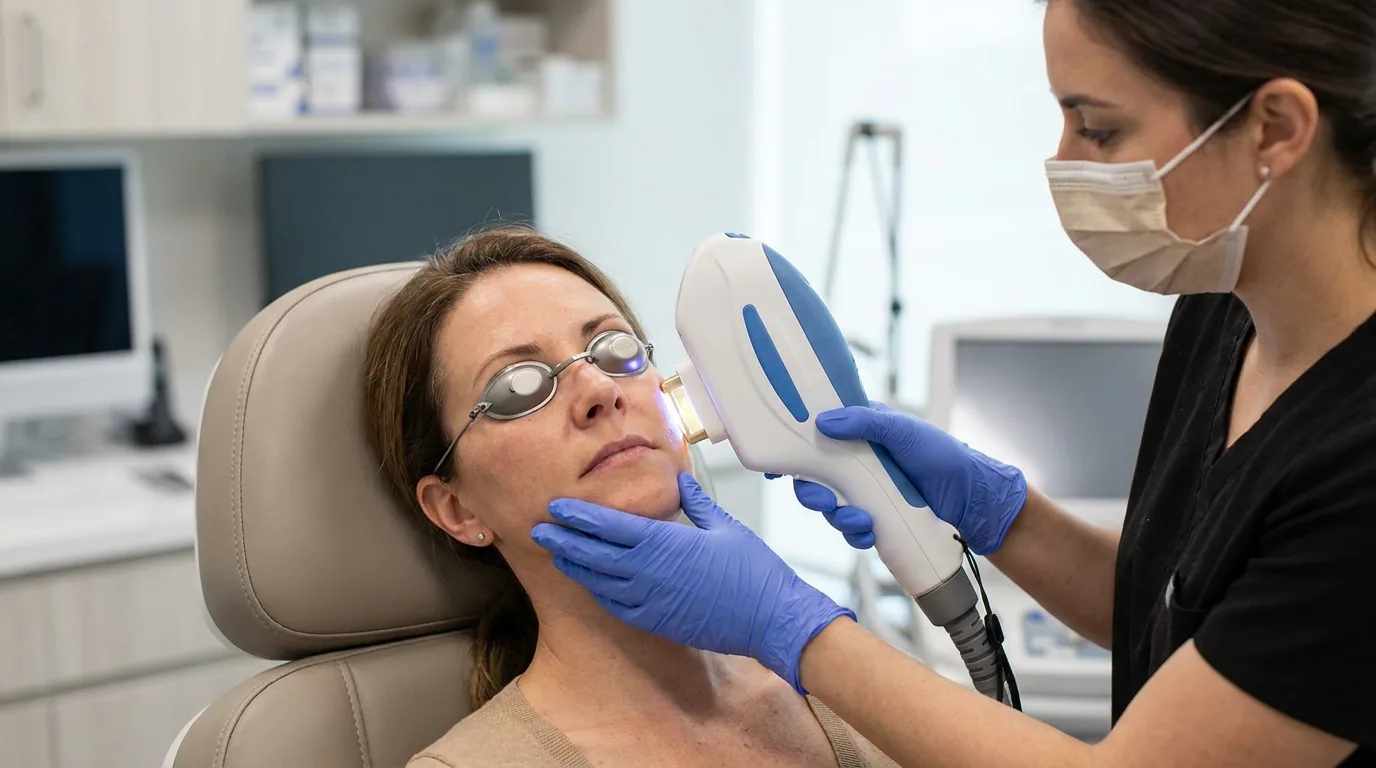
Dry Eye Symptoms: Why Screens and AC Make It Worse
Dry eye burns and feels gritty, especially with screens and AC. Learn the symptoms, real causes, and treatments, from eye drops to IPL therapy.

If your eyes feel like they're burning by the end of the day, gritty, almost like there's sand in them, and it gets worse when you're at the computer or sitting in an air-conditioned room, it's probably not just fatigue. It's dry eye. It's one of the most common eye complaints today, and it's becoming more common precisely because most of us spend nearly the whole day in front of screens and under air conditioning.
Dry eye happens when your tears can't properly lubricate the surface of your eye, either because you're not producing enough of them or because the tears you do have are low quality. The good news is that it can almost always be managed, from simple changes to your daily routine to treatments your eye doctor can offer in the office.
Here's why it burns, what actually causes it (including one reason most people never hear about), and what you can start doing about it today.
What Is Dry Eye?
The surface of your eye is covered by a thin film of tears that keeps it lubricated, clean, and comfortable. Dry eye develops when that film breaks down, either because your eyes aren't making enough tears or because the tears you do make evaporate too quickly. The result is an irritated surface that lets you know something is off.
Here's the part that surprises most people: dry eye doesn't always feel "dry." Many people describe it as burning, grittiness, itching, or fatigue, and sometimes even watery eyes, because an irritated eye produces emergency tears that don't actually fix the underlying problem. That's why an eye that's watering can, paradoxically, still be dry.
This isn't just a passing annoyance, either. Left unaddressed, dry eye can interfere with reading, screen time at work, and how comfortable you are wearing contact lenses. It's worth paying attention to.
Dry Eye Symptoms
Dry eye symptoms are easy to recognize once you know what to look for. According to the Mayo Clinic, the most common ones include:
- Burning, stinging, or itching in the eyes.
- A gritty feeling, like something is stuck in your eye.
- Redness and tired eyes by the end of the day.
- Blurry vision that clears up when you blink.
- Excessive watering, that paradoxical response from an irritated eye.
- Discomfort wearing contact lenses or looking at screens.
If several of these sound familiar, especially if they get worse in certain settings, it's worth getting checked out. Dry eye is diagnosed with a simple exam of the eye's surface and tear film.
Why Screens and Air Conditioning Make It Worse
This is the part that explains why dry eye has gotten so common. When you're looking at a screen, you blink far less than you normally would, and blinking is exactly what refreshes the tear film over your eye. Fewer blinks mean tears that evaporate without being replaced, according to the Mayo Clinic.
Air conditioning adds to the problem: it dries out the air and speeds up tear evaporation. In a hot climate like ours here in the Dominican Republic, where air conditioning runs almost nonstop in offices, cars, and homes, that mix of screen time and cold, dry air is a recipe for dry eye.
Dr. Katherine Santos, an ophthalmologist at Centro Láser who focuses on cornea and dry eye, puts it simply for her patients: modern dry eye is, in large part, a lifestyle problem. It's often not that the eye itself is unhealthy, it's that the environment and daily habits are working against it, and that's something you can change.
The Cause Most People Miss: The Meibomian Glands
Most people assume dry eye just means "not enough tears," but the real issue is often quality, not quantity. Along the edge of your eyelids are tiny glands, called meibomian glands, that produce the oil layer that keeps tears from evaporating too fast. When those glands get clogged or stop working properly, a condition known as meibomian gland dysfunction, tears lose that protective oil layer and evaporate too quickly. This is one of the most common causes of dry eye, according to the Cleveland Clinic.
It often shows up alongside blepharitis, an inflammation of the eyelid margin. That's why dry eye treatment frequently starts at the eyelid, not the eye itself. Once the glands are flowing again, tears regain their oil layer and the burning eases up.
Understanding this changes the whole approach. It's not always about adding more drops. Sometimes it's about clearing out the eyelid's oil supply.
How Is Dry Eye Treated?
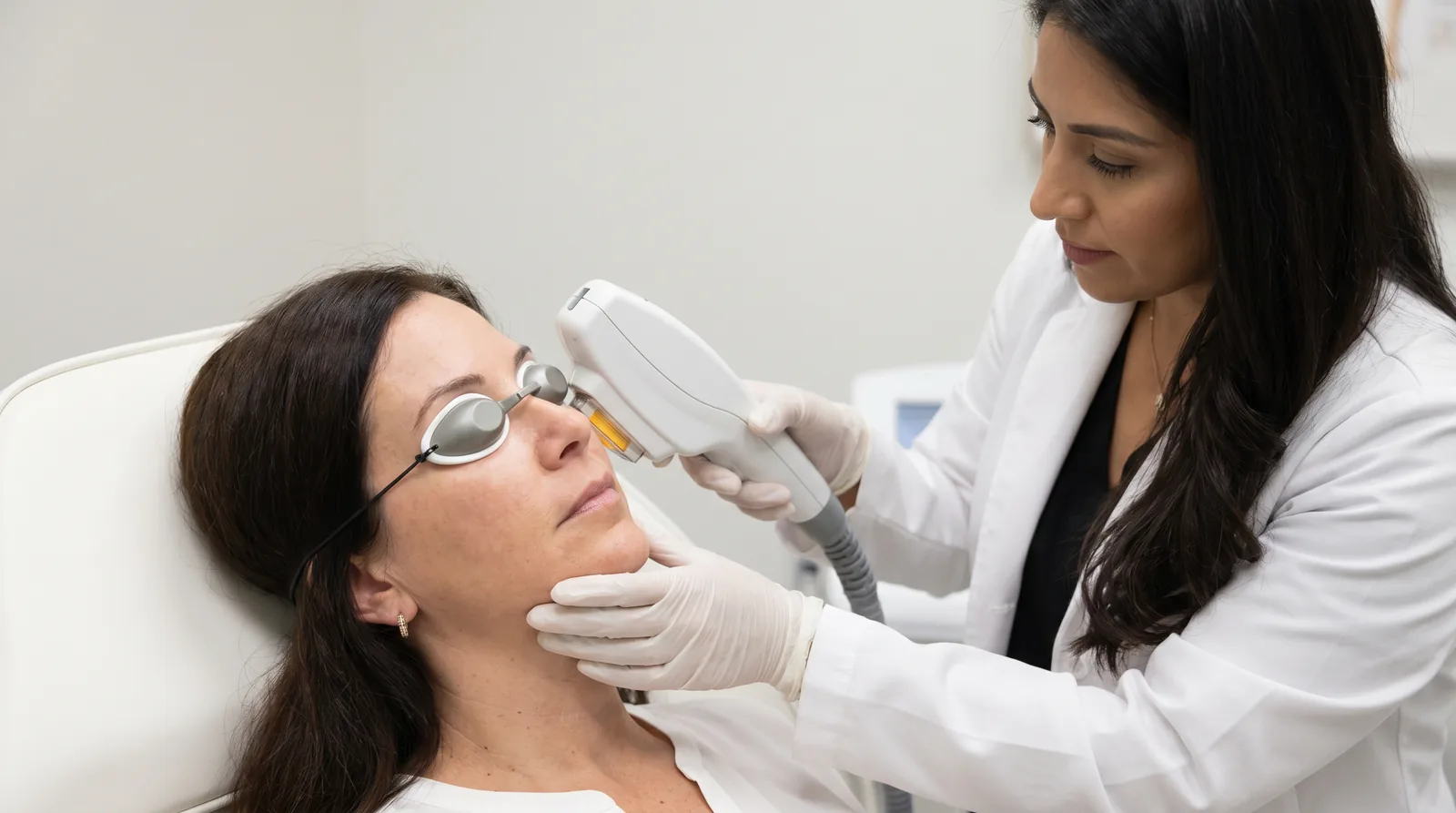
Dry eye treatment is stepwise, tailored to each case based on a dry eye evaluation. It usually starts with the simplest option and adds others depending on the cause:
- Artificial tears: lubricate and soothe the eye, especially high-quality, preservative-free formulas for frequent use.
- Eyelid hygiene and warm compresses: clean the eyelid margin and help the meibomian glands start flowing again.
- Thermal gland therapy: meibomian gland thermal therapy heats and releases trapped oil.
- Punctal plugs: punctal plugs keep your own natural tears on the eye's surface longer.
- Intense pulsed light (IPL): IPL for dry eye treats meibomian gland dysfunction right at the eyelid.
These aren't steps on a fixed ladder. Thermal therapy, punctal plugs, and IPL are chosen based on what's actually causing your dry eye, not in a set order.
IPL deserves an honest note here. Evidence shows IPL improves the signs and symptoms of dry eye caused by meibomian gland dysfunction and increases tear breakup time, according to a controlled study published on PubMed. It's a noninvasive procedure that's generally safe, though it can cause temporary redness or localized burning. It's not magic, and it's not a cure-all, but it's a genuinely useful tool for the right cases. At Centro Láser, this full range of options comes together in our dry eye program, built specifically for cases like these.
What You Can Do Today
While you wait for your appointment, a few habits can bring relief right away, and they help almost everyone:
- Blink on purpose when you're using screens, and try the 20-20-20 rule: every 20 minutes, look at something about 20 feet away for 20 seconds.
- Lower your screen so it sits slightly below eye level. That way your eyelid covers more of the eye and less tear film evaporates.
- Point AC vents away from your face, and use a humidifier if you can.
- Stay hydrated, and take breaks from screens and cold air throughout the day.
These changes aren't a substitute for a real evaluation, but they often make a noticeable difference, especially for dry eye caused by screens and air conditioning.
Frequently Asked Questions
Can dry eye be cured? In most cases it can be very well controlled, more so than "cured" in the sense of disappearing for good. With the right treatment and a few habit changes, most people live symptom-free.
Are eye drops enough? Sometimes, especially in mild cases. But when the problem is in the meibomian glands, drops relieve symptoms without fixing the underlying cause. The eyelid needs treatment too, whether that's hygiene, heat, or IPL.
Does IPL actually work for dry eye? The evidence supports it for dry eye caused by meibomian gland dysfunction: it improves symptoms and tear stability. It doesn't work the same for everyone, which is why your case gets evaluated first.
Why do my eyes water if they're supposed to be dry? That's the paradox of dry eye. When the surface gets irritated, the eye produces emergency tears, plenty of them, but poor quality, that don't lubricate well. That's why a watery eye can still be a dry eye.
Do contact lenses make dry eye worse? They can, especially with long wear times and heavy screen use. You don't always have to stop wearing them, but it's worth having your eye's surface evaluated and adjusting your lens type or wear schedule.
Dry Eye Is Treatable
That end-of-day burning, the gritty feeling, tired eyes at the computer: none of that is something you have to just live with. Dry eye is extremely common, but it's also very treatable, and understanding that it often starts at the eyelids and in daily habits changes the whole picture.
If these symptoms sound familiar, don't get used to the discomfort. Schedule a dry eye evaluation at Centro Láser and let's find out what's causing it and how to fix it.
Request your evaluation and we'll reach out to schedule your visit.
This content is for informational and educational purposes only and is not a substitute for professional medical advice, diagnosis, or treatment. If you have concerns about your eye health, please consult an ophthalmologist.
Written by Centro Láser. Medically reviewed by Dr. Katherine Santos, who specializes in cornea and dry eye care.