IPL for Dry Eye: What It Is and Who It's For
IPL (intense pulsed light) treats dry eye caused by Meibomian gland dysfunction. Learn how it works, who's a candidate, and what a session feels like.
If you've already tried drop after drop for dry eye and the burning still won't quit, you may have heard about a treatment that raises a lot of questions: pulsed light, or IPL. It sounds more like something from a spa menu than a medical treatment, which is exactly why people wonder whether it's a legitimate option or just a cosmetic extra. Here's the short answer: IPL is a real, evidence-backed treatment for a specific type of dry eye. It isn't magic, though, and it isn't right for everyone.
This guide breaks down, honestly, what IPL actually is, who it works for, what a session looks like, what results to expect, and what the Dry Eye Spa is all about. No inflated promises.
The Dry Eye That Drops Can't Fix
To understand IPL, there's one thing you need to know first: not all dry eye is the same. Many cases aren't about producing too few tears. They're about tears that are poor quality and evaporate too fast. The reason is usually Meibomian gland dysfunction.
Those glands sit along the edge of your eyelids and produce the oil that keeps tears from evaporating. When they get clogged or stop working properly, your tears lose that oily layer, and your eyes end up burning, itching, and feeling gritty, according to the Cleveland Clinic. It's one of the most common causes of evaporative dry eye, as the American Academy of Ophthalmology also notes.
Here's the key part: if the problem is the oil in your eyelids, more drops will bring relief but won't fix what's actually wrong. You have to treat the glands themselves, and that's where IPL comes in. If you want to understand why dry eye symptoms get worse with screens and air conditioning, we cover that in our guide on dry eye, screens, and air conditioning.
What Is Intense Pulsed Light (IPL)?
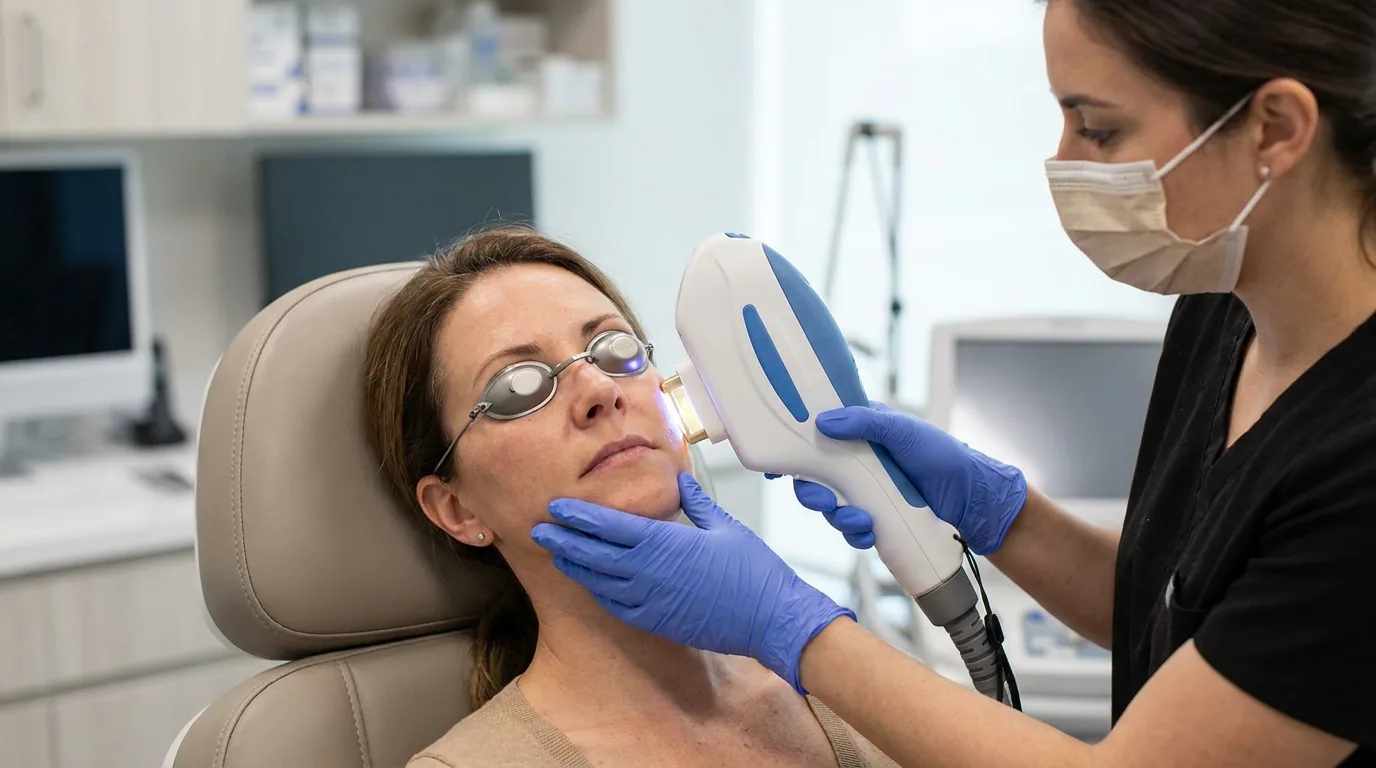
IPL, short for intense pulsed light, works by applying pulses of light to the skin over your cheekbones and around your eyes. That light helps unclog the Meibomian glands and restore how they function, so tears can regain their protective oily layer.
Here's what matters most: this isn't a marketing idea. A controlled study published on PubMed shows that IPL consistently improves the clinical signs of dry eye from Meibomian gland dysfunction, including tear film stability and how well the glands function. Many patients also notice symptom relief, though that benefit varies more from person to person. It's not a fancy placebo, but it's not an equal guarantee for everyone either.
That said, let's be clear about the limits: IPL doesn't "cure" dry eye once and for all, and it isn't the right fit for everyone with eye discomfort. Dry eye caused by low tear production, for instance, rather than by the Meibomian glands, doesn't respond to IPL. It's a genuinely useful tool in the right cases, nothing more and nothing less.
What Happens During a Session
This is the part that puts most people at ease. IPL is a non-invasive, in-office procedure, not surgery. Your eyes stay protected throughout, the light pulses are applied to the skin around them, and the whole thing usually takes just a few minutes.
Most people tolerate it well. You might feel a warm sensation or a small snap with each pulse, and afterward it's common to have mild, temporary redness or a slight sting on the skin that fades on its own. It generally has a strong safety profile when performed by a trained professional on well-selected patients, according to the same PubMed study.
There's no real "recovery" involved. Most people go right back to their day, with simple precautions like sun protection. That's one of the reasons IPL has become so popular for chronic dry eye.
How Many Sessions, and What to Expect
Here's the honest part a lot of places skip. IPL usually isn't a single session. It's a series of sessions spaced out over time, followed by periodic maintenance visits, because dry eye from Meibomian gland dysfunction is a chronic condition.
That's not bad news, it's just how it works. Like managing blood pressure or skin health, it's ongoing care, not a one-time fix. Many people notice less burning, less grittiness, and less reliance on drops as they move through their sessions.
What you shouldn't expect is a magic cure or identical guaranteed results for everyone. The benefit depends on your specific case, which is exactly why the evaluation beforehand is what sets realistic expectations.
Who Is a Good Candidate for IPL?
IPL works best for a specific profile: people with evaporative dry eye from Meibomian gland dysfunction, often with blepharitis alongside it, who haven't gotten enough relief from drops alone. It also suits people who simply want to rely less on artificial tears.
It isn't for everyone. Some types of dry eye, like the kind caused by low tear production, respond better to other approaches. And there's an important point worth flagging here: IPL has restrictions based on skin tone, and certain medications or conditions, such as active infections in the area or pregnancy, can also rule it out. That's why the evaluation beforehand, which includes checking your skin type, is essential before anyone recommends the treatment. IPL isn't something we start "just because."
That evaluation is exactly what separates a well-indicated treatment from money spent for nothing.
The Dry Eye Spa: A Complete Approach
IPL rarely works alone. Dry eye from Meibomian gland dysfunction is managed best by combining several tools, and that's exactly why the Dry Eye Spa exists: a dedicated space and program built to treat this condition as a whole.
Within that approach, IPL is paired, depending on the case, with thermal therapy for the glands, eyelid hygiene, gland expression, and habit recommendations. The goal isn't just to calm today's discomfort. It's to improve how the glands function over the medium term and give your eyes lasting comfort.
Treating dry eye as an ongoing program, rather than reaching for one more bottle of drops, is what changes the outcome for many people who had already resigned themselves to living with the burning.
Frequently Asked Questions
Does pulsed light cure dry eye? Not permanently, but it controls it very well in the right cases. It improves the signs and symptoms of dry eye caused by Meibomian gland dysfunction, which is why it's typically paired with ongoing maintenance, just like other chronic conditions.
Does IPL hurt? Most people tolerate it very well. You'll feel a warm sensation with each pulse and, sometimes, mild, short-lived redness on the skin afterward. Your eyes stay protected throughout the entire procedure.
How many sessions will I need? Usually several, spaced out over time, plus maintenance sessions after that. Your specialist sets the exact number based on how your dry eye responds.
Does it work for any type of dry eye? No. IPL is designed mainly for evaporative dry eye caused by Meibomian gland dysfunction. Dry eye from low tear production responds better to other options, and the evaluation is what makes that distinction clear.
Is IPL safe for every skin tone? No. IPL has restrictions based on skin tone, and in darker skin it may not be recommended because of the risk of skin side effects. That's why the evaluation beforehand includes checking your skin type to confirm whether it's safe for you.
Can I stop using drops if I get IPL? Many people cut back on drops, though they don't always stop using them completely. The goal is to improve your tear quality. Drops can still play a supporting role depending on your case.
How soon will I see results? Most people start noticing improvement over the course of their sessions, not after the first one. Relief tends to build gradually, and your specialist checks your response at each visit to adjust the plan.
What is the Dry Eye Spa? It's a program dedicated to treating dry eye as a whole, combining IPL with thermal therapy, eyelid hygiene, and other measures tailored to each person, instead of relying on drops alone.
Treat the Cause, Not Just the Symptom
Pulsed light isn't a cosmetic luxury or a miracle cure. It's an evidence-based treatment for the type of dry eye that starts in the eyelid glands, the kind that drops can ease but never actually fix. Used appropriately, and as part of a complete approach like the Dry Eye Spa, it can give you back comfort you thought was gone for good.
If you've been dealing with burning, grittiness, or dependence on drops for a while, don't settle for it without finding out the cause. Schedule a dry eye evaluation at Centro Láser in Santo Domingo, and let's find out together whether IPL is right for you and what plan makes sense.
Request your evaluation and we'll reach out to schedule your visit.
This content is for informational and educational purposes only and is not a substitute for professional medical consultation, diagnosis, or treatment. Whether pulsed light is the right treatment for your dry eye is determined through an ophthalmic evaluation of the ocular surface.
Written by Centro Láser. Clinically reviewed by Dr. Juan Batlle Logroño, fellowship-trained ophthalmologist and lead of the Dry Eye Spa at Centro Láser.