Droopy Eyelid (Ptosis): Cosmetic Issue or Medical Problem?
A droopy eyelid isn't always cosmetic. Ptosis can block your vision. Learn the causes, how it differs from excess skin, and how it's treated.

When an eyelid starts to droop, the first thing most people think is that it's just age or fatigue. And often, that's exactly what it is, nothing serious. But a droopy eyelid, known medically as ptosis, isn't always just a cosmetic issue. Sometimes it blocks part of your vision, and in some cases it's a sign of something that needs a closer look. Knowing which one you're dealing with makes all the difference.
In this guide, we'll cover what ptosis is, why it happens, how it's different from "excess" eyelid skin, and how it's treated, so you know when it's time to see a specialist.
What Is Ptosis (Droopy Eyelid)?
Ptosis is when the upper eyelid droops lower than it should, sometimes covering part of the eye. It can affect one eyelid or both, and the severity ranges from barely noticeable to covering a large part of the pupil, according to the American Academy of Ophthalmology.
The causes vary. Ptosis can be present from birth (congenital ptosis) or develop over time, when the muscle that lifts the eyelid weakens or stretches, which is the most common cause. It can also result from an injury, previous eye surgery, or, less often, a neurological or muscular condition.
Identifying the cause is the first step, because not every case of ptosis is the same, and not every case is treated the same way.
Ptosis or Excess Eyelid Skin?
This is a common point of confusion worth clearing up, because it changes the treatment. A droopy eyelid isn't the same thing as excess eyelid skin, even though the two can look similar at first glance.
With ptosis, it's the edge of the eyelid itself that drops, usually because the muscle that lifts it isn't holding it up properly. What many people notice with age, on the other hand, is excess skin on the upper eyelid (dermatochalasis) hanging over the eye, while the eyelid margin stays where it should be. That excess skin is treated with blepharoplasty, a different procedure, according to the American Academy of Ophthalmology.
Sometimes both conditions happen together, in which case a combined treatment plan is developed. That's why an accurate evaluation matters: it identifies whether the issue is the muscle, the skin, or both. If you want to learn more about eyelid skin specifically, we cover it in our guide on functional and cosmetic blepharoplasty.
When It's Not Just Cosmetic
This is the part many people don't expect. Ptosis can be a functional problem, not just an appearance issue. When the eyelid droops enough to cover part of the visual axis, it narrows your field of vision. You start losing your upper visual field, raising your eyebrows, or tilting your head back to see better, often without even realizing it, according to the American Academy of Ophthalmology.
In children, this matters even more. Ptosis that blocks the visual axis during a child's development can lead to amblyopia, commonly known as "lazy eye," because the brain never receives a clear image from that eye. Studies show that children with ptosis have a risk of amblyopia several times higher than children without it. That's why childhood ptosis should always be evaluated by a specialist as early as possible.
Understanding this changes the conversation. Correcting ptosis isn't always about looking better. Often, it's about seeing better.
How Is Ptosis Treated?
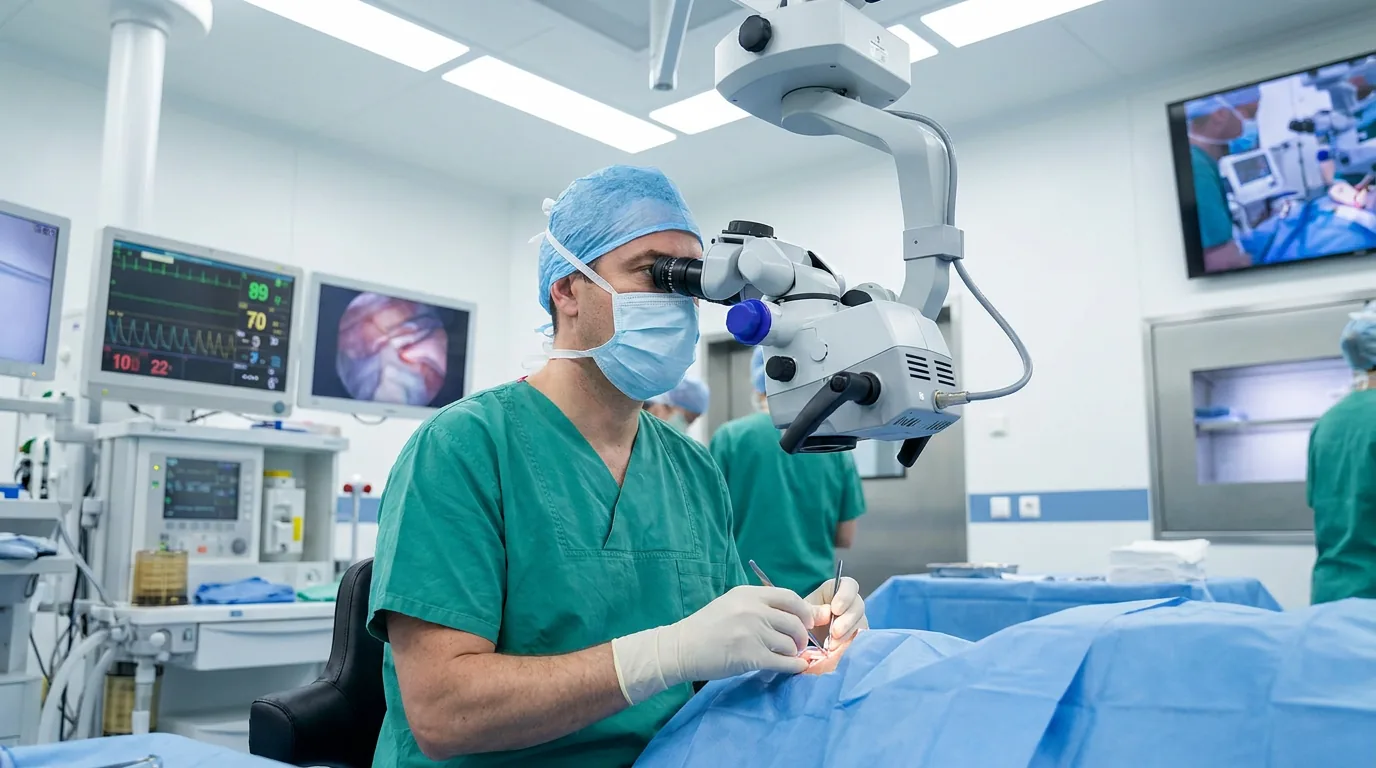
The main treatment for ptosis is surgery, aimed at returning the eyelid to its correct position. In most cases, surgery repositions or tightens the muscle that lifts the eyelid so it can hold it up properly again, according to the American Academy of Ophthalmology.
It's a delicate procedure, because the goal isn't just to lift the eyelid. It's to achieve symmetry and a natural, even opening of both eyes. That's why it should be performed by an oculoplastics specialist, the branch of ophthalmology focused on the eyelids and the structures around the eye. The exact technique depends on how much the eyelid droops and how well the lifting muscle still functions.
In some mild cases, a specialist may consider non-surgical options, but surgery is usually what actually corrects the underlying problem. What matters most is that the decision comes from a proper evaluation, not just a quick look in the mirror.
What Does Recovery Look Like?
Ptosis surgery is usually an outpatient procedure done under local anesthesia, so patients go home the same day, according to the American Academy of Ophthalmology. Some swelling and bruising around the eye is normal in the days that follow, and it resolves on its own.
Eye drops or ointment are used during recovery, and patients avoid strenuous activity for a while. The final result settles in over the following weeks, as the swelling goes down and the eyelid reaches its final position. Follow-up visits with the specialist allow for fine-tuning and confirm that both eyes are symmetrical.
Why Have an Ophthalmologist Perform the Surgery?
The eyelid isn't just skin. It protects the eye, helps spread tears evenly across its surface, and frames your entire expression. That's why ptosis surgery should be performed by a fellowship-trained oculoplastics ophthalmologist, someone who looks after the cosmetic result as much as the function and health of the eye itself.
It's not just about lifting the eyelid. It's about doing so without affecting how well the eye closes, how it stays lubricated, or the health of the cornea. That complete perspective, combining eyelid surgery with a deep understanding of the eye itself, is what sets a well-done correction apart.
When to See a Doctor Right Away
Most cases of ptosis develop gradually and aren't an emergency, though they still deserve an evaluation to decide whether treatment makes sense. There's one situation, however, that should never be ignored.
Sudden onset ptosis, especially if it comes with double vision, a severe headache, a change in pupil size, an eye that isn't moving normally, or unusual muscle weakness, can be a sign of a neurological problem and calls for urgent medical evaluation, according to the American Academy of Ophthalmology. Don't wait for your next scheduled appointment. This isn't common, but it's worth acting on quickly.
If an eyelid drops overnight, or you notice any of these warning signs along with it, don't wait. Get evaluated as soon as possible.
Frequently Asked Questions
Can a droopy eyelid be fixed with creams or exercises? No. Ptosis comes from the position of the eyelid and the muscle that holds it up, so creams or exercises won't correct it. The treatment that actually resolves the underlying problem is usually surgical, and an evaluation determines the right approach.
Is ptosis the same as sagging eyelid skin? No, even though they can look similar. With ptosis, the eyelid margin itself drops because of the muscle. Excess skin is a separate issue treated with blepharoplasty. Sometimes both occur together and are treated at the same time.
Does insurance cover ptosis surgery? When ptosis affects your vision and isn't purely cosmetic, it can be considered a functional procedure. Coverage depends on your specific plan, so it's best to confirm with your insurance provider after your evaluation.
How do I know if my droopy eyelid is affecting my vision? Common signs include raising your eyebrows or tilting your head back to see, feeling like your upper field of vision is blocked, or eye fatigue by the end of the day. A visual field test during your evaluation can confirm it.
Is ptosis in children urgent? It should be evaluated promptly, because if it blocks the visual axis during a child's development, it can cause lazy eye (amblyopia). It doesn't always require immediate surgery, but it does call for a specialist's assessment early on.
Will the eyelid droop again after surgery? A well-planned surgery typically gives long-lasting results, though the natural aging process continues over time. Your specialist will walk you through what to expect in your specific case.
How long does the surgery take? It's usually a short outpatient procedure done under local anesthesia. Most patients go home the same day and get back to their routine within a few days, with some simple aftercare.
Does the surgery leave a visible scar? The most common approach follows the eyelid's natural crease, where the resulting scar is hidden and typically very discreet. Your specialist will explain the technique that fits your case.
Seeing Better, Not Just Looking Better
A droopy eyelid is one of those things that becomes normal over time, until you realize you've been seeing less than you thought. Ptosis has a solution, and figuring out whether it's cosmetic, functional, or both is exactly what makes it possible to treat it the right way.
If you've noticed a drooping eyelid, catch yourself raising your eyebrows to see, or feel like your eyes look tired or uneven, it's worth getting checked out. Schedule an oculoplastics evaluation at Centro Láser, and let's find out together whether it's cosmetic, functional, or both, and what the best option is for you.
Request Your Evaluation and we'll reach out to schedule your visit.
This content is for informational and educational purposes only and is not a substitute for professional medical consultation, diagnosis, or treatment. The cause and treatment of a droopy eyelid should be determined through a specialized ophthalmology evaluation.
Written by Centro Láser. Clinically reviewed by Dr. Silvia Gamarra, fellowship-trained oculoplastics specialist at Centro Láser.