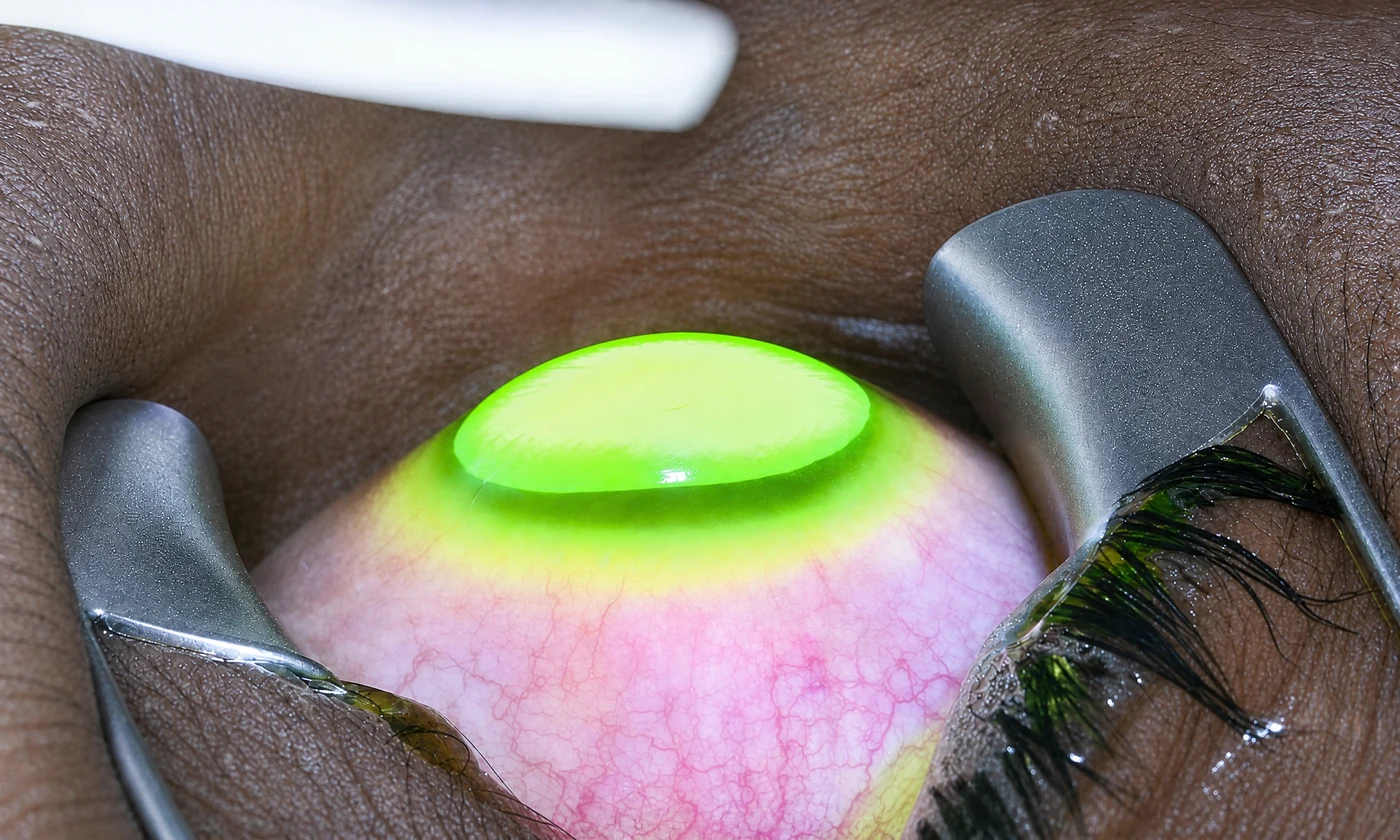
What Is a K-PRO Keratoprosthesis?
A K-PRO keratoprosthesis is an artificial cornea implanted to restore vision when a corneal transplant using donor tissue is not a viable option, or when previous transplants have failed repeatedly. The world’s reference model is the Boston Keratoprosthesis (Boston K-PRO), made from clear, biocompatible materials.
It works like an artificial optical window. A transparent device replaces the cloudy or damaged cornea, letting light enter the eye again and reach the retina. It is the last line of defense in corneal surgery, reserved for the most complex cases.
When Is It Recommended?
Keratoprosthesis is reserved for situations where a conventional transplant would likely fail:
- Repeated failure of previous corneal transplants (multiple rejections)
- Severely damaged ocular surface: chemical burns, Stevens-Johnson syndrome, ocular pemphigoid
- Extreme dry eye or autoimmune diseases that destroy donor tissue
- Conditions where donor tissue would not survive
It is an option that restores the hope of vision for patients once considered beyond help.
A Specialized Resource
Keratoprosthesis is not a routine surgery. It requires:
- Surgeons with specific training in the technique
- Infrastructure and experience managing complex corneal cases
- Very close lifelong follow-up
Centro Láser offers it as part of its full ladder of corneal solutions, so the most difficult cases are never left without options.
The Procedure
- Thorough evaluation: ocular surface condition, intraocular pressure, and retinal and optic nerve function (these must be working for vision to improve).
- Surgery: local anesthesia with sedation, or general anesthesia. The prosthesis is assembled with supporting tissue and implanted. The procedure takes 60 to 120 minutes.
- Immediate post-op care: rest, a protective contact lens, and antibiotic and anti-inflammatory drops.
- Lifelong follow-up: regular checkups to watch for complications (glaucoma, infections, membranes) and keep the implant healthy.
Recovery and Care
Many patients notice improved vision fairly soon, since the prosthesis provides a clear optical window right away. Long-term success, though, depends on rigorous follow-up:
- Regular lifelong eye exams
- Permanent use of a protective contact lens, in many cases
- Prophylactic antibiotic drops
- Active monitoring for glaucoma and infections
The degree of visual recovery depends on the condition of the retina and optic nerve, which must be functioning.
Why Choose K-PRO Keratoprosthesis at Centro Láser
Centro Láser offers K-PRO keratoprosthesis as part of its cornea department, with dedicated fellowship-trained subspecialists. When a conventional corneal transplant is not viable or has failed, keratoprosthesis is the option that keeps the possibility of recovering vision alive. Every case is evaluated individually, with an honest conversation about realistic expectations based on the condition of each eye.