What Are Intravitreal Injections?
Intravitreal injections deliver medication directly into the eye, into the vitreous cavity, to treat retinal disease. They are the single most important treatment in modern retina care, and they have completely changed the outlook for conditions that used to lead straight to blindness.
The most widely used medication is anti-VEGF (vascular endothelial growth factor). It blocks the substance responsible for abnormal blood vessel growth and fluid leakage in the macula, the two mechanisms behind central vision loss in many retinal diseases.
What Conditions Do They Treat?
- Wet age-related macular degeneration (AMD): stops the bleeding and leakage from abnormal vessels beneath the macula
- Diabetic macular edema: reduces macular swelling caused by diabetes
- Retinal vein occlusions: treats the edema that follows venous blood clots
- Other conditions involving neovascularization or macular edema
Why They’re the Global Standard
Before anti-VEGF drugs existed, many of these diseases had no effective treatment and simply progressed to vision loss. Today they are the worldwide standard of care because:
- They stop the damage and, in many cases, improve vision
- They are outpatient and take just minutes
- They have a strong safety profile thanks to a sterile protocol
- They allow OCT-guided follow-up to fine-tune treatment
The Procedure, Step by Step
- OCT evaluation: confirms the indication and measures the state of the macula.
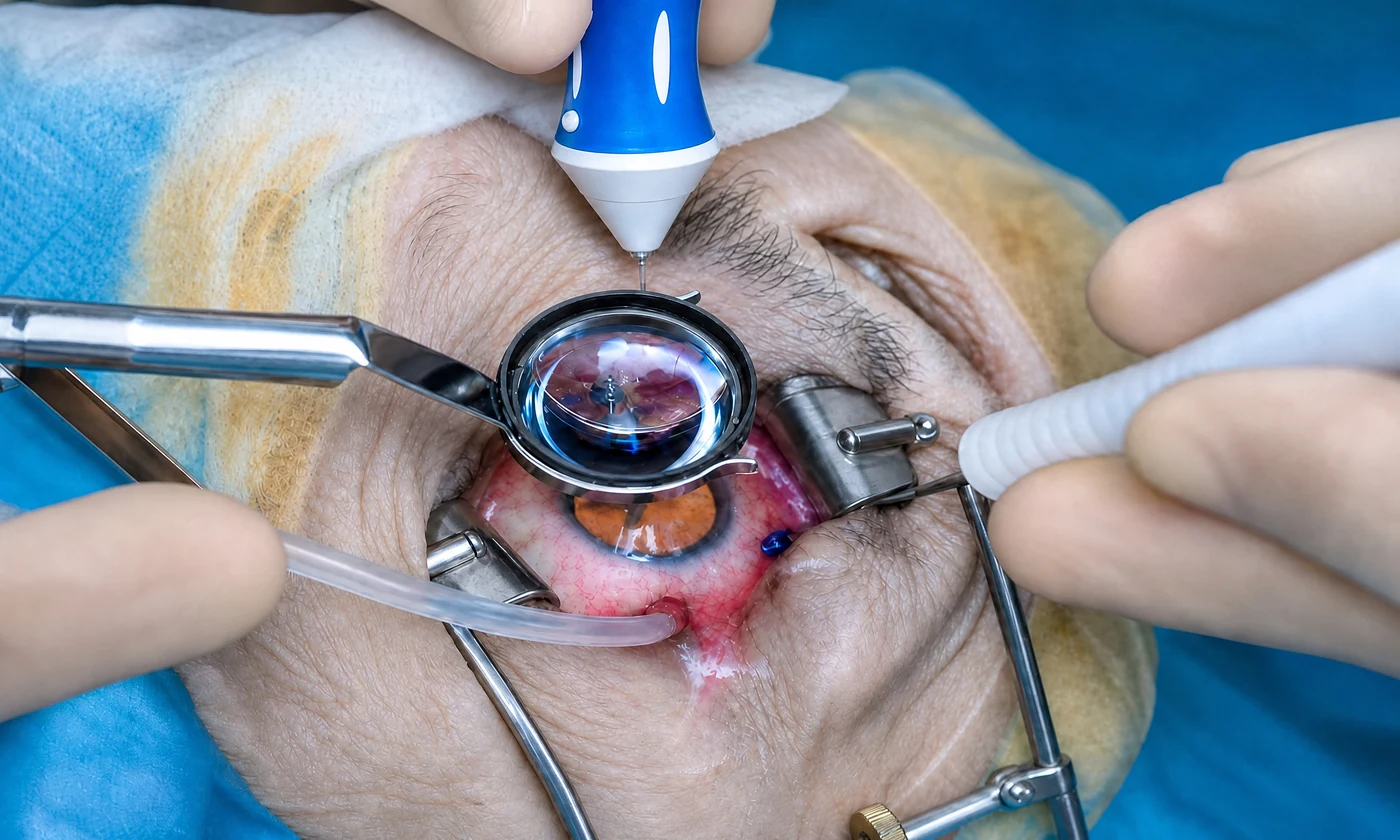
- Sterile prep: in the operating room, we clean and disinfect the eye and place a lid speculum.
- Anesthesia: anesthetic eye drops and, if needed, additional numbing on the surface.
- Injection: the medication is delivered in seconds through the pars plana, a safe entry point in the eye.
- Check and discharge: we confirm everything looks right, and you go home the same day.
The whole procedure takes 10 to 15 minutes.
Recovery
Recovery is quick. In the first few hours you might notice:
- A gritty, sandy feeling that eases with artificial tears
- A small red spot on the white of the eye (subconjunctival hemorrhage), harmless
- Slightly blurry vision that clears up within hours
We recommend avoiding rubbing your eye, staying out of pools for a few days, and using the drops we prescribe. Call us right away if you notice severe pain, worsening redness, or vision loss, rare warning signs that need immediate attention.
An Ongoing Treatment
It’s important to understand that most of these conditions are chronic. Treatment typically involves an initial loading phase followed by maintenance doses spaced according to your response. Staying consistent is what protects your vision long-term, since stopping the schedule lets the disease progress again.
Why Choose Centro Láser for Intravitreal Injections
Centro Láser’s retina department is staffed by fellowship-trained subspecialists with precision OCT diagnostics to guide and monitor treatment. We give every injection in the operating room under a strict sterile protocol and adjust your schedule at each visit based on how you respond. When your condition calls for it, we combine injections with retinal laser photocoagulation as part of a complete retina management plan.