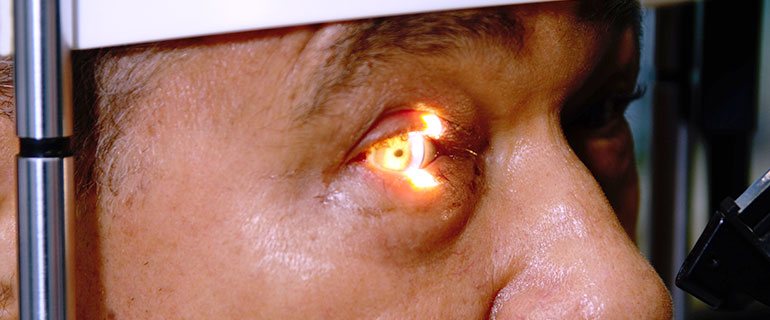
What Is YAG Laser Iridotomy?
YAG iridotomy is an outpatient laser procedure that creates a small opening in the iris, the colored part of the eye. This opening, essentially microscopic, lets aqueous humor flow freely between the eye’s posterior and anterior chambers, clearing the pupillary block that causes, or threatens to cause, angle-closure glaucoma.
It’s the treatment of choice for treating and preventing angle-closure glaucoma, as well as for resolving acute eye pressure attacks. The procedure is quick and done right in the office, with no operating room needed.
When Is It Recommended?
YAG iridotomy has three main indications:
- Treating angle-closure glaucoma: once it’s diagnosed, to prevent future attacks
- Prevention in narrow angles: when gonioscopy finds an angle at risk of closing, before symptoms appear
- Urgent treatment of an acute attack: an acute angle-closure glaucoma attack is an eye emergency that calls for immediate pressure relief
Acute Glaucoma Attack: A Real Emergency
When the drainage angle closes suddenly, eye pressure can jump from normal levels (10 to 21 mmHg) to more than 50 mmHg within hours. This spike causes:
- Sudden, severe eye pain with a sudden onset
- An intense headache (often mistaken for a migraine)
- Nausea and vomiting tied to the pain
- Blurry vision with rainbow-colored halos around lights
- A red eye with a semi-dilated pupil
Left untreated for even a few hours, this can cause permanent optic nerve damage within a day or two. YAG iridotomy resolves the anatomical cause of the closure and is the treatment of choice, usually paired with pressure-lowering drops to bring eye pressure down quickly before the procedure.
Clinical Indications
YAG iridotomy is appropriate for patients with:
- Angle-closure glaucoma, primary or secondary
- Narrow angle found on gonioscopy, at risk of closing
- Acute attack of angle-closure glaucoma
- Predisposing anatomy: shallow anterior chamber, thick iris, high hyperopia
Contraindications
We don’t perform this procedure for:
- Open-angle glaucoma, since it doesn’t address that cause
- A cloudy cornea that blocks the view of the iris
- Active inflammation inside the eye
- Patients with extensive iris synechiae
The Procedure, Step by Step
- Pre-procedure evaluation: tonometry, gonioscopy, and biomicroscopy to confirm the indication.
- Day of the procedure: we apply pressure-lowering drops to bring pressure down beforehand, a miotic drop to stretch the iris and make the laser easier to apply, and topical anesthesia.
- Placing a special contact lens: this focuses the laser on the peripheral iris.
- Applying the YAG laser: 1 to 3 short pulses create the opening. The procedure takes 5 to 10 minutes per eye.
- Post-procedure check: measuring eye pressure and ruling out inflammation.
- Immediate discharge with post-procedure instructions.
Recovery and Follow-Up
In the first few hours you may notice:
- Light sensitivity
- Slightly blurry vision
- A mild gritty feeling
- Mild eye redness
These symptoms clear up within hours or a day. We prescribe anti-inflammatory drops for a week.
Follow-up schedule:
- 24 hours: pressure check and ruling out inflammation
- 1 week: confirming the iridotomy is working properly
- 1 month: checking stability
- Ongoing glaucoma follow-up every 3 to 6 months
Why Choose Centro Láser for YAG Iridotomy
Centro Láser has a dedicated glaucoma department staffed by fellowship-trained subspecialists in managing every form of the disease, including angle closure. Before iridotomy, we run a complete evaluation: tonometry, detailed gonioscopy, biomicroscopy, and, when needed, UBM (ultrasound biomicroscopy) to get a detailed look at the angle anatomy. Post-procedure follow-up folds directly into your ongoing glaucoma care, with no need to be referred elsewhere. For acute attacks, we provide 24/7 emergency care.