What Is Reconstructive and Orbital Surgery?
This is the area of oculoplastics that treats eyelid malpositions, eyelid tumors, and orbital conditions, including thyroid eye disease. Unlike purely cosmetic surgery, the main goal here is functional and medical: protecting the eye, restoring its correct position, and, when needed, treating lesions or reconstructing the eyelid.
All of these conditions have one thing in common: they call for a fellowship-trained ophthalmologist who protects the eye’s function and health while correcting the structural problem.
Eyelid Malpositions
- Entropion: the eyelid turns inward and the eyelashes rub against the eye. It causes constant irritation and, left untreated, can damage the cornea. It’s corrected by repositioning the eyelid.
- Ectropion: the eyelid turns outward, leaving the eye exposed. It leads to tearing, dryness, and chronic irritation. Surgery restores the eyelid to its normal position.
Eyelid Tumors and Lesions
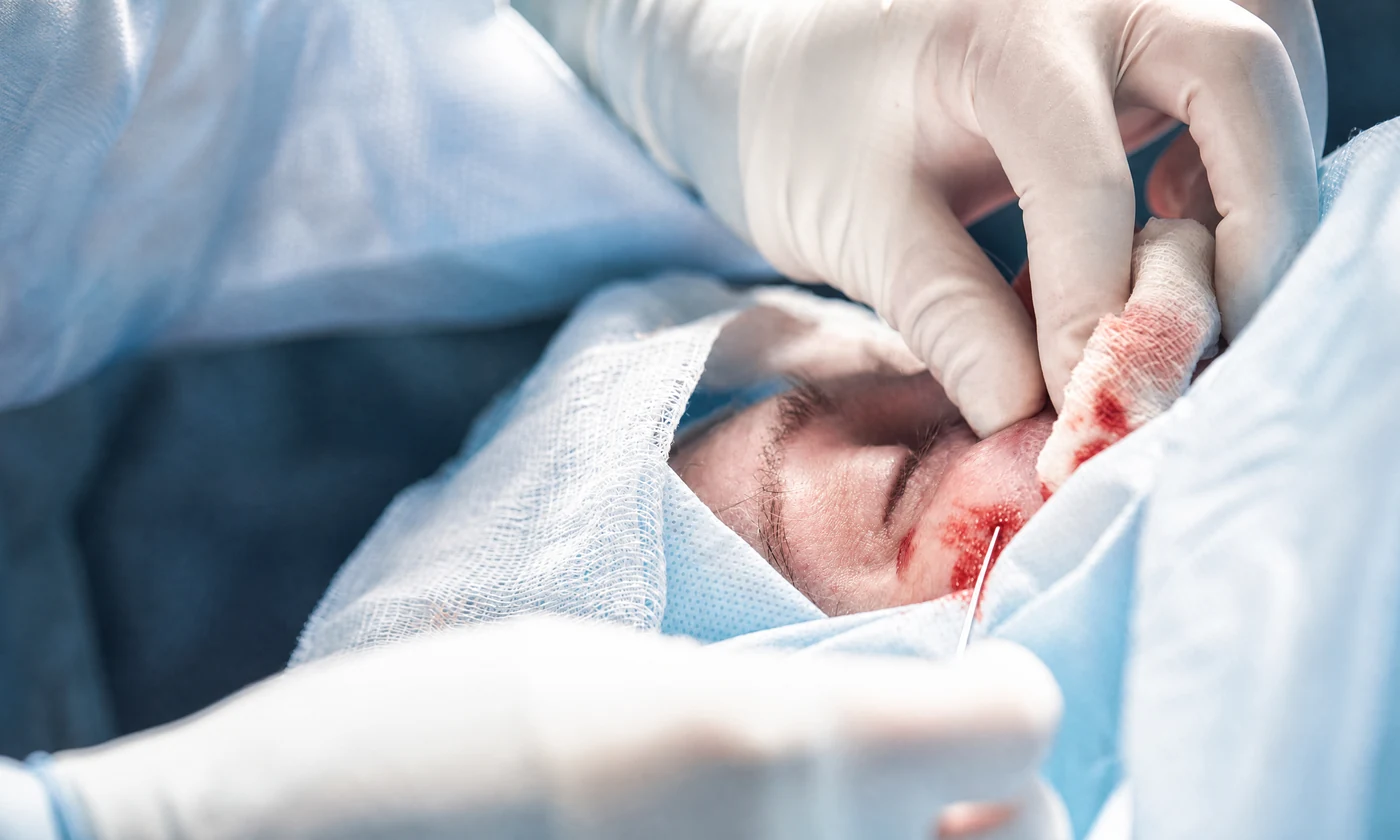
Most eyelid lesions are benign, but some require treatment. When a bump grows, changes, bleeds, or doesn’t go away, it’s worth getting it checked out. When needed, the lesion is removed and analyzed, and the eyelid is reconstructed with attention to both function (closure, protecting the eye) and appearance.
Thyroid Eye Disease
The eye’s involvement in thyroid disease can cause bulging eyes (proptosis), eyelid retraction, double vision, and, in severe cases, compression of the optic nerve. Management is staged:
- Controlling the underlying thyroid disease
- Orbital decompression surgery when there’s severe proptosis or risk to the optic nerve
- Muscle surgery for double vision
- Eyelid surgery to correct retraction
Am I a Candidate?
- A sensation of eyelashes rubbing against the eye, or an eyelid turned inward or outward
- A bump, lesion, or change in the shape of the eyelid
- Bulging eyes, eyelid retraction, or double vision from thyroid disease
- Chronic irritation and redness from eyelid malposition
The Process
- Specialized evaluation: of the eyelid, the ocular surface and, in orbital cases, imaging studies.
- Planning: based on the diagnosis (malposition, tumor, or orbital condition).
- Surgery: under local anesthesia with sedation or general anesthesia, depending on how complex the case is.
- Reconstruction when needed, always prioritizing the function of the eye.
- Close follow-up to make sure healing and results go as expected.
Duration ranges from 45 to 120 minutes, depending on the case.
Why Choose Centro Láser for Reconstructive and Orbital Surgery
At Centro Láser, these surgeries are performed by our oculoplastics team, who always put protecting the eye and vision first. We treat malpositions, tumors, and orbital conditions within a comprehensive eye care center, backed by our other subspecialties whenever a case, like thyroid eye disease, calls for a team approach.