HomeProceduresPtosis Repair Surgery

Oculoplastics

Ptosis Repair Surgery

Corrects a drooping upper eyelid by repositioning the levator muscle. When the eyelid blocks part of your vision, it's a functional surgery that many insurance plans cover.

Ptosis Repair Surgery

What Is Ptosis Surgery?

Ptosis (also called a drooping eyelid) happens when the upper eyelid sits lower than it should. In more significant cases, the eyelid covers part of the pupil, narrows your field of vision, and forces you to tilt your head back or raise your eyebrows just to see clearly. This is not only a cosmetic concern: it has a real functional impact on vision and quality of life.

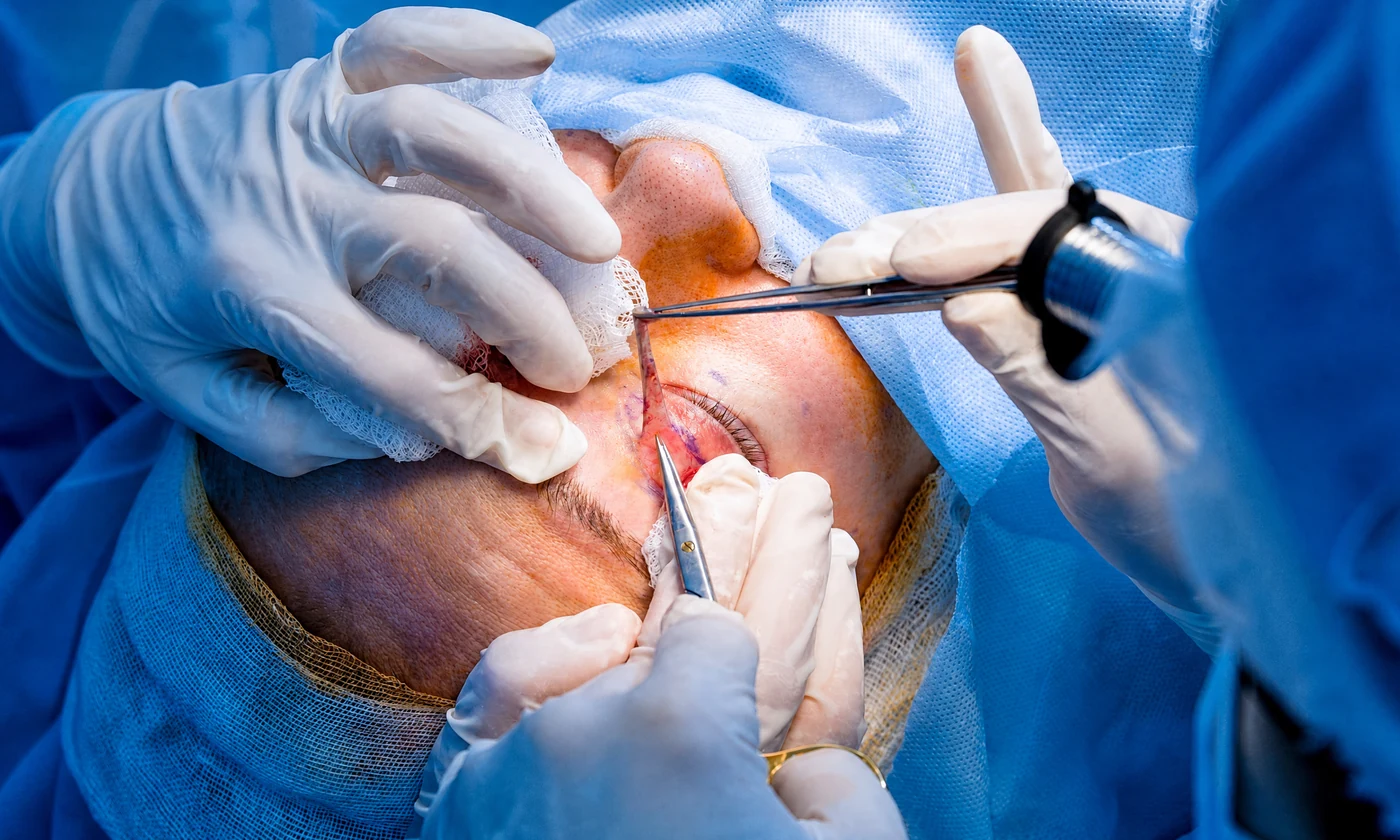
Ptosis surgery corrects this by strengthening or repositioning the levator muscle, the structure that normally holds the eyelid open. It restores the eyelid to its natural height, bringing back your field of vision and improving the symmetry of your gaze.

Ptosis Is Not the Same as Excess Eyelid Skin

This distinction matters because it determines the right treatment:

  • Ptosis: the eyelid margin itself droops because the levator muscle has weakened or detached. It is corrected by repositioning the muscle.
  • Excess skin (dermatochalasis): loose, sagging skin with a normal, functioning muscle underneath. It is corrected with blepharoplasty.

The two can look alike at a glance, but they call for different techniques. They often occur together and can be corrected in the same surgery.

Who Is a Candidate?

  • A drooping upper eyelid that covers part of the eye
  • Needing to tilt your head back or raise your eyebrows to see well
  • Documented loss of upper visual field
  • Asymmetry between the two eyelids
  • Congenital ptosis in children (requires specialized evaluation because of the risk of amblyopia)

The Procedure, Step by Step

  1. Evaluation: we measure eyelid height and levator muscle function, and run a visual field test when it applies.
  2. Anesthesia: local anesthesia with sedation, done on an outpatient basis.
  3. Repositioning the levator muscle: strengthened or reattached depending on how severe the ptosis is.
  4. Height adjustment: in many cases done with the patient awake and cooperating, to fine-tune symmetry.
  5. Closure with fine sutures and cold compresses.

The procedure takes 45 to 60 minutes.

Recovery

  • Days 1-7: swelling and sometimes bruising; cold compresses and rest. Stitches come out between days 5 and 7.
  • Weeks 2-4: eyelid height settles as the swelling goes down.
  • The final result, in both symmetry and eyelid opening, becomes clear over the following weeks.

Why Choose Centro Láser for Ptosis Surgery

At Centro Láser, ptosis surgery is performed by our oculoplastics team, with the precision it takes to adjust eyelid height and symmetry while protecting the eye’s function. When ptosis affects your field of vision, we document the impact to help you pursue insurance coverage, and if there is excess skin as well, we address it in the same surgery with blepharoplasty.


What you should know
about Ptosis Repair Surgery

Ptosis is when the upper eyelid droops below its normal position. In more significant cases, the eyelid covers part of the pupil and narrows your field of vision, so you end up tilting your head back or raising your eyebrows just to see. It happens when the levator muscle, the one that lifts the eyelid, weakens or detaches. It can be present from birth, develop with age, or result from other underlying causes.

Yes, and it is an important distinction. Ptosis is the drooping of the eyelid margin itself, caused by a problem with the levator muscle. Excess skin (treated with blepharoplasty) is loose, sagging skin with a normal, working muscle underneath. The two can look alike at first glance, but they need different treatments. Sometimes both conditions show up together and get corrected in the same surgery.

When ptosis narrows your field of vision, correcting it is considered functional, and many insurance plans cover it. To document that, we run a visual field test that shows the obstruction caused by the drooping eyelid. If the ptosis is mild and it is really just a matter of symmetry or appearance, coverage usually is not available. We will sort out which applies to you at your evaluation.

Surgery strengthens or repositions the levator muscle to bring the eyelid back to its normal height. The technique we use depends on how severe the ptosis is and how much strength the muscle still has. It is an outpatient procedure done under local anesthesia with sedation. In many cases, we fine-tune the height with the patient awake and cooperating, so we can get the best possible symmetry.

Not during the procedure itself, since it is done under local anesthesia with sedation. Afterward you may notice mild discomfort, tightness, and swelling, which are manageable with the medication we prescribe and cold compresses. Recovery is generally easy to handle, similar to what you would expect after blepharoplasty.

You will have swelling and sometimes bruising for the first few days, which settles down with cold compresses and rest. Stitches come out between days 5 and 7. The eyelid height can look slightly uneven during the first few weeks as the swelling goes down, until it settles into its final position. You will see the full, final result over the following weeks.

Our specialists
in Ptosis Repair Surgery

Are you a candidate for Ptosis Repair Surgery?

Book your evaluation with our specialists.