What Is Phacoemulsification?
Phacoemulsification is the gold-standard technique for treating cataracts. The clouded natural lens is broken up using high-frequency ultrasound, the fragments are gently suctioned out, and an artificial intraocular lens (IOL) is put in its place to restore clarity and focus to the eye.
The procedure is performed through a micro-incision of about 2.2 millimeters that requires no stitches. It’s outpatient surgery, taking 15 to 30 minutes per eye, and most patients are back to their normal routine the very next day.
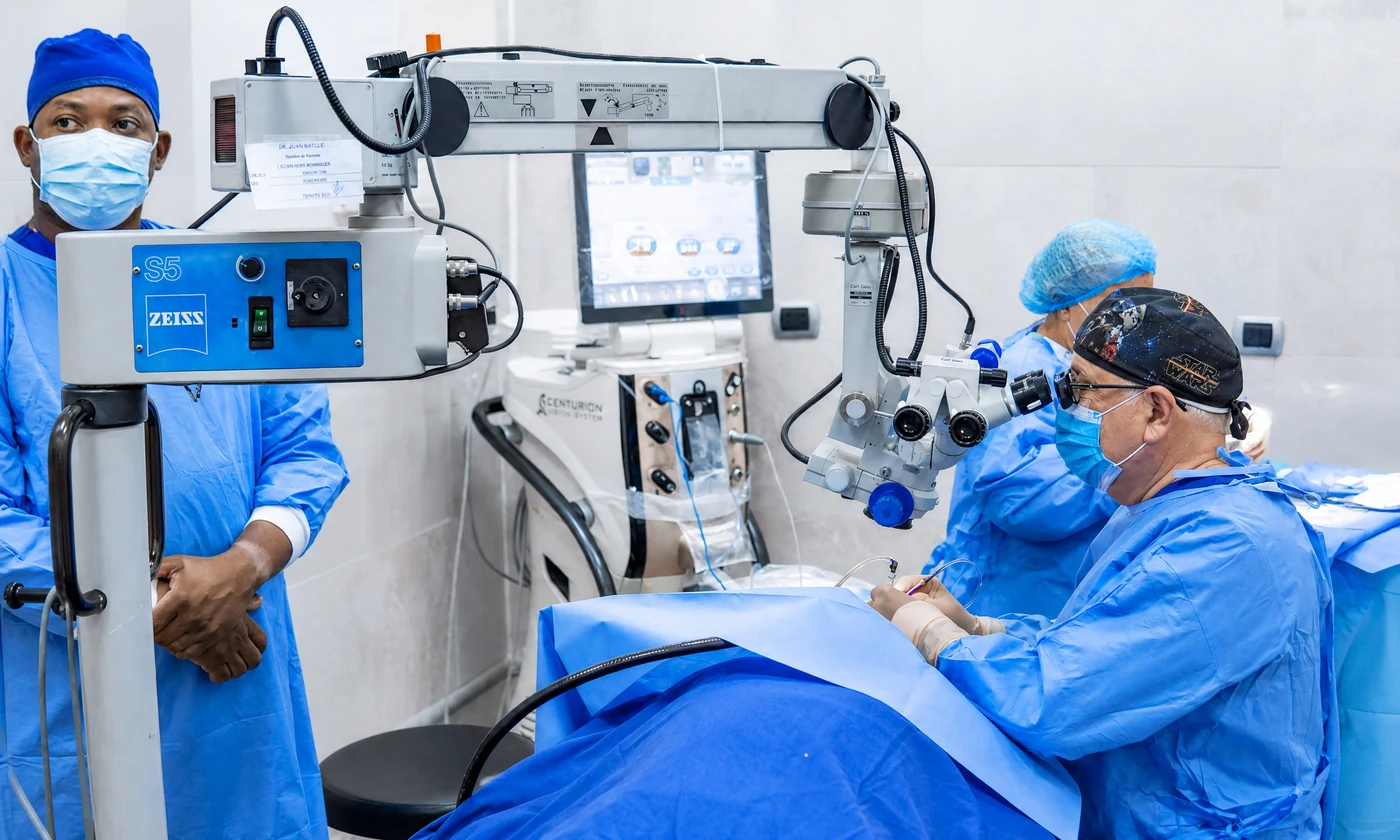
At Centro Láser we work with two internationally recognized phacoemulsification platforms, Centurion® (Alcon) and Signature® Pro, which combine advanced fluidics and precise ultrasound control to minimize intraocular stress during surgery.
Unlike older techniques, which required large incisions and full manual removal of the lens, phacoemulsification is minimally invasive, fast, and boasts one of the highest success rates in modern medicine.
When Is It Needed?
Cataract surgery becomes an option once the clouding of the lens starts getting in the way of your everyday activities. Common signs include:
- Blurry or hazy vision that doesn’t improve with a new eyeglass prescription
- Halos and glare around lights, especially when driving at night
- Sensitivity to bright light that makes it hard to get around outdoors on sunny days
- Colors that look faded or take on a yellowish tint
- Needing a new eyeglass prescription every few months
The decision to operate is made case by case, weighing your corrected visual acuity, the type and stage of the cataract, the overall health of the eye, and how much the vision loss is affecting your quality of life and independence.
Types of Intraocular Lenses (IOLs)
Choosing the right intraocular lens is one of the most important decisions in the surgery. Centro Láser offers the full range:
-
Standard monofocal. Corrects vision at a single distance, usually far away. It’s the most commonly used lens and is covered by most insurance plans. You’ll still need reading glasses for close-up work after surgery.
-
Toric monofocal. Works the same way as the standard monofocal but also corrects pre-existing corneal astigmatism. Recommended when significant astigmatism would otherwise blur the surgical result.
-
Premium multifocal or trifocal. Provides several focal points at once (distance, intermediate, and near), significantly cutting down your dependence on glasses. A great option for active people who want visual freedom.
-
Premium toric (multifocal plus astigmatism correction). Combines astigmatism correction with multi-distance vision in a single implant.
-
Extended depth of focus (EDOF) lenses. The newest technology, offering smooth, continuous vision with fewer nighttime halos than traditional multifocal lenses.
The right choice depends on your eye anatomy, lifestyle, visual goals, and budget. During your pre-op evaluation, your specialist walks you through which option best fits your case.
The Procedure, Step by Step
-
Pre-operative evaluation. We perform a complete eye exam plus supporting tests: IOL Master biometry to calculate the exact lens power, specular microscopy to assess the corneal endothelium, macular OCT to rule out associated retinal disease, and, when needed, Pentacam corneal topography.
-
Day of surgery. You arrive fasting. We apply dilating drops for about an hour beforehand, followed by topical anesthesia. Light intravenous sedation keeps you relaxed but awake.
-
Micro-incision. The surgeon makes an incision of about 2.2 mm in the cornea, with no stitches required.
-
Capsulorhexis. A circular opening is made in the front of the lens capsule to reach the cloudy core.
-
Phacoemulsification. An ultrasound probe breaks up the clouded lens and suctions out the fragments. This is the key clinical step of the procedure.
-
Lens implantation. The folded intraocular lens is inserted through the same micro-incision and unfolds into place inside the empty capsule, right where your natural lens used to be.
-
Natural closure. The micro-incision self-seals without stitches. Antibiotic and anti-inflammatory drops are applied.
You’ll stay for a few minutes of observation and go home the same day with an eye patch, which comes off the next day.
Recovery and Aftercare
In the first few hours, you may feel mild grittiness, tearing, or blurry vision. That’s normal and clears up on its own. By the next morning, most patients already notice a significant improvement in their vision.
First-week care:
- Use the prescribed eye drops (antibiotic plus anti-inflammatory) as directed
- Don’t rub the eye or sleep on the side of the operated eye
- Keep water out of the eye (no leaning your head back in the shower, no pools, no ocean swimming)
- Avoid strenuous exercise and heavy lifting
- Wear sunglasses outdoors, even on cloudy days
Follow-up visits:
- Next day: initial check-up, assessment of results, and treatment adjustments
- Day 7: check on healing progress
- One month: final evaluation of the refractive outcome
Vision fully stabilizes within 4 to 6 weeks. If both eyes need surgery, they’re usually scheduled 1-2 weeks apart.
Why Choose Centro Láser for Cataract Surgery
Centro Láser is the first specialized eye care center in the Dominican Republic, founded in 1947. Over seven decades of experience in eye surgery and a team of dedicated fellowship-trained specialists stand behind every cataract surgery.
What sets us apart clinically:
- First in Latin America and North America to use femtosecond laser technology for cataract surgery (2009). This precision technology is available as a premium option for patients who choose it.
- Premium phacoemulsification platforms: Centurion® by Alcon and Signature® Pro, with advanced fluidics that reduce intraocular stress during surgery.
- Full range of intraocular lenses, including monofocal, toric, multifocal, trifocal, and extended depth of focus (EDOF) options.
- Every pre-surgical test under one roof: IOL Master biometry, specular microscopy, macular OCT, Pentacam, and corneal topography, with no need for outside referrals.
- Fellowship-trained subspecialists dedicated to lens surgery, with international training in the technique.
- Bilingual care (Spanish and English) with a personal touch that supports you and your family through the whole process, from the first evaluation to the final follow-up visit.
If your vision has grown blurry and glasses no longer help, or your ophthalmologist has mentioned you have a cataract, you can request an evaluation with our specialists to learn about the treatment options that fit your case.